

Accounting Outsourcing Services: Why UK Companies Are Rethinking Their Finance Function
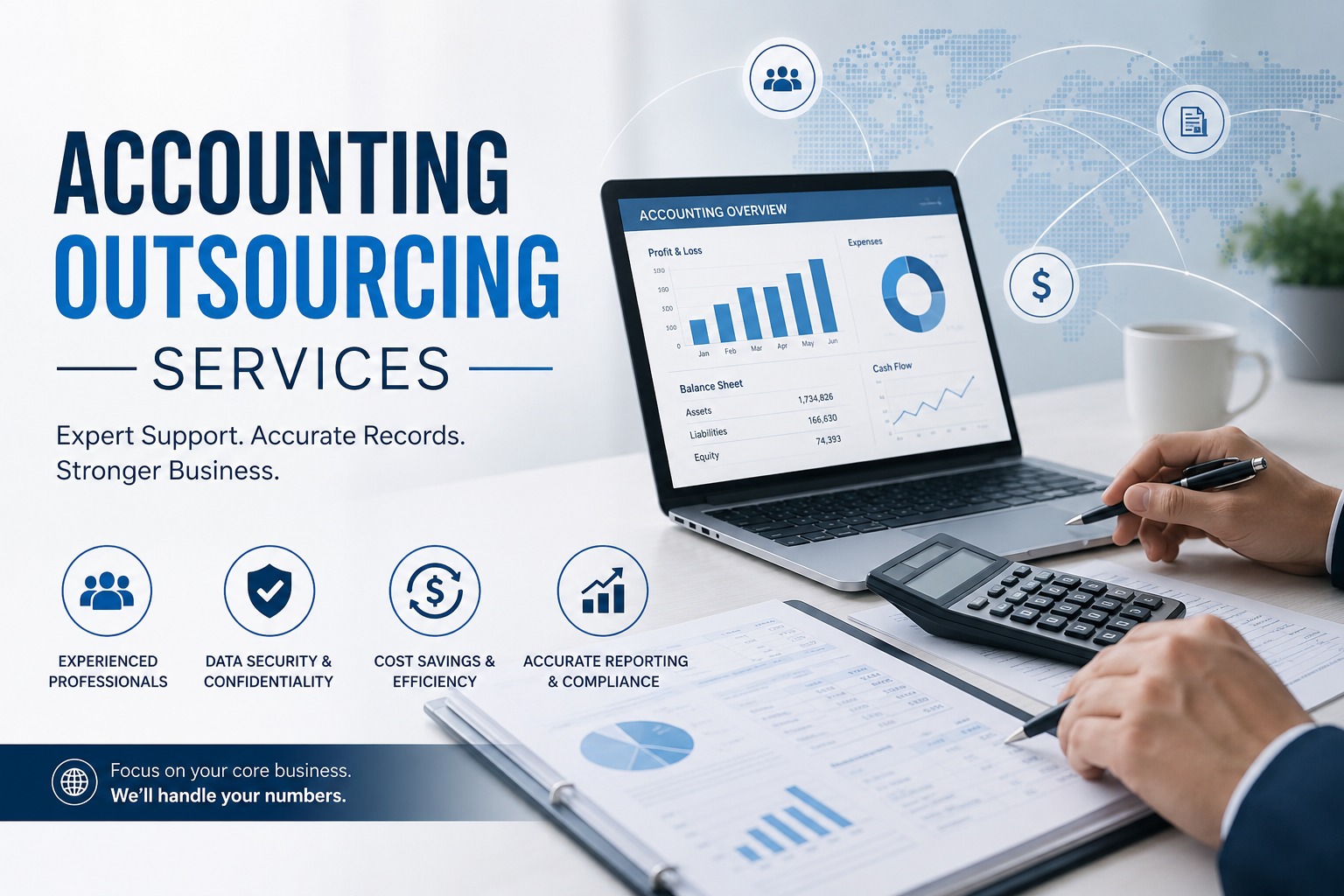
Running a business in the UK means keeping an eye on much more than sales and customer relationships. Financial records, supplier invoices, payroll, customer payments, VAT and reporting all need regular attention. When these responsibilities start taking too much time, business owners often look for a more practical solution. Accounting Outsourcing Services can help companies manage essential financial tasks through external professionals while allowing internal teams to focus on operations and growth.
Outsourcing does not have to mean handing over every financial responsibility. Businesses can choose individual services or build a wider outsourced finance function around their specific needs.
What Is Accounting Outsourcing?
Accounting outsourcing is the process of using an external accounting team to handle selected financial activities for a business.
A small company may outsource only its bookkeeping. A larger organisation might outsource bookkeeping, payroll, accounts payable, accounts receivable, management accounts and other routine finance activities.
The advantage is flexibility. Businesses can decide which responsibilities should remain internal and which are better handled by specialists.
This approach can be particularly useful for growing companies that need professional accounting support but are not ready to create a large finance department.
Why Accounting Becomes Difficult as a Business Grows
Accounting requirements usually increase alongside business activity.
A new company may only have a limited number of transactions each month. As sales increase, however, the number of invoices, supplier payments, bank transactions and employee records can grow considerably.
More transactions mean more opportunities for mistakes or delays. If records are not updated regularly, management may find it difficult to understand the company's current financial position.
This is where an organised accounting process becomes important. Outsourcing can provide the additional capacity needed to keep financial administration under control.
Outsourced Bookkeeping for Accurate Records
Bookkeeping is one of the most common accounting functions to outsource.
It involves recording business transactions, reconciling accounts and maintaining accurate financial records. Although bookkeeping is often considered routine, it forms the foundation of many other financial activities.
If the books are incomplete, management accounts may not reflect the true position of the company. Tax-related information may also take longer to prepare.
An outsourced bookkeeping team can maintain records according to an agreed schedule, helping the business avoid large backlogs.
Managing Supplier Invoices More Effectively
As businesses work with more suppliers, accounts payable can become a significant administrative responsibility.
Invoices need to be received, checked, recorded and paid according to agreed terms. Without a clear process, invoices can easily be overlooked.
Outsourced accounts payable support can help businesses establish a consistent workflow. The external team can organise supplier records, process invoices and prepare information for payment approval.
This can give management better visibility of upcoming financial obligations and make supplier administration easier to manage.
Improving Customer Payment Collection
Accounts receivable is equally important because businesses need to turn sales into actual cash.
A customer invoice that remains unpaid for several weeks can affect working capital and create unnecessary pressure.
Outsourced accounts receivable support can include maintaining customer ledgers, recording payments, monitoring outstanding balances and preparing aged receivables reports.
With regular information, management can identify overdue invoices sooner and decide what action should be taken.
Payroll Outsourcing for Growing Teams
Payroll can become more complicated as the number of employees increases.
Changes to salaries, working arrangements, employee information and deductions all need to be processed accurately. A mistake can cause unnecessary frustration for employees and create additional administrative work.
Outsourcing payroll can provide businesses with access to experienced payroll professionals and established processes.
For a small company without a dedicated finance or HR department, this can be a convenient way to manage regular payroll responsibilities.
Management Accounts and Business Insight
Good accounting should do more than record transactions. It should help business owners understand how the company is performing.
Management accounts can provide regular information about revenue, expenses, profit, cash flow and other relevant measures.
Monthly or quarterly reports can highlight changes that may otherwise go unnoticed.
For example, if operating costs have increased steadily while sales have remained unchanged, management can investigate the reason. Similarly, a decline in profit margins may encourage a review of pricing or supplier costs.
Regular reporting turns accounting information into something that can support business decisions.
Helping Businesses Manage Cash Flow
Cash flow is one of the areas where organised accounting can make a practical difference.
Businesses need to understand how much money is expected from customers and how much needs to be paid to suppliers, employees and other parties.
An outsourced accounting team can help maintain up-to-date records of receivables and payables, making it easier to monitor the movement of money through the business.
This does not eliminate cash-flow challenges, but better information can help management plan ahead rather than react at the last minute.
The Financial Case for Outsourcing
Hiring an internal accountant can be the right choice for some businesses, but it is not always the most practical option.
A full-time employee involves salary and other employment costs. There may also be recruitment, training, software and equipment expenses.
For a smaller company, the amount of accounting work may not justify a permanent position.
Outsourcing allows businesses to purchase a defined level of support. As the company grows, services can be increased without necessarily restructuring the entire finance department.
However, cost should never be the only consideration. Accuracy, communication, experience and data security are equally important.
Access to Wider Accounting Expertise
One person may not have expertise in every area of accounting.
An external accounting provider may have different team members specialising in bookkeeping, payroll, tax, reporting or other financial activities.
This gives smaller companies an opportunity to access broader expertise without employing multiple specialists.
It can also be useful when a business faces an unfamiliar financial requirement or needs additional support during a particularly busy period.
Technology Makes Outsourcing Easier
The growth of cloud accounting has changed how businesses interact with external finance teams.
Documents can be shared electronically, financial information can be accessed remotely and accounting systems can connect with banking and other business applications.
Automation can also reduce repetitive work. Certain invoices, transactions and reconciliations can be processed more efficiently through digital systems.
Nevertheless, technology should be combined with appropriate review procedures. Automated systems still require professional oversight to ensure that financial records remain reliable.
Signs Your Business May Need Outsourced Accounting
A business does not need to reach a particular size before considering outsourcing.
Some common signs include:
- Bookkeeping is regularly falling behind.
- Business owners are spending too much time on financial administration.
- Customer invoices are not being followed up consistently.
- Supplier payments are becoming difficult to organise.
- Payroll takes significant internal time.
- Management does not receive regular financial reports.
- The business is growing faster than its existing accounting processes can handle.
When several of these issues appear at the same time, outsourcing may be worth exploring.
Choosing an Accounting Outsourcing Provider
Selecting a provider requires careful consideration.
First, businesses should identify exactly which accounting responsibilities they want to outsource. This makes it easier to compare providers on a like-for-like basis.
Experience is another important factor. A provider should understand the needs of UK businesses and be familiar with the accounting systems relevant to the company.
Businesses should also ask about communication. Will there be a dedicated contact? How often will reports be provided? What happens if an urgent accounting issue arises?
Data security should also be discussed because accounting records contain confidential financial information.
Finally, the agreement should clearly explain the services included, expected deadlines and any additional charges.
Maintaining Control Over Your Finances
Some owners worry that outsourcing means losing control of the company's finances. It does not.
The external accounting team handles agreed tasks, but business owners and directors can continue to approve payments, review reports and make financial decisions.
In many cases, outsourcing can actually improve financial visibility because management receives more structured and timely information.
The goal is to remove repetitive administration while keeping important decision-making within the business.
A Practical Way to Start
Businesses do not necessarily need to outsource everything at once.
A sensible starting point is to identify the accounting tasks that consume the most internal time. Bookkeeping and payroll are often suitable areas to begin with.
Once the process is working effectively, additional services can be introduced if required.
This gradual approach allows the business to understand the benefits of outsourcing without making an unnecessarily large change to its existing processes.
Final Thoughts
Accounting is an essential part of every business, but managing every financial task internally is not always the most efficient approach. Accounting Outsourcing Services can give UK companies access to professional support while reducing routine administration and improving the organisation of their financial processes.
Whether a company needs help with bookkeeping, payroll, accounts payable, accounts receivable or management reporting, outsourcing can be adapted to its circumstances.
The most successful arrangements are based on clear responsibilities, reliable communication, appropriate technology and regular management oversight. With the right provider and a well-defined process, outsourced accounting can support businesses as they grow while allowing owners to spend more time on the work that moves the company forward.

 English
 Arabic
 French
 Spanish
 Portuguese
 Deutsch
 Turkish
 Dutch
Dutch
 Italiano
 Russian
 Romaian
 Greek
Greek