


Does Asparagus Cause Gas and Bloating? Digestive Effects Explained
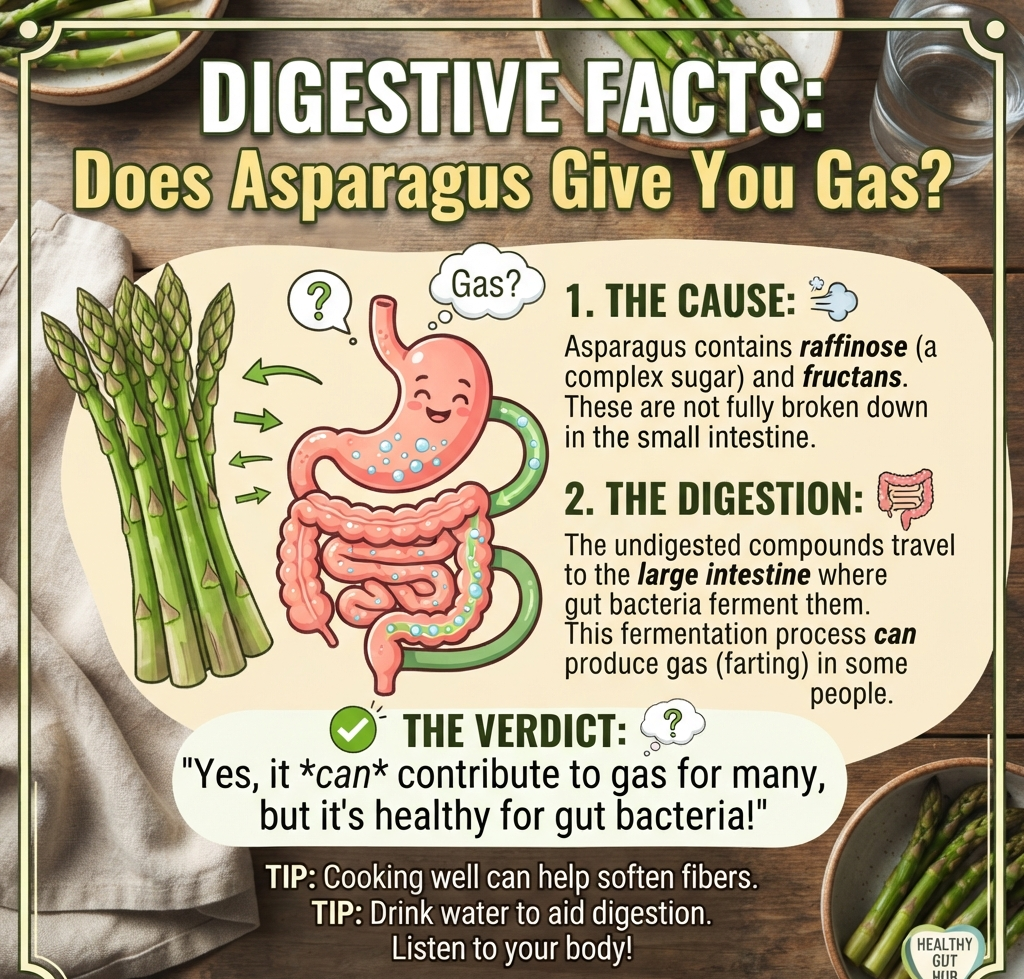
Asking does asparagus give you gas is common when bloating or abdominal pressure strikes after a healthy vegetable meal. Because asparagus contains specific fermentable carbohydrates and sulfur compounds, eating large portions can temporarily increase intestinal gas in sensitive digestive tracts.
Key Facts About Asparagus and Digestion
-
Raffinose content: Asparagus contains raffinose, a complex trisaccharide sugar that human small intestines cannot fully break down because we lack the necessary alpha-galactosidase enzyme.
-
Colonic fermentation: When undigested raffinose reaches the large intestine, beneficial gut bacteria ferment it, releasing hydrogen, carbon dioxide, and methane gases.
-
High insoluble and soluble fiber: A single cup of cooked asparagus provides nearly three grams of dietary fiber, which supports regularity but can trigger temporary bloating if increased too quickly.
-
Sulfur compounds: Asparagusic acid and other sulfur-containing compounds break down during digestion, sometimes giving intestinal gas—and urine—a noticeable odor.
Practical Actions to Eat Asparagus Without Bloating
-
Cook asparagus thoroughly: Steaming, roasting, or sautéing asparagus softens tough plant fibers and breaks down complex sugars, making it far easier to digest than raw spears.
-
Start with modest portions: Limit servings to four to six spears at a time so your gut bacteria can adapt gradually without producing excess gas.
-
Chew food slowly and thoroughly: Breaking down fibrous stalks completely in your mouth reduces swallowed air and eases digestive workload.
-
Drink plenty of water: Staying well-hydrated helps dietary fiber move smoothly through the colon without trapping gas pockets.
-
Take a gentle post-meal walk: Light physical movement for 10 to 15 minutes after eating stimulates natural intestinal contractions and helps release trapped gas.
Habits and Combinations to Avoid
-
Eating large amounts raw: Raw asparagus is dense in intact cellulose and raffinose, significantly increasing the likelihood of cramping and flatulence.
-
Pairing with multiple high-FODMAP foods: Combining asparagus with garlic, onions, beans, or broccoli in the same meal compounds fermentable carbohydrates.
-
Drinking carbonated beverages with meals: Sparkling water or soda adds extra swallowed gas on top of bacterial fermentation.
Warning Signs Requiring Medical Care
-
Severe, sharp abdominal pain: Intense or worsening belly pain that does not improve after passing gas or having a bowel movement requires prompt medical evaluation.
-
Persistent nausea or vomiting: Continuous vomiting paired with severe bloating and an inability to pass gas may indicate a bowel obstruction needing immediate care.
-
Bloody stools or unexplained weight loss: Rectal bleeding, black tarry stools, or ongoing digestive changes warrant urgent assessment by a healthcare provider.
-
High fever with abdominal tenderness: Fever alongside localized stomach pain signals potential infection or acute inflammation requiring emergency evaluation.
Cooking asparagus well and keeping portions moderate allows you to enjoy its vitamins and fiber with minimal digestive discomfort. If severe abdominal pain, persistent vomiting, or rectal bleeding occurs alongside bloating, seek immediate medical evaluation from trusted providers like ER of Fort Worth.

 English
 Arabic
 French
 Spanish
 Portuguese
 Deutsch
 Turkish
 Italiano
 Russian
 Romaian
 Portuguese (Brazil)
 Greek