


What Is the Most Effective Treatment for Granuloma Annulare?
How to treat granuloma annulare: Understanding the most effective options
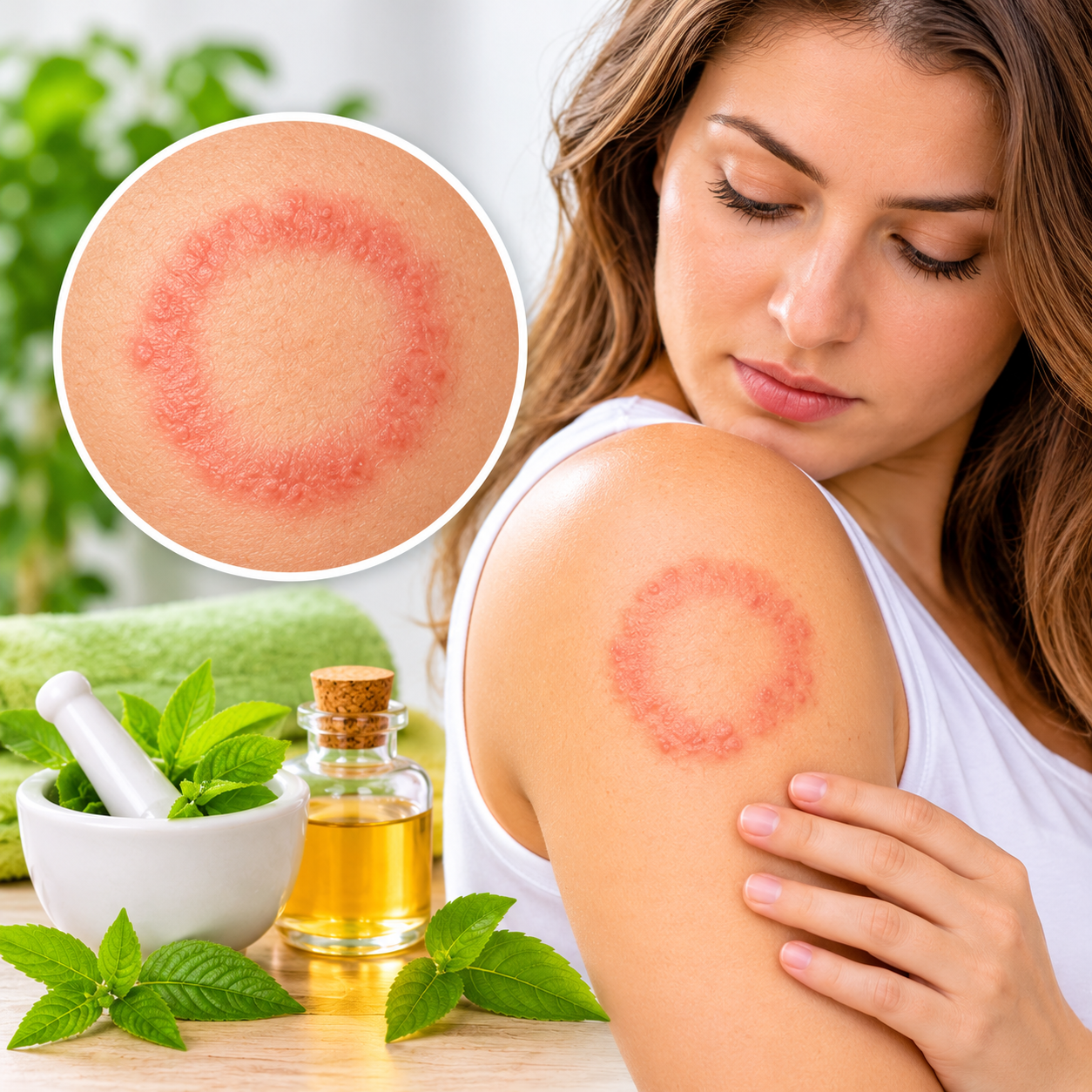
Granuloma annulare is a benign inflammatory skin condition that causes small, firm bumps arranged in circular or ring-shaped patterns. Although the rash can look concerning, it is generally harmless and is not contagious.
If you want to treat granuloma annulare, the most effective approach depends on whether the condition affects a small area or has spread across several parts of the body.
There is no single treatment that works for everyone. Many cases disappear naturally, while persistent or widespread lesions may respond to prescription creams, steroid injections, phototherapy, or specialist-prescribed medication.
Understanding the available treatments can help you make informed decisions with your dermatologist and avoid unnecessary or potentially harmful remedies.
What is granuloma annulare?
Granuloma annulare is a chronic inflammatory skin condition that develops when immune cells create small areas of inflammation within the skin.
The exact cause remains unknown. Researchers believe that certain immune responses, minor skin injuries, infections, or other triggers may contribute to its development in some individuals.
The condition commonly appears as:
-
Small, firm, skin-coloured or reddish bumps
-
Circular or ring-shaped patches
-
Smooth lesions without significant scaling
-
Rings on the hands, fingers, feet, ankles, or elbows
-
Occasionally, itching or mild discomfort
Granuloma annulare may affect children, adults, and older individuals. It can occur in otherwise healthy people.
There are several forms, including localized, generalized, subcutaneous, and perforating granuloma annulare. The localized form is the most common and usually affects a limited area.
What is the most effective treatment for granuloma annulare?
The most effective treatment depends on the type, severity, location, and duration of the condition.
For a few persistent lesions, dermatologists commonly consider topical corticosteroids or corticosteroid injections. For widespread disease, phototherapy or prescription medicines may be considered.
However, treatment is not always necessary. Many people improve without medication.
The American Academy of Dermatology explains that treatment decisions depend on the extent of the rash, symptoms, and how much it affects a person's quality of life.
1. Topical corticosteroid creams
Topical corticosteroids are often considered for localized granuloma annulare.
These prescription creams or ointments reduce inflammation in the affected skin. A dermatologist may recommend a potent corticosteroid for a limited period, depending on the location and thickness of the lesions.
They may be particularly useful when:
-
The rash affects a small area
-
Lesions are raised or persistent
-
The appearance causes distress
-
The skin is mildly itchy or irritated
Treatment should follow medical instructions. Using strong steroid creams for too long can cause skin thinning, visible blood vessels, stretch marks, or changes in skin colour.
Steroids should be used especially cautiously on the face, eyelids, groin, and other sensitive areas.
2. Corticosteroid injections
For individual raised rings or persistent patches, a dermatologist may inject a corticosteroid directly into the affected area.
This treatment delivers anti-inflammatory medication into the lesion and may help flatten the bumps or reduce their appearance.
A dermatologist may choose injections when topical medication has not produced sufficient improvement.
Possible side effects include temporary discomfort, skin thinning, or a small depression in the treated area. The treatment is generally reserved for selected lesions rather than large areas of skin.
3. Cryotherapy
Cryotherapy involves freezing a skin lesion with liquid nitrogen.
The procedure may be considered for small, localized patches that have not improved with other treatments.
Freezing can destroy the affected tissue and sometimes helps the lesion disappear. However, it may also cause blistering, temporary discomfort, pigment changes, or permanent scarring.
Because granuloma annulare can occur on visible areas such as the hands, cryotherapy should be performed by a trained healthcare professional.
4. Phototherapy for widespread granuloma annulare
Phototherapy uses controlled ultraviolet light to reduce inflammation in the skin.
It may be recommended when lesions affect large areas of the body or when localized treatments are not practical.
Some dermatologists use PUVA therapy, which combines a light-sensitizing medication called psoralen with UVA exposure. Other forms of ultraviolet treatment, including UVA1, may also be considered.
Phototherapy usually requires multiple supervised sessions. Improvement may take several weeks or months.
Potential risks include skin irritation, sun sensitivity, and cumulative ultraviolet exposure. The dermatologist will determine whether the expected benefits outweigh these risks.
5. Prescription oral medications
For severe or generalized disease, a dermatologist may consider medication taken by mouth.
One option is hydroxychloroquine, a medicine originally developed to treat malaria but also used for certain inflammatory and autoimmune conditions.
Other medicines sometimes considered for difficult cases include:
-
Dapsone
-
Methotrexate
-
Isotretinoin
-
Oral corticosteroids
-
Selected immune-modulating medications
These treatments are not suitable for everyone. Some require blood tests, eye examinations, or monitoring for serious side effects.
A 2025 systematic review of generalized granuloma annulare described several treatment approaches, including hydroxychloroquine and phototherapy, while emphasizing that evidence remains limited and responses vary.
Can granuloma annulare disappear without treatment?
Yes. Many cases resolve naturally without prescription medication.
Localized granuloma annulare often disappears within months or a few years. Some lesions may remain longer, particularly when the condition is widespread.
The rash may also return after it clears. Recurrence does not necessarily mean that the original treatment failed.
For people with a few harmless lesions, observation may be the safest and most reasonable option.
A dermatologist may recommend monitoring rather than treatment when:
-
The diagnosis is clear
-
The lesions are not painful
-
The rash is limited to a small area
-
The condition does not affect daily activities
-
Treatment risks outweigh the expected benefits
What natural approaches may help granuloma annulare?
Many people prefer gentle skin care and natural approaches before considering prescription medication.
However, there is currently no reliable evidence that a particular home remedy can cure granuloma annulare or consistently make it disappear faster.
Gentle skin care
A simple skin-care routine may help reduce irritation and support the skin barrier.
Consider the following practical steps:
-
Use a mild, fragrance-free cleanser.
-
Apply a gentle moisturizer after bathing.
-
Avoid very hot showers.
-
Wear comfortable clothing that does not rub the affected areas.
-
Avoid scratching, picking, or squeezing the bumps.
These measures may improve comfort, but they should not be considered a direct treatment for the underlying inflammation.
Herbal and complementary approaches
Some people explore Herbal Supplements for Granuloma Annulare because they hope to support skin health or reduce inflammation.
However, herbal supplements have not been established as an effective treatment for this condition. Evidence from studies of other inflammatory skin diseases cannot automatically be applied to granuloma annulare.
Before taking any supplement, discuss it with your healthcare professional, especially if you use prescription medication, have a chronic illness, or are pregnant or breastfeeding.
Supplements may cause allergic reactions, interact with medicines, or contain ingredients that are not suitable for everyone.
Diet and lifestyle considerations
There is no specific diet proven to eliminate granuloma annulare.
A balanced eating pattern that includes vegetables, fruits, whole grains, protein, and healthy fats supports general health. However, restrictive diets or eliminating entire food groups are not recommended solely because of this skin condition.
Some studies have explored possible associations between granuloma annulare and diabetes or abnormal blood lipids. These associations do not mean that every person with the condition has an underlying metabolic disorder.
If you have symptoms of diabetes or other health concerns, your clinician can decide whether appropriate testing is needed.
Choosing trustworthy skin-care information
When researching Herbal Care Products or other complementary skin-care options, look for transparent ingredient lists and avoid claims of guaranteed cures.
A product marketed as natural is not automatically safe or effective. Avoid applying concentrated essential oils, acidic substances, or irritating preparations directly to lesions without medical advice.
Natural skin care should complement appropriate medical assessment rather than replace it.
How is granuloma annulare diagnosed?
A dermatologist can often recognize granuloma annulare by examining the appearance and distribution of the lesions.
The condition may sometimes resemble other skin problems, including ringworm, eczema, psoriasis, or other inflammatory disorders.
If the diagnosis is uncertain, the dermatologist may recommend a skin biopsy. This involves removing a small sample of skin for examination under a microscope.
A biopsy can help distinguish granuloma annulare from other conditions that require different treatments.
Do not assume (Granuloma Annulare Natural Treatment) that every ring-shaped rash is granuloma annulare. Ringworm is a fungal infection and generally requires antifungal treatment.
When should you see a dermatologist?
Arrange a medical assessment if you notice persistent ring-shaped bumps or patches that do not disappear within a few weeks.
You should seek professional advice if:
-
The rash is spreading rapidly.
-
Lesions are painful, bleeding, or ulcerated.
-
The affected area becomes warm or develops pus.
-
The rash affects your face or sensitive areas.
-
You are unsure whether the condition is granuloma annulare.
-
The appearance is affecting your confidence or quality of life.
A dermatologist can confirm the diagnosis and explain whether observation or active treatment is appropriate.
Frequently asked questions
Can granuloma annulare be cured permanently?
There is no guaranteed permanent cure. Many cases clear naturally, but the condition can return months or years later.
How long does granuloma annulare take to disappear?
Some lesions disappear within a few months, while others remain for several years. Generalized disease may be more persistent than localized disease.
Is granuloma annulare contagious?
No. Granuloma annulare is not an infectious disease and cannot spread from one person to another through touching, sharing clothing, or ordinary contact.
Can I treat granuloma annulare at home?
Home care can help keep the skin comfortable, but it cannot reliably eliminate the condition. Gentle cleansing, moisturizing, and avoiding irritation are reasonable supportive measures.
Does granuloma annulare mean I have diabetes?
Not necessarily. Some studies have reported an association between granuloma annulare and diabetes, particularly in certain groups, but the relationship is not fully understood. Your healthcare professional can determine whether blood sugar testing is appropriate.
Should I use steroid cream without a prescription?
Do not use strong corticosteroid creams without medical guidance. The wrong strength or prolonged use may damage the skin, especially on sensitive areas.
Conclusion
The most effective approach to granuloma annulare depends on the extent of the rash, its symptoms, and how much it affects your daily life.
For localized lesions, dermatologists may recommend topical corticosteroids, steroid injections, or selected procedures. Widespread disease may require phototherapy or carefully monitored prescription medication.
Because many cases resolve naturally, observation is often appropriate when the condition is harmless and does not cause significant discomfort.
If you want to treat granuloma annulare, start by confirming the diagnosis with a qualified dermatologist. Avoid unproven remedies and focus on a treatment plan that balances potential benefits with safety.
Medical Disclaimer
This article is for educational and informational purposes only. It does not replace professional medical advice, diagnosis, or treatment. Always consult a qualified healthcare professional or dermatologist before starting, changing, or stopping any medication or supplement. Seek prompt medical attention if a skin lesion becomes painful, rapidly spreads, bleeds, or shows signs of infection.

 English
 Arabic
 French
 Spanish
 Portuguese
 Turkish
 Dutch
 Italiano
 Russian
 Romaian
 Portuguese (Brazil)
 Greek