


Outsource Bookkeeping: A Practical Choice for Growing UK Businesses
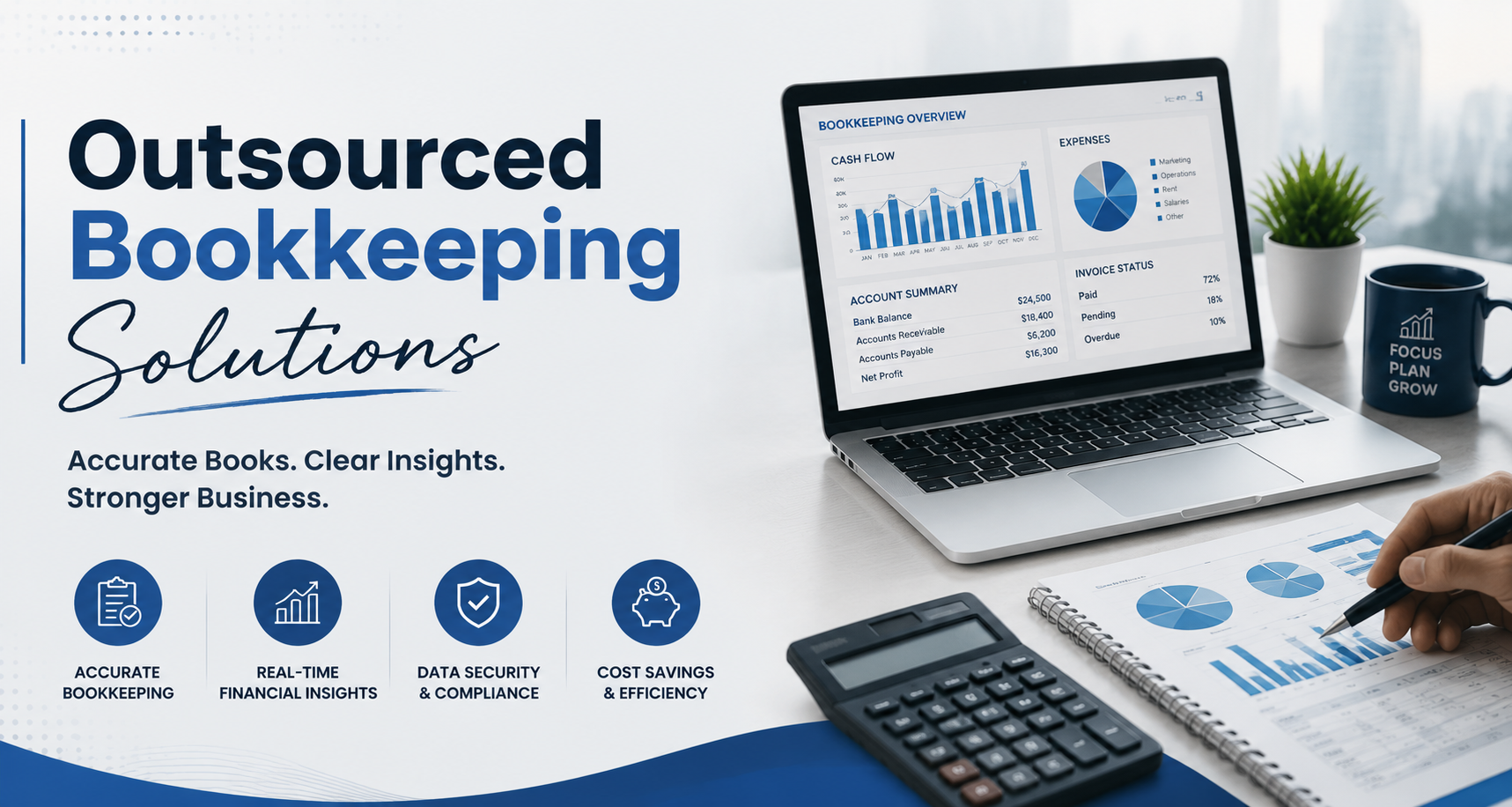
Managing the financial side of a business requires accuracy, consistency and plenty of time. For a small business owner, keeping track of invoices, expenses, payments and bank transactions can become difficult when there are also customers, employees and daily operations to manage. This is why many UK companies are considering Outsource Bookkeeping as a practical way to handle routine financial administration. By working with an external bookkeeping professional, businesses can keep their records organised, gain better financial visibility and reduce the pressure placed on owners or existing employees.
Why Bookkeeping Becomes Difficult as a Business Grows
Bookkeeping is often straightforward when a business is small. There may only be a handful of invoices, a few suppliers and a limited number of monthly transactions.
As the company grows, however, the situation changes.
More customers mean more sales invoices. More suppliers create additional purchase records. New employees may result in more expenses and financial administration. Subscription payments, online transactions and different payment methods can add another layer of complexity.
The business may still be using the same bookkeeping process it had when it first started, even though the workload has increased considerably.
Eventually, someone has to deal with the backlog.
For a business owner, that often means spending evenings or weekends catching up on accounts.
What Is Outsourced Bookkeeping?
Outsourced bookkeeping involves using an external professional or specialist company to manage agreed bookkeeping responsibilities for a business.
The level of support can vary.
A small company may only require monthly bookkeeping, while a business with a higher transaction volume may need weekly updates. Some businesses outsource their complete bookkeeping function, while others only delegate selected tasks.
Common responsibilities can include:
- Recording income and expenditure
- Bank reconciliation
- Processing invoices
- Recording expenses
- Maintaining sales ledgers
- Maintaining purchase ledgers
- Accounts receivable support
- Accounts payable support
- Supplier record management
- Customer balance monitoring
- Preparing regular bookkeeping information
The arrangement should reflect the actual needs of the business rather than forcing the company into a standard package.
The Main Benefits of Outsourcing
There are several reasons why UK businesses choose to use external bookkeeping support.
More Time for Business Owners
Time is one of the most valuable resources in a small business.
Every hour spent entering transactions or checking receipts is an hour that cannot be spent developing the business.
An external bookkeeper can handle routine financial tasks while the owner focuses on higher-value responsibilities.
This could include meeting customers, improving services, developing new products, managing employees or identifying opportunities for growth.
The owner remains involved in financial decisions without having to personally complete every administrative task.
More Consistent Financial Records
Bookkeeping becomes much easier to manage when it is performed regularly.
If transactions are recorded promptly, missing information can usually be identified sooner. Bank differences can be investigated while the transactions are still recent, and outstanding invoices are easier to monitor.
An outsourced provider can follow a defined bookkeeping schedule.
For example, the business may arrange weekly updates so that its records remain current throughout the year.
Another company may only need monthly support.
The important point is to establish a routine that prevents financial records from being neglected.
Better Understanding of Cash Flow
Cash flow is an important concern for UK businesses.
A company may generate healthy sales but still face financial pressure if customers take too long to pay.
At the same time, supplier invoices, rent, wages, software subscriptions and other costs continue to leave the business.
Regular bookkeeping gives management a clearer view of these movements.
For example, the records can show which customers have unpaid invoices and which expenses are due in the near future.
This information can help owners plan ahead rather than discovering cash flow problems after they have already become serious.
Access to Specialist Knowledge
Business owners are experts in their own industries, but that does not mean they want to become experts in bookkeeping.
A business owner may know everything about construction, consulting, retail, property or professional services while having limited experience with financial administration.
Working with an experienced bookkeeper provides access to someone whose primary responsibility is maintaining financial records.
This can be particularly valuable when transaction volumes increase or the business's financial processes become more complicated.
A Flexible Alternative to Hiring
Hiring an employee is not always the best solution.
A business may need bookkeeping support but not enough to justify a full-time position.
For example, a small consultancy might only have a few hours of bookkeeping work each week. Employing someone full-time could create unnecessary costs.
Outsourcing allows the company to obtain support according to its actual workload.
As the business grows, the level of bookkeeping assistance can potentially increase.
This flexibility can be particularly useful for start-ups and SMEs that are carefully managing their operating costs.
Supporting Business Growth
Growth creates additional administrative responsibilities.
When a company takes on new customers, opens another location or expands its product range, the volume of financial transactions usually increases.
Without a suitable bookkeeping process, growth can create an administrative bottleneck.
An external bookkeeping provider can help the business manage this increasing workload without requiring the owner to personally handle every additional transaction.
This allows management to concentrate on growth while the financial records continue to be maintained.
Bookkeeping and Digital Accounting Software
Technology has transformed the way businesses manage their finances.
Cloud accounting platforms allow authorised users to access financial information from different locations. This is particularly useful when the business owner and external bookkeeper work remotely.
Receipts and supporting documents can also be stored digitally, reducing reliance on physical paperwork.
Many accounting systems offer automation features that can assist with transaction matching, recurring entries and other routine activities.
However, automation should not replace human oversight.
Transactions still need to be reviewed and unusual items investigated. A combination of suitable software and professional bookkeeping knowledge can provide a more reliable process.
How Outsourcing Can Support Accountants
Many UK businesses already work with an accountant for tax returns, annual accounts and financial advice.
The accountant needs accurate underlying records to perform their work efficiently.
When bookkeeping is completed throughout the year, there may be fewer missing invoices, unexplained transactions or incomplete records to resolve.
An outsourced bookkeeper can work alongside the company's accountant, provided both parties understand their responsibilities.
This can create a smoother financial workflow.
The bookkeeper focuses on maintaining the records, while the accountant can concentrate on wider accounting, tax and advisory responsibilities.
What Businesses Should Look for in a Bookkeeping Provider
Choosing the right provider is important because bookkeeping involves sensitive financial information.
Price should not be the only consideration.
Businesses should also look at experience, communication, technology and the scope of services.
Before choosing a provider, consider asking:
- What services are included?
- How frequently will the books be updated?
- Which accounting software do you support?
- Who will manage the account?
- How are financial documents shared?
- How is confidential information protected?
- Can the service scale as the business grows?
- Can you work with our existing accountant?
- Are there additional charges for work outside the agreed scope?
Clear answers to these questions can help prevent misunderstandings later.
Preparing for the Handover
Moving bookkeeping to an external provider does not have to be complicated.
Start by gathering the current financial information.
This may include:
- Bank statements
- Sales invoices
- Purchase invoices
- Expense receipts
- Supplier details
- Customer information
- Existing accounting records
- Previous bookkeeping reports
It is also helpful to identify any transactions that have not yet been reconciled.
The provider should understand how the business operates, including recurring payments, common expenses and customer payment processes.
A clear handover gives the bookkeeper a better understanding of the business and provides a stronger starting point.
How Often Should Bookkeeping Be Completed?
There is no single answer for every business.
Monthly bookkeeping may be sufficient for a small business with relatively few transactions.
Weekly bookkeeping can be more appropriate for a company with frequent sales, numerous suppliers or a higher volume of financial activity.
The decision should also depend on how often management needs financial information.
If the owner relies on current figures to make decisions, more frequent bookkeeping may provide greater value.
Signs Your Business May Need Outsourced Bookkeeping
Sometimes the need for external support becomes obvious.
You may want to consider outsourcing if:
- Bookkeeping is regularly falling behind.
- You are working on accounts outside normal business hours.
- Bank reconciliation takes too long.
- Customer invoices are not being monitored properly.
- Receipts and financial documents are difficult to organise.
- Employees are spending too much time on bookkeeping.
- Your transaction volume has increased significantly.
- You need professional support but do not need a full-time employee.
These signs do not necessarily mean outsourcing is the only solution, but they suggest that the current arrangement may need reviewing.
Keeping Control of Your Finances
Outsourcing bookkeeping does not mean giving up control.
The business owner should still have access to financial records and understand the company's overall financial position.
The external provider handles the agreed administrative responsibilities, while management continues to make decisions about spending, investment, hiring and growth.
Regular reports and clear communication can help maintain this balance.
A good bookkeeping arrangement should make the finances easier to understand rather than making them feel more complicated.
Final Thoughts
Bookkeeping is one of those business responsibilities that cannot simply be ignored. Financial records need to be accurate, organised and maintained throughout the year.
For many UK businesses, outsourcing provides a practical way to achieve this without placing the entire workload on the owner or creating a full-time internal position.
Whether you are running a start-up, managing a growing SME or simply finding that bookkeeping is taking too much of your time, external support may provide the flexibility you need.
The right provider can help maintain financial records, improve cash flow visibility, support collaboration with accountants and reduce routine administration.
Most importantly, outsourcing allows business owners to focus on running their companies rather than constantly catching up with paperwork.

 English
 French
 Spanish
 Portuguese
 Deutsch
 Turkish
 Dutch
Dutch
 Italiano
 Russian
 Romaian
 Portuguese (Brazil)
 Greek
Greek