


The Complete Fitness App Development Timeline for Startups: From Idea to Launch
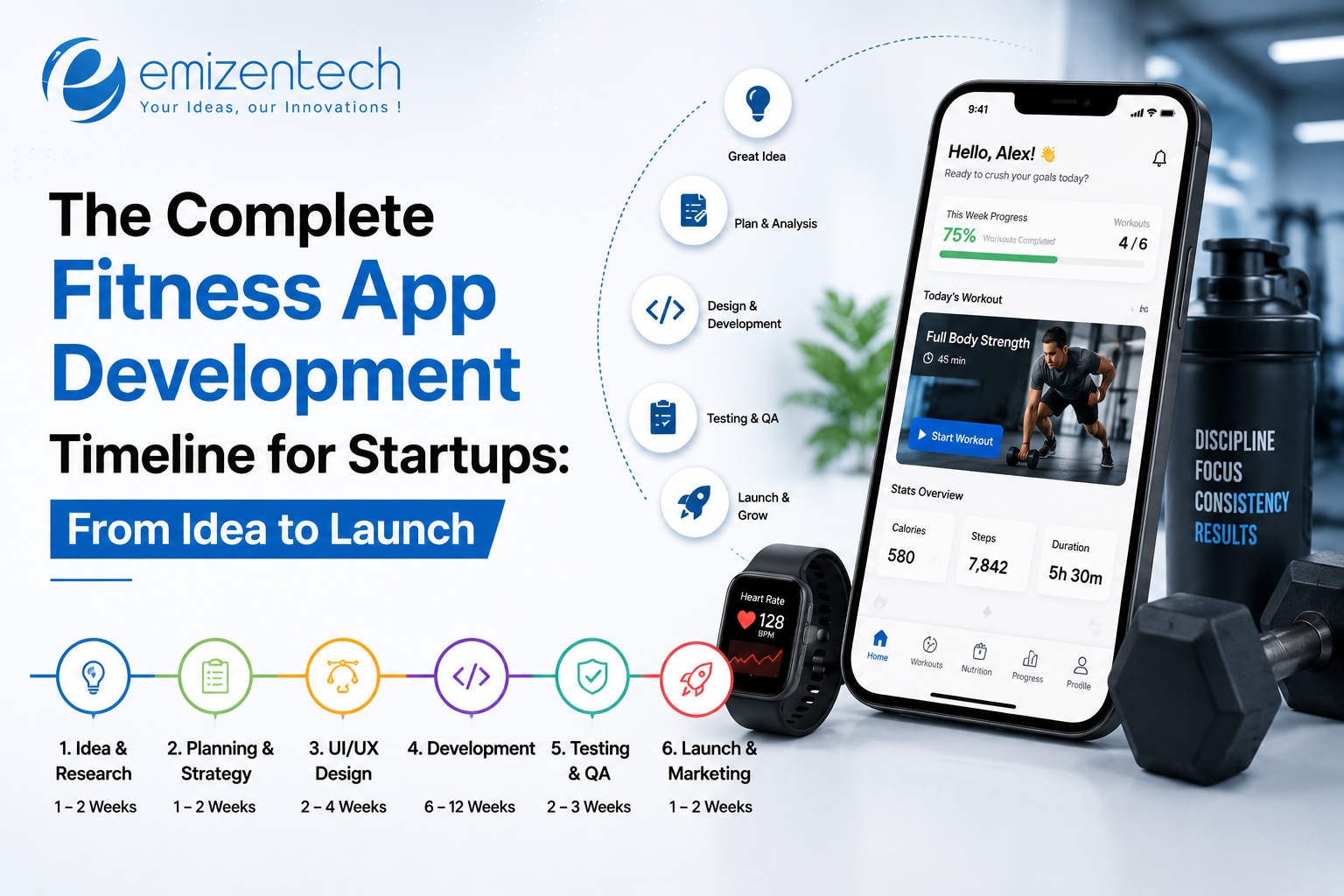
The fitness app market continues to expand as more people rely on digital solutions to track workouts, monitor health metrics, and maintain active lifestyles. For startups entering this space, understanding the development timeline is essential before allocating budgets and resources. While many founders expect an app to be built within a few weeks, the reality is that successful products require careful planning, design, development, testing, and launch preparation. This guide explains the complete journey from idea validation to launch and highlights the stages that influence project timelines.
Why the Fitness App Development Timeline Matters
A well-defined timeline helps startups make informed decisions throughout the development process. It provides clarity on project milestones, resource allocation, and expected outcomes. Without a realistic schedule, teams may encounter delays, rising costs, and shifting priorities.
Understanding the timeline also helps stakeholders align business goals with technical requirements. For example, a startup planning to launch before a major fitness event or seasonal campaign needs sufficient time for testing and app store approvals. A structured timeline reduces uncertainty and creates a more predictable path from concept to market.
What Shapes Your Fitness App Development Timeline?
Several factors influence how quickly or slowly a fitness application moves from planning to launch.
-
App Complexity: A simple workout tracker can be developed faster than an AI-powered platform with personalised recommendations, social features, and wearable integrations.
-
Platform Choice: Building separate native applications for iOS and Android often requires more time than using a cross-platform framework.
-
Design Requirements: Custom interfaces, animations, and interactive experiences increase design and development effort compared to standard layouts.
-
Third-Party Integrations: Connecting wearables, payment gateways, video streaming tools, or health data platforms adds implementation and testing time.
-
Development Team Structure: In-house teams, outsourced developers, and dedicated project teams all operate at different speeds depending on experience, communication, and project management practices.
Fitness App Development Timeline: Phase-by-Phase Breakdown
Most startup fitness apps follow a structured development process that spans several months. While exact timelines vary, the following phases represent a realistic roadmap for turning an idea into a market-ready application.
Phase 1 — Idea Validation and Planning
The first phase focuses on understanding the target market and defining the app's purpose. Teams conduct competitor research, analyze user needs, and identify opportunities that existing fitness applications may not address.
During this stage, startups also define business goals and prioritise MVP features. Instead of attempting to launch every possible feature, successful startups focus on delivering the most valuable functionality first. The result is a clear product roadmap and a documented set of requirements.
Phase 2 — Strategy and Product Architecture
Once the concept is validated, attention shifts toward technical planning. Teams map user journeys, create wireframes, and establish information architecture to ensure a logical user experience.
Technical decisions are also made during this stage, including technology stack selection, database structure, API requirements, and security planning. These foundational choices have a significant impact on future scalability and performance.
Phase 3 — UI/UX Design
Design transforms ideas into visual experiences. Designers create user interfaces, define branding elements, and build design systems that maintain consistency across screens.
Interactive prototypes allow stakeholders and test users to experience the app before development begins. Feedback gathered during usability testing helps identify friction points early, reducing costly revisions later in the project.
Phase 4 — Fitness App Development
This is typically the longest phase of the project. Backend developers build authentication systems, databases, workout management modules, and nutrition tracking capabilities.
Frontend developers simultaneously create dashboards, workout screens, progress reports, and user profile sections. Core integrations such as wearable connectivity, push notifications, and subscription management are also implemented.
As development progresses, technical complexity increases due to multiple integrations, performance requirements, and evolving feature sets. An experienced fitness app development company can help manage these challenges through structured workflows, efficient development practices, and effective coordination across project teams.
Phase 5 — Testing and QA
Testing ensures the application performs reliably across devices and usage scenarios. Functional testing verifies that features operate correctly, while performance testing evaluates speed and stability.
Security reviews are particularly important for fitness apps that store personal health and activity information. Beta testing with real users provides valuable feedback before public release and helps identify issues that internal teams may overlook.
Phase 6 — Launch Preparation
Before publication, teams prepare app store assets, screenshots, descriptions, and compliance documentation. Marketing plans and user acquisition strategies are also finalised during this stage.
Analytics tools are configured to track user behaviour after launch, allowing startups to measure engagement, retention, and feature usage from day one.
Phase 7 — Launch and Post-Launch Growth
Launching the app is only the beginning. Teams monitor performance, address user feedback, and release updates based on real-world usage patterns.
Post-launch optimisation often includes improving onboarding experiences, refining features, and introducing enhancements that support long-term growth. Successful fitness apps evolve continuously as user expectations and market trends change.
Typical Fitness App Development Timelines by App Type
Development timelines vary depending on the scope and functionality of the application.
-
Basic Fitness Tracking App (3–4 Months): Includes workout logging, profile management, and activity tracking features.
-
Workout and Nutrition App (4–6 Months): Combines fitness tracking with meal planning, calorie monitoring, and personalized recommendations.
-
Personal Trainer Marketplace App (5–7 Months): Includes booking systems, trainer profiles, messaging tools, and payment processing.
-
AI-Powered Fitness App (6–9 Months): Uses machine learning for personalised workout plans, progress analysis, and smart recommendations.
-
Enterprise Fitness Platform (9–12+ Months): Supports large-scale operations, advanced integrations, analytics dashboards, and multi-user environments.
Many of these projects also involve elements of fitness mobile app development, especially when businesses want seamless experiences across smartphones, tablets, and connected devices.
Common Mistakes That Delay Fitness App Development
Avoiding common mistakes can help startups stay on schedule and within budget.
-
Unclear Requirements: Ambiguous goals often lead to repeated revisions and development delays.
-
Feature Overload Before Launch: Attempting to build every feature at once increases complexity and extends timelines.
-
Ignoring User Feedback: Skipping validation can result in products that fail to meet user expectations.
-
Poor Technology Selection: Choosing unsuitable tools or frameworks may create technical limitations later.
-
Inadequate Testing: Releasing an app without thorough testing often leads to bugs, negative reviews, and emergency fixes after launch.
How to Accelerate Fitness App Development Without Sacrificing Quality
Several practical strategies can shorten development timelines while maintaining product quality.
Build an MVP First
Launching with a focused set of core features allows startups to enter the market faster, gather user feedback, and validate assumptions before investing in advanced functionality.
Prioritize High-Impact Features
Identifying features that deliver the greatest user value helps development teams concentrate resources where they matter most instead of spreading efforts across low-priority additions.
Use Cross-Platform Frameworks
Modern cross-platform technologies enable teams to build applications for multiple operating systems using shared codebases, reducing development effort and simplifying future maintenance.
Follow Agile Development Practices
Agile workflows encourage continuous collaboration, frequent testing, and iterative improvements, helping teams identify challenges early and adapt efficiently throughout the project lifecycle.
Establish Clear Communication
Consistent communication among designers, developers, stakeholders, and testers minimises misunderstandings, reduces rework, and keeps projects aligned with defined objectives and timelines.
Conclusion
Building a fitness app involves far more than coding screens and publishing an application. From idea validation and architecture planning to design, development, testing, and post-launch optimisation, each phase contributes to the overall success of the product. EmizenTech views structured planning and phased development as important elements of building scalable fitness applications. While timelines vary depending on complexity and business objectives, startups that follow a structured approach are better positioned to launch efficiently, adapt to user needs, and support long-term growth.
Frequently Asked Questions
1. How long does it take to build a fitness app?
Most fitness applications take between three and nine months to develop, depending on features, integrations, and overall complexity.
2. What is the average fitness app development timeline?
A typical startup fitness app generally requires four to six months from planning to launch.
3. What factors can extend a fitness app development project?
Complex features, changing requirements, integration challenges, and extensive testing requirements can increase development timelines.
4. Can startups launch a fitness app in under 4 months?
Yes, startups can launch a basic MVP within four months if requirements are clearly defined and development remains focused.
5. Does cross-platform development reduce development time?
In many cases, cross-platform frameworks help reduce development time by allowing teams to share code across multiple platforms.

 Arabic
 French
 Spanish
 Portuguese
 Deutsch
 Turkish
 Dutch
Dutch
 Italiano
 Russian
 Romaian
 Portuguese (Brazil)
 Greek
Greek