


How Do Tight Tolerances Influence Component Performance in Industrial Systems?
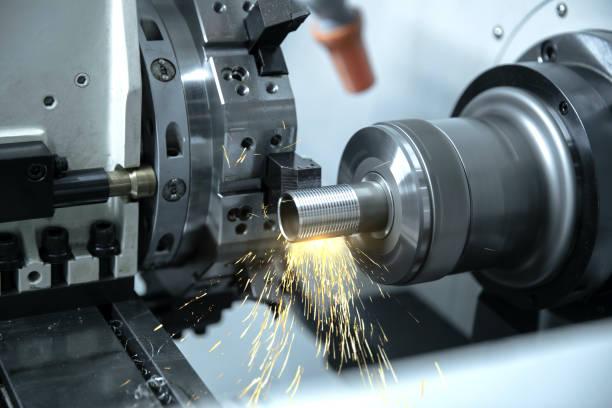
Industrial machinery relies on hundreds - sometimes thousands - of discrete parts working in harmony, without excess movement or friction. That dimensional discrepancy may seem insignificant when compared to a drawing, but in our industry, those discrepancies can spell trouble, and if you're a component manufacturer, being precision- and quality-focused is key, and working with Swiss turned components suppliers is one way to achieve that level of dimensional accuracy. Close tolerances ensure parts fit together tightly, move as expected, and support the loads placed on them. The bottom line is, the performance of industrial machines isn't just dictated by high-quality materials and equipment; it's also about paying attention to the minutiae, because every little detail adds up.
Understanding Tight Tolerances in Component Manufacturing
Tight tolerances refer to the degree to which the acceptable variation is limited for the dimensions of a manufactured component. All machined items are required to be within specified dimensions or measurements; however, these measurements can be difficult to maintain. Take, for example, a shaft that is required to be inserted in a bearing with a minimum amount of clearance; not enough clearance and the shaft is hard to insert and higher friction levels occur, and too much clearance and the shaft will rattle around inside of the bearing and produce a very different set of problems. How tight? Manufacturers achieve tight tolerance manufacturing via the use of high precision machining, high-accuracy measuring systems, and carefully controlled manufacturing processes, but that doesn't necessarily mean that tighter is always better.
How Dimensional Accuracy Enhances Mechanical Performance
Mechanical systems are often more reliable when the parts that slide together are made with tight tolerances. When the dimensions are accurate, the mechanical systems tend to run more efficiently because the moving parts stay in proper position, there's less vibration, and the parts don't rub against each other unnecessarily. Think about a rotating shaft inside a piece of equipment such as an industrial pump or a machine in a production line. When the dimensions of the machined parts aren't consistent, you can sometimes have a slight difference in where the shaft is in relation to the surrounding equipment. This small difference over time can cause the parts to rub together more than they should, wearing out the parts faster. Good dimension control helps prevent those problems.
Lower Friction, Wear and Early Component Failure
Friction is one of those things that even the best equipment makers can't get rid of but can certainly control. Components that are poorly matched up can lead to excess contact, heat, and surface damage. Things can heat up faster than you expect at high-speed industrial operations. Tight tolerances keep the proper distance between parts so that bearings, shafts, bushings, and other moving parts can do their jobs. Surface finish matters here, too. Two parts can be machined to meet the dimensional requirements while suffering from excessive friction if their surface conditions are less than optimal. That's why precision machining is about more than getting the right diameter or length; it's about heat treatment, hardness, surface roughness, lubrication, and operating temperature. Treat all of these factors correctly, and a piece can last much longer, but ignore them, and the thing you think is precisely machined may break early.
The Importance of Tight Tolerances for Reliability of Industrial Systems
Reliability is critically important in fields where equipment downtime drives loss of production, labor, and the requirements of additional contractual obligations. The smallest, worst-fit part in an assembly line can jam the entire process. Where an obvious problem exists - such as a part that doesn't fit - it is clear what the issue is. But more often the failure occurs incrementally over time - through such means as vibration, oil or water leaks, rapid temperature changes, or vibration-inducing equipment. Tighter tolerances are one means of managing dimensional variations that cause failures; they also help with replacement and maintenance, reducing the amount of fine-tuning and re-fitting required because parts made to the same specifications will more likely fit the same assembly or structure. This is especially critical to equipment manufacturers who make a product for which they know how it will be used and believe should be the same from batch to batch. But tolerances are only one aspect of reliability - material selection, heat treatment, quality assurance, and maintenance are also essential considerations.
Why Precise Tolerances are Important for High-Speed and Complex Uses
Today's industrial plants tend to be faster and more demanding than they were in the past. So the components inside them are subject to more stress. High-speed spinning systems, pneumatic and hydraulic equipment, and automated machinery all require precise dimensions for maximum performance. If a component's dimension differs just a little from the specs, it may not spin as freely or run as smoothly. If the machine is complex enough, it may even affect the locations of other parts. It's a challenge for precision turning and sophisticated CNC machining, because manufacturers want to control the size and shape of every tiny piece, but make it in a way where it can be duplicated across a lot of parts. And they want to be able to compact everything in a machine where there isn't a lot of space to go wrong. Because just a little bit of precision, sometimes, really does make a difference.
Quality Control And Inspection Help To Keep Manufacturing Consistent
Tight tolerances aren't everything. Manufacturers need to be able to check finished parts to be sure they meet specifications - either during or after production. This can be done with coordinate measuring machines, bore gauges, digital calipers, or micrometers, among many other tools. It really depends on how the part is designed and how tight the tolerances are. When it comes to machining, you can't beat real-time production monitoring. If your machine slowly develops tool wear, or if you have a heat spike or fluctuation during production, you can start to see dimensional changes across an entire run of parts. Not that fun to learn that a few hundred parts are out of spec. Regular inspection can help catch these issues before production gets too far along. Equipment like statistical process control can also be used to monitor any dimensional trends.
Managing Manufacturing Costs Alongside Accuracy Needs
It's true that tighter tolerances can lead to higher performance, but these too often come at the cost of the manufacturing process. Longer setup, specialized tooling, slower machining, and demanding inspection procedures can all add to manufacturing costs. For this reason, it's best for engineers not to specify tolerances too tight unless there is a good reason. For example, a component in a housing used to support a low load probably doesn't need to be dimensionally controlled to as tight a tolerance as a precision shaft inside a high-speed machine. The bottom line is: tolerances should relate to operating conditions. Consider load, temperature, vibration, movement, service life, and assembly requirements as you determine tolerance needs. An experienced Swiss CNC machine contract manufacturer should be able to manufacture complex turned parts consistently and economically, and working with manufacturing experts during early design iterations can often reveal features that are unnecessarily complex or expensive to produce.
Conclusion: Make Sure Your Tolerances are Right for Your Industrial Needs
In the world of industrial machinery, precision tolerances directly impact the fit, movement, stress behavior, and overall operation of individual machine components. They help prevent excessive vibration, ensure proper alignment, dictate the management of friction, and provide for reliable mechanical assemblies. Working with experienced Swiss CNC machine contract manufacturers can help engineers achieve the required dimensional accuracy and consistency while meeting specific production requirements. However, this doesn't mean that we should simply make every dimension perfect. The number of millimeters used in manufacturing should never be an overly expensive engineering hurdle that does not produce a defined performance improvement. Engineers must weigh the needs of a component and its function and define the perfect specifications for each part. Considerations such as quality of machining, material choices, inspection requirements, and communication between the engineer and manufacturer are what ultimately produce a high-quality industrial product.

 English
 Arabic
 French
 Spanish
 Portuguese
 Deutsch
 Turkish
 Dutch
 Italiano
 Russian
 Portuguese (Brazil)
 Greek