


Protein Purification Requirements Shape Laboratory Equipment Demand
Protein expression is a fundamental process in biotechnology that enables researchers and manufacturers to produce specific proteins using host cells or other biological systems. These proteins support a wide range of activities, including therapeutic development, vaccine research, drug discovery, diagnostics, and industrial biotechnology.
The growing use of biologics is increasing the importance of reliable protein production technologies. Monoclonal antibodies, recombinant hormones, enzymes, and other protein-based treatments require carefully controlled expression and purification processes. As pharmaceutical pipelines become more complex, biotechnology companies are investing in platforms that improve production yield, protein quality, and manufacturing consistency.
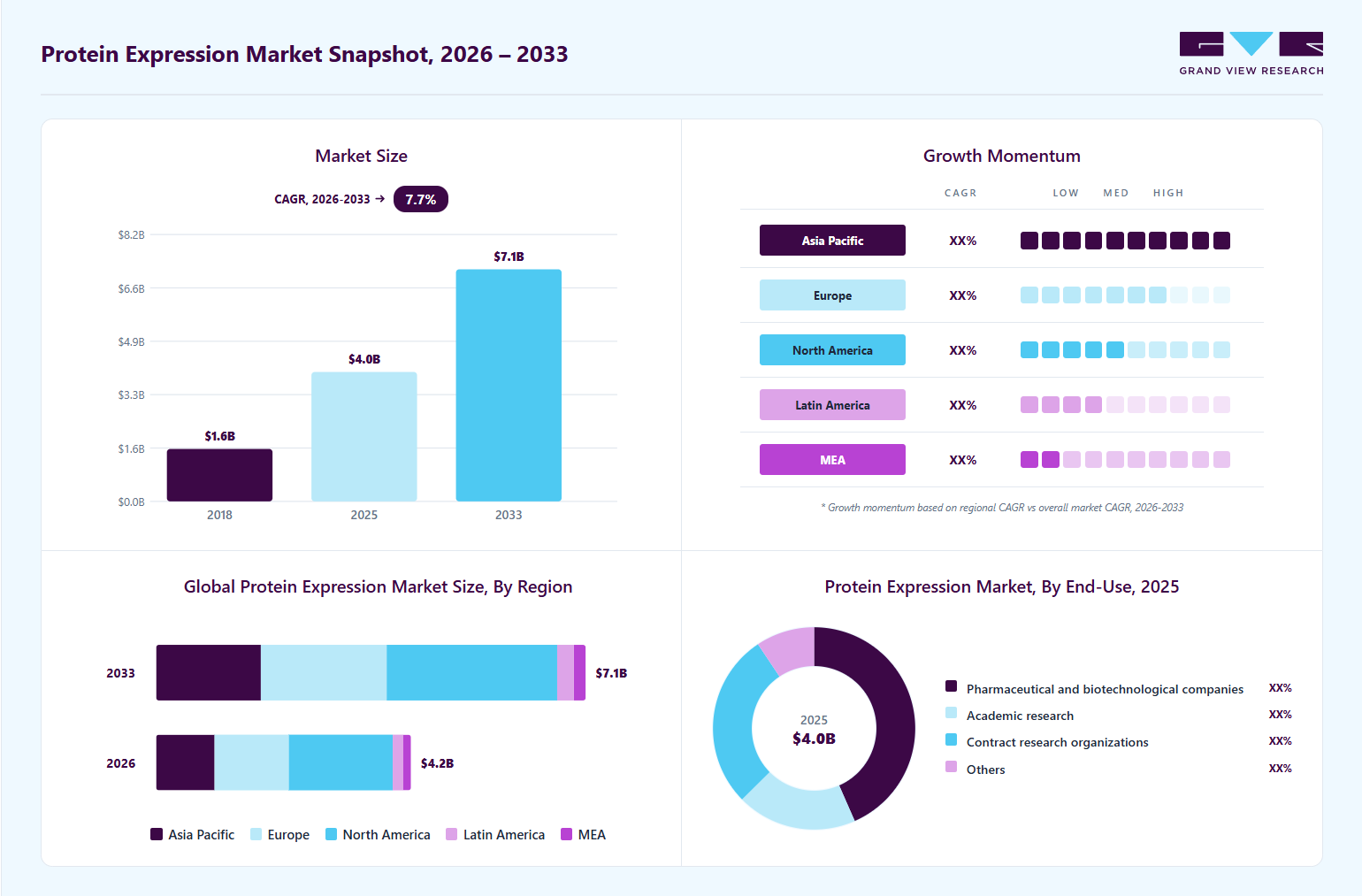
The global protein expression market was valued at USD 4.0 billion in 2025 and is projected to reach USD 7.1 billion by 2033, expanding at a CAGR of 7.7% from 2026 to 2033.
Go Deeper! Ask Prism AI about the Protein Expression Market.
Mammalian Systems Address Complex Protein Requirements
Mammalian cell expression systems accounted for 37.6% of market revenue in 2025, making them the leading expression system category. These platforms are widely used to produce therapeutic proteins that require complex folding and post-translational modifications. Their ability to generate proteins with characteristics closer to naturally occurring human proteins makes them particularly valuable in biopharmaceutical manufacturing.
Prokaryotic expression systems offer a different advantage. Bacterial hosts such as E. coli can support rapid protein production and are often less expensive to operate. They are useful for producing proteins that do not require complex post-translational modifications. Improvements in genetic engineering and synthetic biology are also helping researchers develop more controlled bacterial expression platforms.
Yeast and insect cell systems provide additional options for specific protein production requirements. Their suitability depends on the desired protein characteristics, production scale, and cost considerations. The availability of multiple expression platforms allows researchers to select systems according to the complexity and intended application of the target protein.
Request a Sample Report to Explore Detailed Market Insights and Industry Analysis.
Reagents Remain Essential Across the Production Workflow
Reagents represented 44.3% of market revenue in 2025, the largest share among product categories. These consumables are required throughout protein expression workflows, including cell culture, transfection, gene delivery, protein synthesis, and purification. Their recurring use in laboratory research and commercial production supports consistent demand.
Competent cells and expression vectors are also important components. Competent cells enable the introduction of genetic material into host organisms, while expression vectors carry the genetic instructions required for protein production. Instruments such as bioreactors, fermenters, and chromatography systems support controlled production and downstream processing.
The services segment is expected to grow rapidly as biotechnology and pharmaceutical organizations increasingly outsource specialized activities. External providers can support protein production, cell line development, vector design, purification, and process optimization. This approach can help organizations access technical expertise without establishing every capability internally.
Therapeutic Applications Lead Protein Expression Demand
Therapeutic applications accounted for 43.6% of market revenue in 2025. Protein expression technologies are central to developing monoclonal antibodies, recombinant proteins, vaccines, and other biologic treatments. These products can interact with specific biological targets and support treatment approaches for conditions such as cancer, autoimmune disorders, and metabolic diseases.
Research applications also contribute to demand through proteomics, structural biology, biomarker identification, and drug discovery. Industrial applications use expressed proteins such as enzymes in food processing, agriculture, manufacturing, and environmental technologies. These diverse uses broaden the market beyond pharmaceutical production.
Pharmaceutical Companies Drive End-Use Adoption
Pharmaceutical and biotechnological companies held 43.4% of market revenue in 2025. Their investment in biologics research, therapeutic development, and manufacturing capacity creates demand for expression systems, reagents, instruments, and specialized production services.
Contract research organizations (CROs) are expected to register the fastest growth among end-use segments. Outsourcing allows pharmaceutical and biotechnology companies to access specialized protein production capabilities, accelerate research activities, and manage operational costs. CROs also support preclinical development and customized protein production projects for organizations with varying technical requirements.
Academic research institutions remain important users of protein expression products, particularly for fundamental studies in molecular biology, genetics, and disease mechanisms.
Production Complexity Creates Technical and Cost Challenges
Despite growing adoption, protein expression involves technical challenges that can affect production efficiency. Protein folding, aggregation, low expression yields, and purification difficulties can increase development time and manufacturing expenses. Mammalian cell systems can be particularly resource-intensive because they require controlled culture conditions and extensive quality management.
Regulatory requirements add further complexity for therapeutic proteins. Manufacturers must maintain consistency across production batches, validate processes, and demonstrate product quality and safety. These requirements make process optimization and reliable analytical methods important throughout development and manufacturing.
FAQs
1. What is driving growth in the protein expression market?
Increasing demand for biologics, recombinant proteins, therapeutic antibodies, vaccines, and personalized treatments is driving market growth. Biotechnology research and outsourcing of protein production services are also supporting adoption.
2. Which segments hold the largest shares of the protein expression market?
Mammalian cell systems held 37.6% of revenue in 2025. Reagents accounted for 44.3%, therapeutic applications represented 43.6%, and pharmaceutical and biotechnological companies contributed 43.4% of market revenue.
Key Protein Expression Companies:
· Agilent Technologies, Inc.
· Bio-Rad Laboratories
· Thermo Fisher Scientific, Inc.
· Merck Millipore
· New England BioLabs, Inc.
· Promega Corporation
· QIAGEN
· Takara Bio, Inc.
· Oxford Expression Technologies
· Lucigen Corporation
About us:
Grand View Research, a market research and consulting company, provides syndicated research reports, customized research reports, and consulting services. Grand View Research database is used by the world's renowned academic institutions and Fortune 500 companies to understand the global and regional business environment. Our database features thousands of statistics and in-depth analysis on 46 industries in 25 major countries worldwide.

 English
 Arabic
 French
 Spanish
 Portuguese
 Deutsch
 Turkish
 Dutch
 Russian
 Romaian
 Portuguese (Brazil)
 Greek