


Internal Finance Controls: Why Strong Financial Processes Matter for Every Business
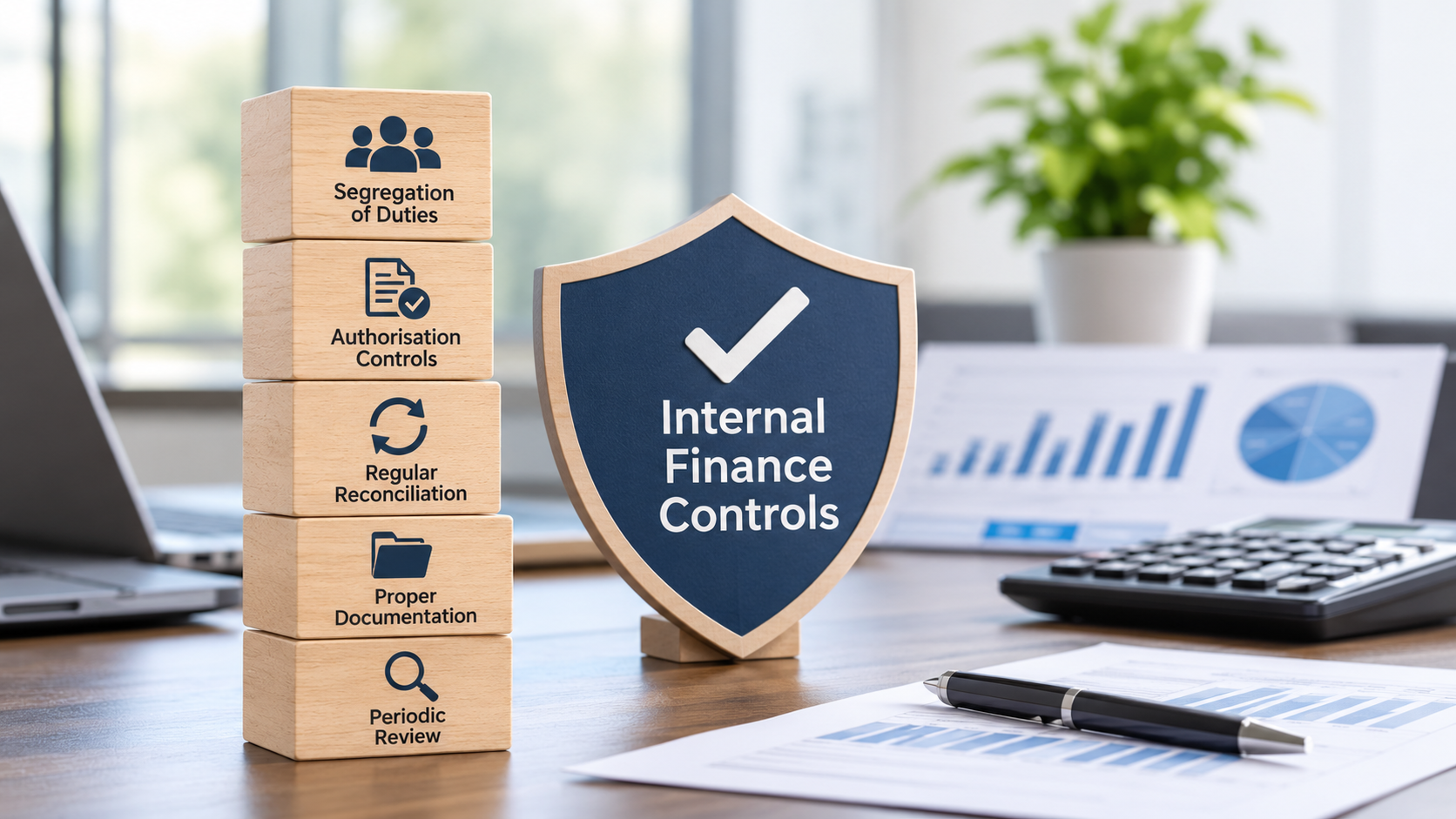
Every business depends on accurate financial information to make decisions, manage resources and plan for growth. However, maintaining financial accuracy becomes increasingly challenging as an organisation expands, handles more transactions and introduces new processes. Without proper checks and accountability, even small errors can develop into significant financial and operational problems.
This is where internal finance controls become important. They establish a structured approach to managing financial activities, protecting business assets and ensuring that financial information remains reliable.
What Are Internal Finance Controls?
Internal finance controls refer to the policies, procedures and checks an organisation puts in place to manage its financial operations. These controls help ensure that transactions are properly authorised, recorded accurately and reviewed at appropriate intervals.
For example, a company may require separate employees to approve payments, process transactions and reconcile bank statements. This division of responsibilities reduces the possibility of errors, unauthorised payments and financial irregularities.
The objective is not simply to monitor employees or introduce additional paperwork. It is to create a dependable financial environment where responsibilities are clear and potential problems can be identified early.
Why Do Businesses Need Strong Financial Controls?
As businesses grow, their financial processes naturally become more complicated. More vendors, employees, customers and transactions create additional areas that require attention.
Effective internal finance controls help organisations in several ways:
- Improved financial accuracy: Regular reconciliations and transaction reviews help identify discrepancies before they affect financial statements.
- Fraud and error prevention: Approval mechanisms and segregation of duties reduce opportunities for unauthorised activities.
- Better regulatory compliance: Documented procedures help businesses maintain financial records and meet applicable statutory requirements.
- Protection of business assets: Controls over cash, inventory, equipment and other resources reduce the risk of misuse or loss.
- Informed decision-making: Reliable financial information allows management to evaluate performance and plan future activities with greater confidence.
Key Elements of an Effective Internal Control Framework
A well-designed control framework should reflect the organisation's size, nature of operations and risk exposure. Some important elements include:
1. Segregation of Duties
Financial responsibilities should be distributed appropriately. For instance, the person approving a vendor payment should ideally be different from the person processing it.
2. Authorisation and Approval Procedures
Expenses, purchases and financial commitments should follow clearly defined approval limits. This creates accountability and reduces unauthorised transactions.
3. Regular Reconciliation
Bank accounts, vendor balances, customer accounts and other financial records should be reconciled periodically to identify inconsistencies.
4. Documentation and Record-Keeping
Maintaining supporting documents, approval records and financial trails makes transactions easier to verify and review.
5. Periodic Monitoring and Testing
Controls should be reviewed regularly to determine whether they are working as intended and remain relevant as business operations change.
The Role of Internal Controls in Financial Reporting
Internal controls are closely connected with the reliability of financial statements. In India, Internal Control over Financial Reporting (ICFR) is particularly relevant under the Companies Act, 2013, where applicable requirements address the adequacy and operating effectiveness of financial controls.
A structured ICFR framework considers financial reporting risks, control activities, documentation and periodic testing. It helps organisations identify weaknesses in reporting processes and address them through appropriate corrective measures.
J P Chawla & Co. LLP, through its work in audit, risk and assurance, engages with areas such as internal controls over financial reporting, control assessment and related documentation. Its approach reflects the importance of aligning financial processes with applicable regulatory requirements and the organisation's operational realities.
Making Financial Controls Part of Everyday Business
Internal finance controls should not exist only in policy documents or annual audit files. Their real value comes from consistent implementation. Employees should understand their responsibilities, management should review important financial processes, and control procedures should evolve as the organisation grows.
Ultimately, strong financial controls are not just about preventing financial mistakes. They create a culture of transparency, responsibility and informed decision-making. Businesses that pay attention to these fundamentals are better positioned to maintain reliable financial records and build sustainable financial discipline.

 English
 Arabic
 French
 Spanish
 Portuguese
 Deutsch
 Turkish
 Dutch
 Russian
 Romaian
 Portuguese (Brazil)
 Greek