


10 Game-Changing AI Use Cases Driving Healthcare Innovation in 2026
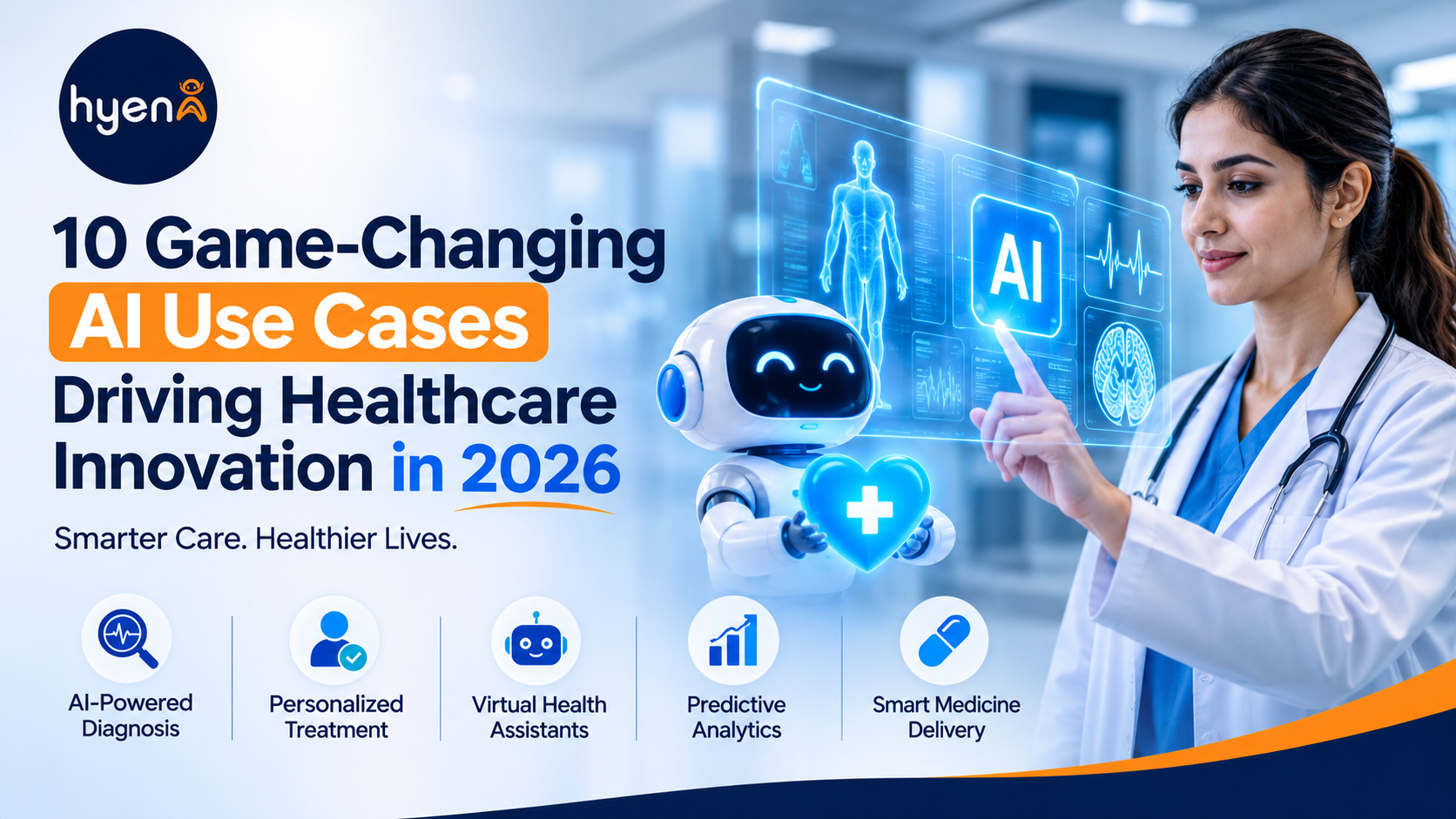
AI affects almost every industry and healthcare is no exception. The main focus of AI in healthcare is to facilitate and enhance the delivery of medical services. This includes diagnostics, monitoring, patient management and engagement, administration and many more.
1. AI-Powered Diagnostics
In medicine, time is often of the essence. The earlier an abnormality is detected and diagnosed, the greater the opportunity for the clinician to effect a more favorable outcome for the patient. AI systems are trained to analyze various types of data including clinical reports, medical images, and patient historical data to detect a possible health condition or condition.
For instance, in the field of imaging, AI can assist radiologists in detecting abnormalities in various types of imaging modalities including X-rays, CT, MRI, ultrasound, and nuclear imaging. Sometimes AI can even assist in detecting abnormalities in patient data where no obvious abnormality is present and help suggest a differential diagnosis.
2. Customized Treatment Recommendations
With the increasing availability of omics data and other biospecimens, AI can sift through a patient’s genomic, epigenomic, proteomic, metabolomic, microbiomic, and other data and biospecimens to provide clinicians with suggestions for optimized treatment and care for each individual patient.
For example, imagine that a patient wishes to have AI help them determine optimal glucose control based on their recent physical activity and diet.
3. AI-Powered Virtual Health Assistants
AI-powered virtual health assistants are found in many health applications and help to answer common health-related questions, schedule and reschedule appointments, provide reminders to take medications, and assist patients in navigating health processes.
For example, if a patient is unable to reach customer service to help find available doctors, or to explain their appointment instructions, they can instead use the AI chatbot to find the information.
Virtual health assistants must operate within defined safety constraints and should direct and/or refer patients to healthcare professionals when an urgent medical concern is expressed.
4. Predictive Analytics for Preventive Healthcare
What if hospitals and other health facilities were able to identify patients that are on the verge of requiring critical care?
Predictive analytics are used to analyze available health and medical records in an effort to identify potential health issues before they become critical.
5. AI for Medical Image Analysis
AI for medical image analysis, specifically for review of x-rays and other diagnostic imaging, has gained a strong foothold in the field of healthcare. Using deep learning algorithms, AI is trained to interpret medical images and help health professionals determine the presence of pathology.
In an operational setting, this technology can help prioritize the scans requiring most urgent attention and assist in other time consuming, repetitive analysis.
6. AI for Remote Patient Monitoring
Continuous monitoring of patient health, recovery, and condition via digital and connected devices is made possible with the usage of AI and healthcare applications integrated with other health and medical devices.
AI can help analyze data continuously collected from health and medical devices and assist in identifying potential health concerns.
7. AI in Online Medicine Delivery Apps
AI can speed up medicine ordering and delivery processes, assist in delivery route optimization and inventory forecasting, and offer customer support.
Online pharmacies combine various intelligent features in their apps to provide seamless ordering and delivery experiences for customers. Prescription upload, AI-powered search, payment, and tracking are some of the intelligent features offered by such apps.
Integration of AI and ML in medicine delivery and inventory systems will positively impact the Cost To Develop Online Medicine Delivery App.
8. AI in Drug Discovery and Development
Using AI to search, analyze, and interpret molecular structures is paving the way for the discovery of new medicines. New AI models help researchers assess treatment opportunities, although medicines finally reach end users only after extensive laboratory research, clinical trials, and the involvement of FDA/other regulatory bodies.
9. Automated Medical Documentation and Management
AI is simplifying the documentation process by converting clinical conversations to structured notes.
AI systems can assist in streamlining the numerous workflows in a hospital and interact with patients in an engaging manner.
The focus on simplifying documentation by AI systems will free up time for healthcare professionals to manage and take care of patients.
10. AI in Mental Wellness
AI in mental wellness applications provides users with emotion-based mood journals, relaxation exercises, and other mental wellness activities.
While these applications are not to replace mental health professionals, especially in cases of mental health emergencies, they can help address mental health concerns and emotions.
How Can Businesses Build AI-Powered Healthcare Applications?
To develop a reliable digital product from an AI-based healthcare idea, businesses must look at numerous factors including, but not limited to, the target audience, compliance with local laws and regulations, features and functionalities of the application, security of the data, and integration to existing healthcare systems and services.
The cost of developing a healthcare app is dependent on many factors including complexity of the app, the capabilities of AI being used, the platform on which it is built, third-party integrations, and many developmental requirements.
This is the reason having an experienced Mobile App Development Company is important.
With AI App Development and Mobile App Development services, Hyena Information Technologies offers business the opportunity to explore digital healthcare solutions. With the right development strategy, businesses can turn their ideas for AI-based healthcare platforms and apps to commercially viable solutions.
Conclusion
The use cases for AI in healthcare keeps growing. 2026 presents an opportunity to develop AI-based solutions focused on addressing problems related to healthcare.
For businesses looking to innovate in the field of healthcare, in collaboration with the right AI technology partner, the time is now.
To understand the available options and possibilities of AI for your business, book an executive AI briefing.

 English
 French
 Spanish
 Portuguese
 Deutsch
 Turkish
 Dutch
 Italiano
 Russian
 Romaian
 Portuguese (Brazil)
 Greek