


How Do Phosphor Bronze Products Support Precision Engineering
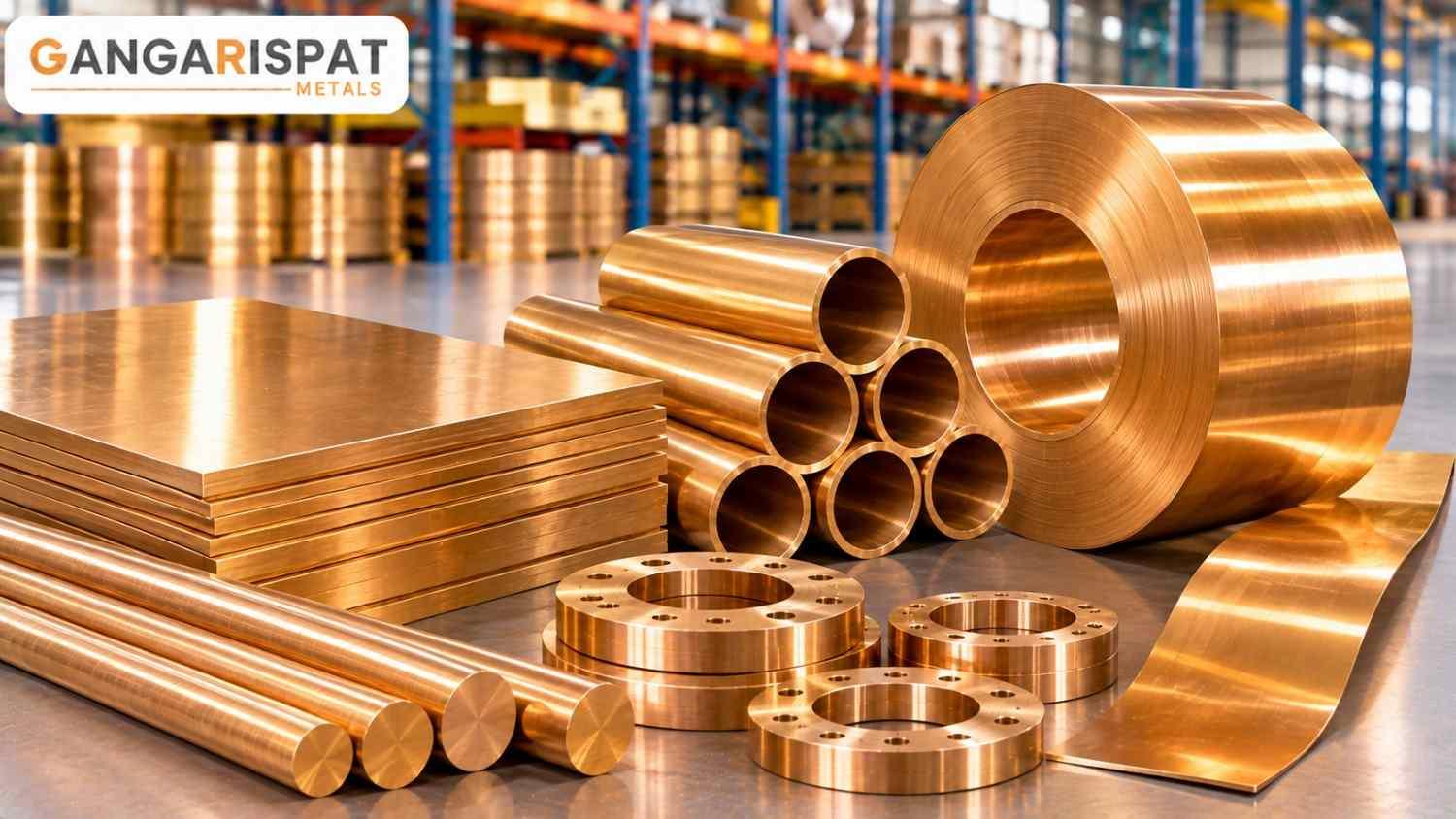
Precision engineering requires materials that perform consistently under demanding operating conditions. Even minor changes in component dimensions, material strength or surface quality can affect the performance of mechanical assemblies.
Phosphor Bronze Products support precision engineering through their mechanical strength, fatigue resistance, wear resistance and spring properties. Manufacturers use this copper-based alloy to produce various components for industrial machinery, electrical equipment and automotive systems.
From small electrical connectors to industrial bearings, the material serves multiple engineering purposes. Understanding its characteristics helps manufacturers improve component design and material selection.
Why Is Material Selection Important in Precision Engineering?
Precision engineering involves manufacturing components with carefully controlled dimensions and tolerances. These components often operate under repeated mechanical loads, friction and continuous movement. Engineers must consider material strength, machinability, dimensional accuracy and environmental conditions during the design stage.
An unsuitable material may increase component wear, maintenance requirements and production costs. Selecting an appropriate alloy helps manufacturers achieve consistent product quality and reliable mechanical performance.
What Makes Phosphor Bronze Suitable for Precision Engineering?
Phosphor bronze contains copper, tin and small amounts of phosphorus. Its composition provides several useful engineering properties.
Experienced Phosphor Bronze Products Manufacturers can help engineering companies identify suitable alloy grades and material forms for specific manufacturing requirements.
Excellent Fatigue Resistance
The alloy can withstand repeated mechanical stress in suitable applications. This property makes it useful for springs, electrical contacts and flexible mechanical components.
Good Wear Resistance
Its wear-resistant properties support applications involving friction and continuous movement, such as bearings and bushes.
Corrosion Resistance
The material offers good corrosion resistance in many operating environments, making it useful for selected industrial and marine applications.
Good Spring Properties
Certain grades and tempers offer suitable elasticity and resilience for components that require repeated bending or compression.
Applications of Phosphor Bronze in Precision Engineering
Engineering companies use this alloy in various forms depending on component design and manufacturing processes.
|
Engineering Component |
Application |
Material Advantage |
|
Bearings |
Rotating machinery |
Wear resistance |
|
Bushes |
Mechanical assemblies |
Suitable friction properties |
|
Springs |
Electrical and mechanical systems |
Fatigue resistance |
|
Connectors |
Electronic equipment |
Elasticity and conductivity |
|
Gears |
Motion transmission systems |
Mechanical strength |
|
Contact strips |
Electrical switches |
Spring performance |
Professional Phosphor Bronze Products Distributors can help businesses source suitable material forms and grades according to their production requirements.
How Do Different Industries Benefit from Phosphor Bronze?
Automotive Engineering
Automotive manufacturers use suitable grades in transmission assemblies, bearings, electrical contacts and other precision components.
Electrical and Electronics Manufacturing
The alloy supports the production of switches, terminals, connectors and contact springs that require electrical conductivity and mechanical resilience.
Industrial Machinery
Industrial equipment manufacturers use the material in selected gears, bushes and moving mechanical assemblies.
Marine Engineering
Marine equipment manufacturers use appropriate grades in components that require resistance to wear and corrosive environments.
How Does Phosphor Bronze Support Manufacturing Accuracy?
Precision manufacturing requires careful control over material dimensions, surface finish and machining parameters. Variations in raw material quality can affect the accuracy of finished components.
Suitable alloy grades support manufacturing processes such as turning, drilling, milling, stamping and bending. However, machinability differs depending on the alloy composition and material condition. Manufacturers should also consider tool selection, cutting speed and feed rate to achieve the required surface finish.
What Should Engineers Check Before Buying Phosphor Bronze?
Manufacturers should evaluate raw materials against specific engineering requirements before starting production.
Important considerations include:
-
Alloy composition and material grade
-
Mechanical strength and hardness
-
Dimensional tolerances
-
Surface quality
-
Machining and forming requirements
-
Material test certificates
Businesses searching for phosphor bronze products manufacturers near me should evaluate manufacturing capabilities, customization options and quality control procedures alongside geographical convenience.
Checking these factors before purchasing helps maintain consistency across production batches.
How Does Phosphor Bronze Support Long-Term Operational Efficiency?
Industrial equipment often operates for extended periods under demanding mechanical conditions. Frequent component replacement can interrupt production and increase maintenance expenses.
When engineers select the correct alloy grade, component design and lubrication method, phosphor bronze can offer several operational benefits:
-
Reduced component wear
-
Improved equipment reliability
-
Consistent mechanical performance
-
Longer component service life
-
Reduced maintenance requirements
These benefits can help manufacturers manage operational expenses and maintain production efficiency.
Why Is Reliable Material Sourcing Important for Engineering Companies?
Consistent raw material quality is essential for manufacturing precision components. Even small variations between material batches may affect machining results and finished product performance.
Working with dependable Phosphor Bronze Products Suppliers in India helps businesses source materials according to their technical specifications, dimensional requirements and production schedules.
Buyers should also discuss material traceability, bulk order capacity, inspection requirements and delivery timelines before confirming purchases.
Conclusion
Phosphor bronze plays an important role in precision engineering due to its mechanical strength, fatigue resistance and versatile manufacturing applications. From electrical connectors to industrial bearings, suitable alloy grades help engineers develop reliable components for demanding applications.
Ganga R Ispat Metals offers phosphor bronze rods, bars, bushes, plates, sheets and ingots to meet diverse industrial manufacturing requirements. Contact Us Now to discuss your technical specifications, customization needs and bulk material requirements.
Frequently Asked Questions (FAQs)
1. Why is phosphor bronze used in precision engineering?
Its fatigue resistance, mechanical strength and spring properties make it suitable for various precision engineering components.
2. Is phosphor bronze suitable for CNC machining?
Yes, suitable grades can undergo CNC machining using appropriate cutting tools and machining parameters.
3. Can phosphor bronze withstand repeated mechanical stress?
Yes, certain grades and tempers offer good fatigue resistance, making them suitable for repeated loading applications.
4. Is phosphor bronze used in electrical components?
Yes, manufacturers use it in electrical connectors, terminals, switches and contact springs.
5. What forms of phosphor bronze are available for industrial use?
Common forms include rods, bars, bushes, plates, sheets and ingots.

 English
 Arabic
 French
 Spanish
 Portuguese
 Deutsch
 Turkish
 Dutch
 Italiano
 Russian
 Romaian
 Portuguese (Brazil)