


Why Does an STL5 AC Laminated Solenoid Sometimes Operate Inconsistently?
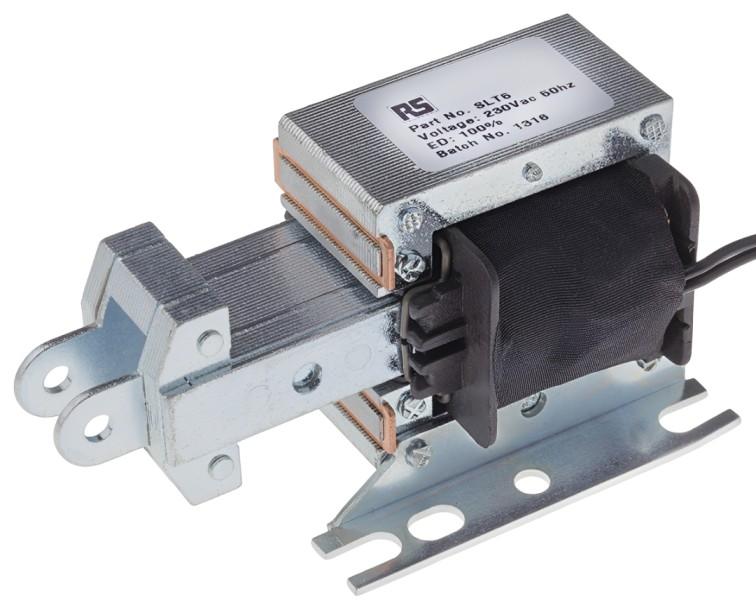
An automated mechanism can work flawlessly during testing yet begin missing movements once production is underway. A latch fails to release, a diverter responds late, or an actuator makes an unfamiliar sound. These problems are easy to blame on the electrical component itself, but power quality, mounting alignment, mechanical resistance and control timing may all contribute. Understanding these factors makes fault-finding more systematic and helps reduce unplanned interruptions.
An STL5 AC Laminated Solenoid is a useful example of an AC-operated pull actuator found in electromechanical control applications. The wider question for maintenance teams is how to keep comparable solenoids responding predictably under real operating conditions. That means evaluating the entire mechanism, not just checking whether the coil becomes energised.
What Happens When a Solenoid Receives a Control Signal?
When alternating current passes through a compatible coil, it creates a changing magnetic field that attracts a movable armature. The armature's movement can operate a latch, shift a linkage or trigger another machine function. Laminated magnetic steel helps limit eddy-current losses associated with alternating fields.
The electrical event is only part of the sequence. The armature must have room to travel, the external load must remain within the actuator's capability, and any return mechanism must reset properly before the next cycle.
Why Can a Solenoid Pull In Slowly or Fail to Move?
An actuator may receive a command without developing sufficient effective pulling force. Low supply voltage, excessive friction, an obstructed plunger or an unsuitable linkage can all contribute. Mechanical misalignment increases resistance and may stop the armature before it reaches its intended position.
AC solenoids are particularly sensitive to an armature that cannot close fully. Depending on construction, an excessive air gap may sustain higher current and increase heating. Persistent buzzing, overheating or failed movement should therefore prompt investigation rather than repeated energisation.
Which Checks Help Separate Electrical and Mechanical Faults?
- Supply: Confirm the specified AC voltage and frequency at the appropriate terminals.
- Connections: Look for loose, damaged or overheated wiring after safe isolation.
- Movement: Check for binding, dirt and interference within the permitted mechanism.
- Load: Confirm springs and linkages do not demand more force than the actuator can provide.
- Timing: Observe whether the return mechanism completes its cycle before reactivation.
Only trained personnel should perform live electrical measurements using appropriate procedures and equipment.
How Does Mechanical Installation Affect Repeatability?
Mounting accuracy can be as important as coil selection. If a plunger pulls against a sideways load, friction increases and useful force may decrease. Loose brackets can alter alignment over time, especially on machinery exposed to vibration.
Designers should allow the specified travel, maintain appropriate clearances and prevent external mechanisms from striking the armature. A correctly installed actuator should move through its intended stroke without being forced into positions outside its design.
When comparing Solenoids for replacement or a new mechanism, assess mounting style and travel characteristics alongside electrical ratings. A physically similar unit is not necessarily functionally interchangeable.
Why Is Switching Frequency Important in Production Machinery?
A mechanism that operates once each hour faces different demands from one activated every few seconds. Frequent switching increases the number of mechanical cycles and may reduce the opportunity for coil cooling. Holding time also matters, because some designs are intended for intermittent rather than continuous energisation.
The specified duty rating should cover the actual operating sequence, including unusually long commands caused by sensor faults or stopped production. Protective control logic may be necessary to avoid energising an obstructed actuator indefinitely.
How Can a Commissioning Test Reveal Hidden Problems?
An initial trial should reproduce normal operating loads rather than simply energising the actuator on a workbench. Observe full travel, return action and behaviour after several consecutive cycles. Check that the connected mechanism does not impose unexpected side loads as it moves. If the test reveals inconsistent operation, document the supply condition and mechanical symptoms before making adjustments. This creates a useful baseline for future maintenance inspections.
How Can Control Timing Reduce Unnecessary Wear?
Solenoids often form one step within a larger sequence. A sensor detects an item, the controller issues a command, the actuator moves, and a return mechanism resets for the next operation. Poor timing can command a second movement before the mechanism is ready.
A suitable Timer Relays arrangement may provide a defined delay or pulse in compatible control circuits, but it must be selected for the required function and electrical load. Timing alone cannot compensate for an actuator that is too weak or mechanically obstructed.
What Should a Preventive Inspection Record Include?
Useful maintenance records describe symptoms rather than simply stating that a solenoid was replaced. Note delayed movement, unusual noise, temperature concerns, visible damage and changes to the surrounding mechanism. Compare these findings with previous inspections to identify recurring patterns.
After safely isolating the system, inspect accessible mounting hardware, wiring, and moving linkages according to manufacturer guidance. Never modify a coil, bypass protective controls or apply unapproved lubrication in an attempt to recover performance.
Maintenance teams can also review whether replacement components are still available and whether machine drawings reflect previous repairs. If one actuator repeatedly fails, investigate installation geometry and control signals before ordering another. Finding the underlying cause can prevent a cycle of replacements that only temporarily restores operation.
How Can Engineers Choose Between Different Motion Types?
A pulling solenoid is useful for short straight-line movement, but not every task requires a linear action. If the mechanism needs a defined angular motion, Rotary Solenoids may provide an alternative worth assessing for a new design. The best long-term solution matches the required motion, operating duty and control sequence, with installation and maintenance planned as parts of one reliable system.

 English
 French
 Spanish
 Portuguese
 Deutsch
 Turkish
 Dutch
 Italiano
 Russian
 Romaian
 Portuguese (Brazil)
 Greek