


How Ceramides Help Repair a Damaged Skin Barrier
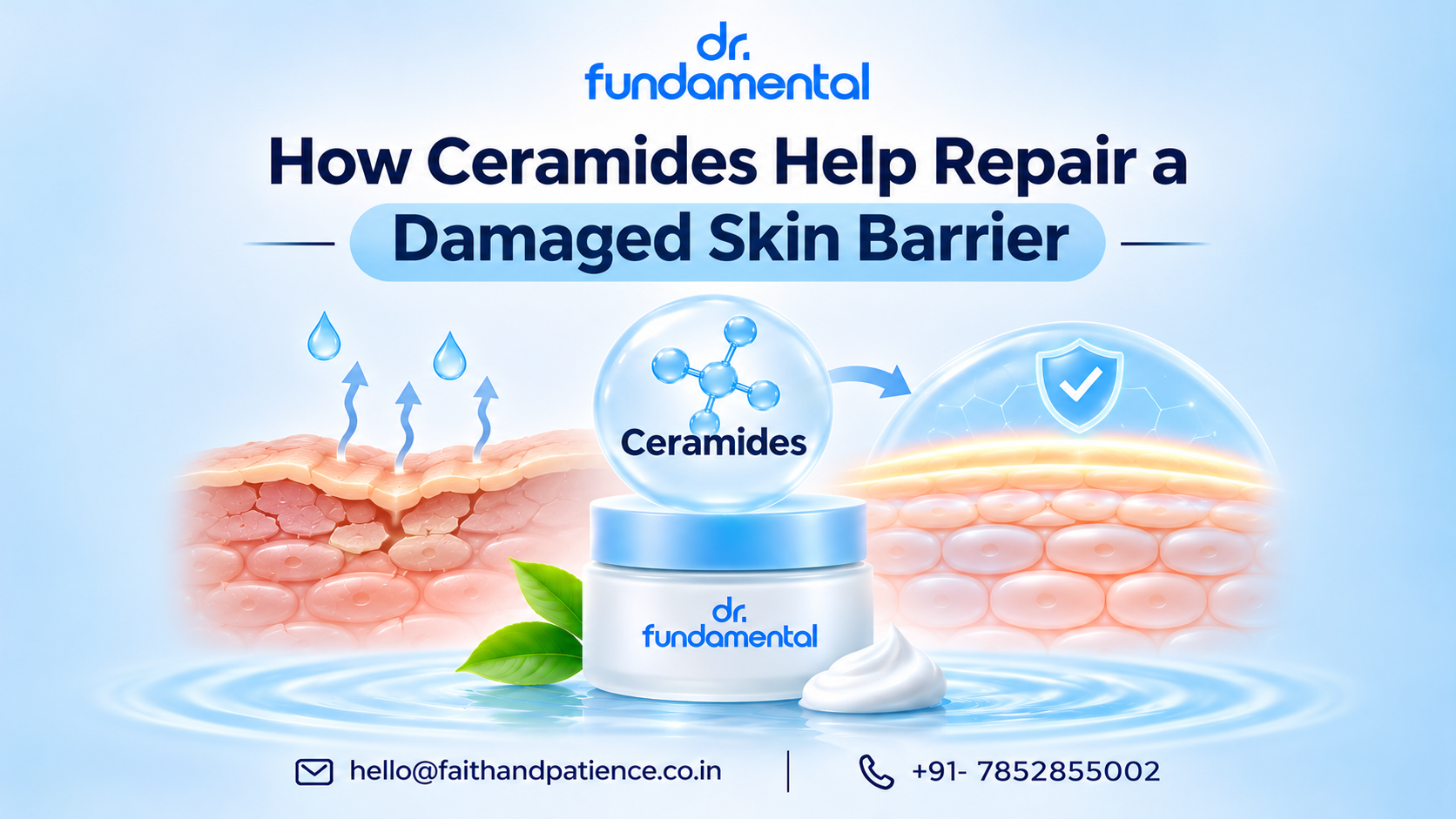
Healthy skin needs a strong protective barrier to retain moisture and protect itself from external irritants. However, factors like pollution, harsh cleansers, excessive exfoliation, and unsuitable skincare products can weaken the skin barrier. This may lead to dryness, irritation, redness, and increased sensitivity.
Ceramides play an important role in maintaining healthy skin. They help lock in moisture, strengthen the skin's natural protective layer, and support skin barrier repair. Adding a ceramide-based moisturizer to your skincare routine can help keep your skin hydrated and comfortable.
What Are Ceramides?
Ceramides are naturally occurring lipids (fats) found in the outermost layer of your skin. They help hold skin cells together and maintain the protective barrier.
Think of ceramides as the building blocks that keep your skin barrier strong. When your skin does not have enough ceramides, moisture can escape more easily, making the skin dry and sensitive.
Ceramides are commonly used in skincare products such as moisturizers, creams, and lotions to support hydration and skin barrier health.
How Do Ceramides Help Repair a Damaged Skin Barrier?
Ceramides offer several benefits for maintaining healthy-looking skin. Here are some important ways they support your skin barrier.
1. Help Restore the Skin Barrier
Ceramides help fill the spaces between skin cells, supporting the skin's natural protective barrier. This helps protect the skin from external irritants and reduces moisture loss.
2. Prevent Moisture Loss
One of the main functions of ceramides is helping the skin retain moisture. They support the natural lipid barrier, keeping skin hydrated for longer.
3. Reduce Dryness and Roughness
A damaged skin barrier can make your skin feel rough, flaky, and uncomfortable. Ceramide-based moisturizers help improve hydration and soften dry skin.
4. Support Sensitive Skin
When the skin barrier becomes weak, the skin may react more easily to skincare products and environmental factors. Ceramides help maintain barrier function and support overall skin comfort.
5. Improve Skin Hydration
Ceramides work with other skin lipids to maintain moisture balance. Regular use of suitable ceramide-based skincare products can help improve skin hydration.
Why Is a Ceramide Moisturizer Good for Oily Skin?
Many people believe that oily skin does not need a moisturizer. However, oily skin can also become dehydrated, especially after using strong cleansers or acne treatments.
A ceramide moisturizer for oily skin can help maintain hydration while supporting the skin's protective barrier.
When choosing a moisturizer for oily skin, look for:
-
Lightweight and non-greasy formulations.
-
Non-comedogenic products.
-
Ceramides to support the skin barrier.
-
Niacinamide to help manage the appearance of excess oil.
-
Hydrating ingredients such as hyaluronic acid.
Gel-based and lightweight lotion formulations may feel more comfortable on oily skin than heavy creams.
Choosing an Oil-Free Moisturizer for Combination Skin
Combination skin usually has both oily and dry areas. The T-zone (forehead, nose, and chin) may produce more oil, while the cheeks can feel dry or dehydrated.
An oil-free moisturizer for combination skin can be a suitable choice for people who want hydration without an overly greasy finish.
Before purchasing, consider these factors:
-
Choose a lightweight formula that absorbs comfortably.
-
Look for ceramides to support the skin barrier.
-
Prefer non-comedogenic formulations.
-
Check for hydrating ingredients such as glycerin and hyaluronic acid.
-
Avoid products that make your skin feel excessively heavy.
A suitable moisturizer should provide enough hydration without making oily areas uncomfortable.
Best Ingredients to Combine with Ceramides
Ceramides work well with several other skincare ingredients. Some combinations can help support hydration and improve overall skin comfort.
|
Ingredient |
Main Benefit |
|---|---|
|
Hyaluronic Acid |
Helps attract and retain moisture |
|
Niacinamide |
Supports the skin barrier |
|
Glycerin |
Helps hydrate the skin |
|
Panthenol |
Helps soothe and hydrate skin |
|
Cholesterol |
Supports the skin's natural lipid barrier |
Choosing products with complementary ingredients can help maintain a healthy skin barrier.
Signs Your Skin Barrier May Be Damaged
A weakened skin barrier can show different signs depending on your skin type.
Common signs include:
-
Persistent dryness and flaky skin.
-
Redness and irritation.
-
Increased skin sensitivity.
-
Tightness after face washing.
-
Rough or uneven skin texture.
-
Stinging when applying skincare products.
If irritation continues or becomes severe, consider consulting a dermatologist.
How to Add Ceramides to Your Skincare Routine
You can include ceramides in your daily skincare routine through a moisturizer or other suitable skincare products.
Morning Routine:
-
Cleanse your face with a gentle cleanser.
-
Apply a lightweight hydrating serum if needed.
-
Apply a ceramide-based moisturizer.
-
Finish with broad-spectrum SPF 30 or higher sunscreen.
Night Routine:
-
Clean your face to remove dirt and sunscreen.
-
Apply a hydrating serum if needed.
-
Use a ceramide moisturizer to support overnight hydration.
Consistency is important when maintaining healthy skin. Avoid excessive exfoliation and introduce new skincare products gradually.
Frequently Asked Questions (FAQs)
1. Do ceramides help repair a damaged skin barrier?
Yes. Ceramides help support the skin's natural protective barrier, reduce moisture loss, and maintain hydration. They are useful for skin that feels dry, rough, or sensitive.
2. Is a ceramide moisturizer suitable for oily skin?
Yes. A ceramide moisturizer for oily skin can help maintain hydration without necessarily making the skin greasy. Choose a lightweight, non-comedogenic formulation.
3. Can I use ceramides every day?
Yes. Ceramide-based moisturizers are generally suitable for daily use, both in the morning and at night.
4. Is an oil-free moisturizer good for combination skin?
Yes. An oil-free moisturizer for combination skin can provide hydration while helping avoid an overly greasy feeling in oily areas.
5. How long does it take to repair a damaged skin barrier?
It depends on the severity of the damage and your skincare routine. Mild barrier issues may improve within a few weeks, while more significant irritation can take longer.
6. Can I use ceramides with niacinamide?
Yes. Ceramides and niacinamide can be used together. Both ingredients support skin barrier health and help maintain skin hydration.
Final Thoughts
Ceramides are important skincare ingredients that help maintain the skin's natural protective barrier, prevent moisture loss, and improve hydration. They can be beneficial for dry, sensitive, oily, and combination skin types.
If you have oily skin, consider a lightweight ceramide moisturizer for oily skin. For combination skin, an oil-free moisturizer for combination skin can help provide comfortable hydration without an excessively greasy finish.
Choosing the right ingredients and following a consistent skincare routine can help keep your skin healthy, hydrated, and balanced.

 English
 Arabic
 French
 Spanish
 Portuguese
 Deutsch
 Turkish
 Dutch
 Italiano
 Romaian
 Portuguese (Brazil)
 Greek