


How to Protect Against CSRF Attacks
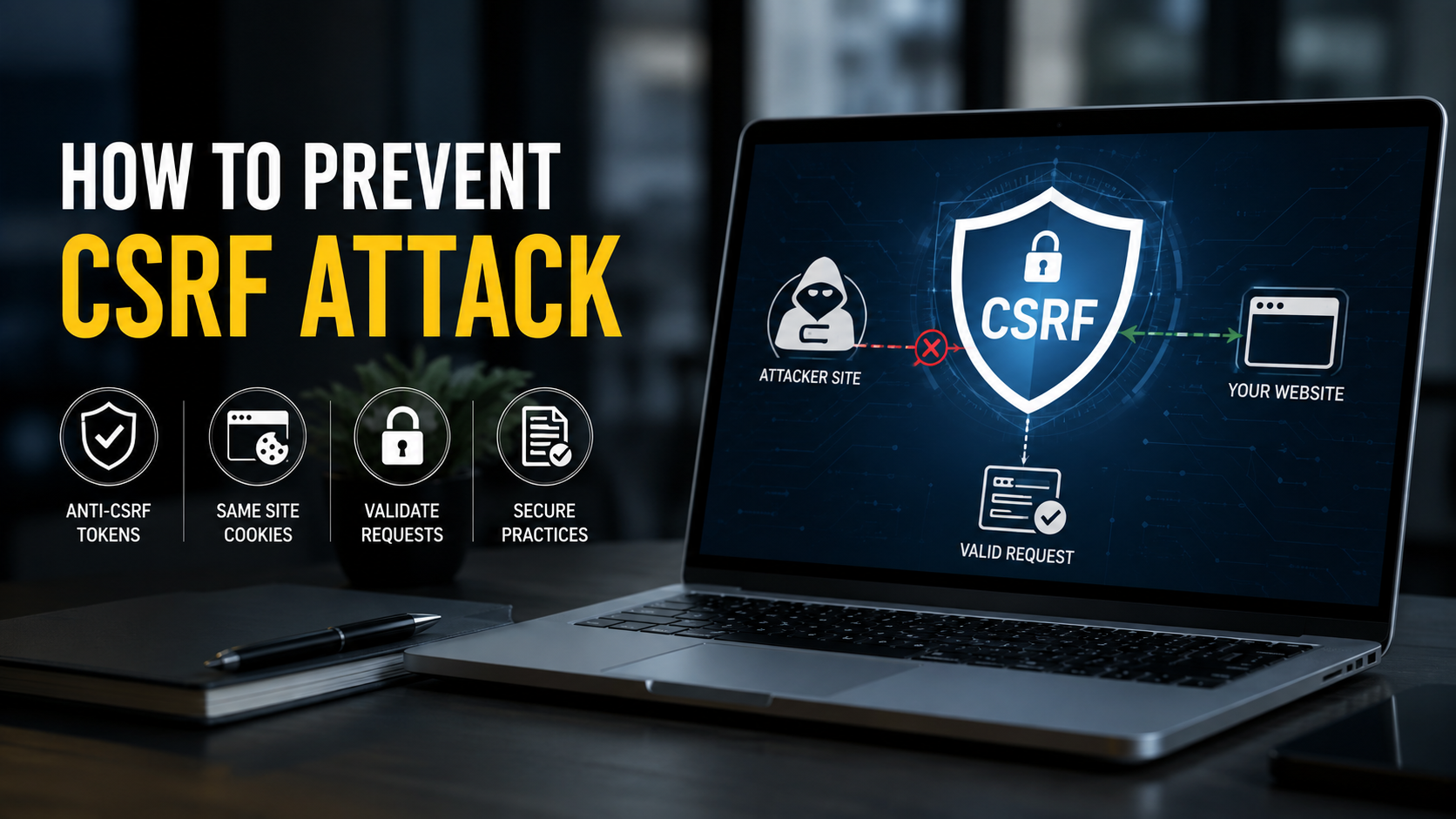
Protecting a single application against CSRF is a technical task; protecting an organization against CSRF is a program. Individual developers can implement antiCSRF tokens correctly on one service and still leave the company exposed if there is no shared standard, no training that explains why the pattern matters, no code review gate that catches missing coverage and no automated check that flags a regression before it ships. This guide covers how to build that program: setting an organizationwide standard, training developers to recognize gaps, integrating checks into code review and CI/CD and measuring whether the program is actually working over time.
Why CSRF Protection Fails at the Organizational Level
Most CSRF vulnerabilities that reach production do not happen because a developer doesn't understand the concept. They happen because the organization never established a consistent, enforced standard for what CSRF protected means across every team, service and legacy system. One team implements the synchronizer token pattern correctly on a new service; another team, working on an older application, never revisited the original implementation and has no process that would catch the gap. Neither team is negligent; the organization simply never connected the two.
This is the core distinction between application level CSRF prevention and enterpriselevel CSRF protection. For the technical mechanics of tokens, SameSite cookies and framework specific implementation, our detailed guide on how to prevent CSRF attacks covers the codelevel detail across .NET, Java, Node.js, Angular, React and PHP. This guide focuses on what has to exist above that code, the standard, the training and the process that makes correct implementation the default rather than the exception.
Building a CSRF Defense Program The Five Stage Model
An effective enterprise CSRF program moves through five connected stages: setting a standard, training developers against it, embedding checks into code review, automating detection in CI/CD and measuring program maturity over time. Skipping any single stage tends to undermine the others; a strong standard without training gets misapplied,and training without code review enforcement fades within a few sprints as deadline pressure takes over.
Stage 1: Set an OrganizationWide CSRF Standard
Before training or reviewing anyone code, define exactly what protected means for your organization: which combination of synchronizer tokens, SameSite cookies, doublesubmit patterns and custom headers applies to which type of service and under what conditions an exception is acceptable. Without this written standard, CSRF protection means something different on every team and code reviewers have no consistent baseline to check new code against.
The standard should distinguish between architecture types rather than mandating a single technique everywhere a server rendered monolith and a stateless API genuinely call for different combinations of defenses and a one size fit all mandate tends to get quietly ignored by teams for whom it does not fit, which defeats the purpose of having a standard at all.
Stage 2: Train Developers to Recognize CSRF Gaps
A written standard only works if developers understand the reasoning behind it well enough to apply it to situations where the document doesn't explicitly cover a new endpoint type, an unusual integration, a framework upgrade that changes default behavior. Training that walks through real forgery scenarios, rather than just listing the defenses to implement, tends to stick better because it gives developers a mental model for recognizing risk in code that does not obviously resemble the examples they were shown.
This is also where handson practice outperforms documentation alone. Developers who have exploited a deliberately vulnerable CSRF endpoint themselves, seeing exactly how a forged request bypasses a missing check, tend to spot the same gap in their own code far more reliably than developers who've only read about the concept. Structured enterprise security training built around this kind of handson exploitation gives teams a shared, practical reference point rather than relying on abstract policy language alone.
Stage 3: Bake CSRF Checks Into Code Review
Standards and training establish intent; code review is where that intent either gets enforced or quietly erodes under deadline pressure. Reviewers need a specific, concrete checklist for CSRF coverage, not a general reminder to think about security because vague guidance gets skipped far more often than a specific, checkable requirement does.
Effective review checklists flag any new statechanging endpoint that doesn't include token validation, any cookie configuration change that touches SameSite attributes, and any custom authentication logic that reimplements token comparison instead of using the framework's builtin mechanism. Our code review checklist for security teams provides a structured starting point covering CSRF alongside the other request validation and access control issues that reviewers should be checking for in the same pass.
Stage 4: Automate Detection in CI/CD
Manual code review catches what a human reviewer notices, which varies with workload, familiarity with the codebase, and simple fatigue near a deadline. Automated checks in CI/CD close that gap by consistently flagging missing token validation, misconfigured SameSite attributes, or newly introduced endpoints that skip the organization's standard every time, regardless of reviewer bandwidth.
This doesn't replace human review; it catches the mechanical, repeatable parts of the check so reviewers can spend their attention on the judgment calls automation can not make, like whether a particular exception is genuinely justified. Teams that pair automated scanning with periodic handson testing against real forged requests get the benefit of both consistency and depth, rather than relying entirely on either one.
Stage 5: Track and Measure Program Maturity
A program that is not measured tends to drift back toward inconsistency once the initial rollout enthusiasm fades. Tracking metrics like the percentage of state changing endpoints with verified CSRF coverage, the number of exceptions granted and whether they're still justified, and how quickly newly reported gaps get remediated gives leadership a concrete way to see whether the program is holding or eroding over time, rather than relying on anecdotal confidence.
Common Reasons Enterprise CSRF Programs Stall
Programs frequently stall after a strong initial rollout for a handful of recurring reasons. Training happens once during onboarding and is never refreshed as frameworks, architecture, and team composition change, so the shared understanding that existed at launch quietly decays. Exceptions granted for legitimate short term reasons, a legacy integration, a vendor requirement never get revisited once the original justification is forgotten, turning temporary gaps into permanent ones. And code review checklists exist on paper but aren't actually enforced when deadline pressure makes we will fix it in a followup the path of least resistance, which in practice often means it never gets fixed at all.
Programs that avoid this drift tend to treat CSRF protection the same way they treat any other operational metric: reviewed on a recurring schedule, owned by a specific team or role, and reported on rather than assumed. Organizations serious about closing these gaps at scale sometimes bring in outside review to validate the program independently, assessing where an existing CSRF program actually stands against the maturity model above and identifying the specific stage where it's stalling rather than assuming the whole program needs to be rebuilt from scratch.
Where CSRF Fits Within a Broader Enterprise Security Program
A CSRF program that exists entirely on its own, disconnected from the organization wider application security practices, tends to compete for attention rather than reinforce it. Teams that already have a security review process for authentication, session management, and secure headers can usually extend that same process to cover CSRF specifically, rather than standing up a parallel program that developers have to learn and follow separately. Our web security best practices guide covers how CSRF fits alongside these adjacent practices, which is useful context for security leads deciding whether to build a standalone CSRF initiative or fold it into an existing application security program.
This integration matters for adoption as much as for coverage. Developers are far more likely to internalize a CSRF checklist item that shows up inside a review process they already follow than a separate document introduced as its own initiative, since the latter tends to get treated as optional the first time a deadline gets tight.
Validating the Program With HandsOn Testing, Not Just Policy Review
A program can look complete on paper: a written standard, a training deck, a code review checklist and still fail to catch real gaps if nobody ever tests it against an actual forged request. Periodic handson validation, where a security team or trained developers attempt to exploit CSRF gaps across a sample of the organization's own services, tends to surface exactly the kind of drift that policy review alone misses, since a checklist item marked complete doesn't always reflect what's actually enforced in production code.
Building this kind of testing skill across the organization, rather than concentrating it in a single security team, also makes the program more resilient. Our web application hacking labs and source code review labs give developers and reviewers handson practice finding the same kinds of gaps a real audit would look for, so validation isn't dependent on a small group of specialists being available to run it.
Rolling This Out Without Disrupting Delivery
Introducing a new organizationwide standard rarely goes well if it's rolled out as a single mandatory change across every team simultaneously. Starting with one or two teams as a pilot, refining the standard and checklist based on what actually works in practice, and then expanding gradually tends to produce a program teams actually follow rather than one they route around. Pairing the rollout with visible, lowfriction wins fixing a handful of real gaps found through handson testing rather than starting with abstract policy discussions also builds the internal credibility a security program needs to get sustained buy-in from engineering leadership.
Conclusion
Protecting an organization against CSRF attacks requires more than any individual team implementing tokens correctly; it requires a shared standard, training that builds real understanding rather than policy awareness, code review that enforces the standard consistently, and automation that catches regressions before they ship. Programs that skip straight to automation without the standard and training behind it tend to produce noisy, inconsistently applied checks; programs that stop at policy documents without enforcement tend to drift back toward the inconsistency they were meant to fix. Building all five stages together, and revisiting them as the organization changes, is what actually closes the gap between individual good implementations and organizationwide protection. AppSecMaster offers handson training and consultation built around exactly this kind of program development.
Frequently Asked Questions (FAQs)
How is enterprise CSRF protection different from implementing CSRF defenses on one application?
Implementing CSRF defenses on one application is a technical task solved by tokens, cookies, and headers. Enterprise CSRF protection is a program problem: ensuring every team, service, and legacy system consistently applies a shared standard, which requires training, code review enforcement, and automated checks rather than just correct code in one place.
What is the fastest way to find out if our organization actually has consistent CSRF protection?
Map every state changing endpoint across your services and check for token validation, SameSite configuration, and header requirements directly, rather than relying on team selfreporting. Gaps between what teams believe is protected and what's actually enforced are extremely common and only surface through direct testing.
Should CSRF training be a onetime session or ongoing?
Ongoing. Frameworks, architecture, and team composition change continuously, and a single onboarding session tends to fade in relevance within a year or two as the codebase and team evolve around it.
How do we get engineering leadership to prioritize a CSRF program over feature work?
Concrete metrics help more than general risk arguments showing the percentage of endpoints with verified coverage, or a specific gap found through handson testing, makes the case far more persuasive than an abstract statement about CSRF being important.
Is automation enough, or do we still need manual code review for CSRF?
Automation catches consistent, repeatable patterns but can not evaluate whether a specific exception is genuinely justified or whether custom authentication logic actually achieves the same security guarantee as the framework default. Manual review remains necessary for those judgment calls.

 English
 Arabic
 French
 Spanish
 Portuguese
 Deutsch
 Dutch
Dutch
 Italiano
 Russian
 Romaian
 Portuguese (Brazil)
 Greek
Greek