


How Do Voltage Controllers Protect Equipment and Improve Power Control?
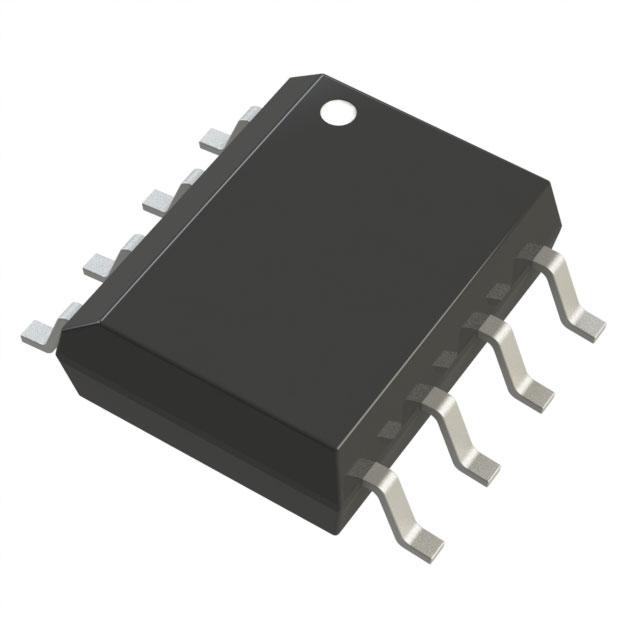
Voltage Controllers are important devices used to manage, regulate, and adjust electrical voltage in systems where stable power is essential. They help ensure that connected equipment receives a suitable level of voltage instead of being exposed to unwanted fluctuations or excessive electrical stress. This makes them valuable in industrial machinery, control panels, heating systems, motors, lighting circuits, testing equipment, and many other electrical applications.
Modern electrical systems are becoming more sensitive to variations in power quality. Even small changes in voltage can affect performance, efficiency, and reliability. By using suitable voltage control, engineers can create more stable operating conditions and improve how electrical equipment responds to changing loads.
What Are Voltage Controllers and What Do They Actually Do?
Voltage Controllers are devices designed to influence the voltage supplied to an electrical load. Their main function is to regulate or adjust power according to the requirements of the connected equipment.
Some controllers provide a manually adjustable output, while others operate automatically using sensors and feedback circuits. More advanced models may include programmable settings, digital monitoring, and communication functions.
The exact purpose depends on the application, but most controllers are used to achieve one or more of the following goals:
- Stabilise electrical output
- Adjust power delivered to a load
- Protect equipment from unsuitable voltage
- Control heating or lighting levels
- Support motor operation
- Improve process consistency
- Reduce unnecessary power use
These functions make voltage control useful in both simple circuits and complex industrial systems.
Why Can Voltage Fluctuations Damage Electrical Equipment?
Electrical equipment is usually designed to operate within a specific voltage range. When voltage rises too high, components may experience increased temperature, insulation stress, or excessive current. When voltage drops too low, equipment may operate inefficiently or fail to function correctly.
Repeated voltage instability can gradually affect component life and overall system reliability.
Sensitive devices such as control electronics, sensors, laboratory instruments, and automation equipment may be particularly vulnerable to irregular power conditions. Voltage Controllers help reduce these risks by maintaining more suitable operating levels.
How Do Voltage Controllers Regulate Power in AC Systems?
In alternating-current systems, voltage control is often achieved using semiconductor switching devices. These components can control the portion of the AC waveform that is delivered to the load.
By changing when the electrical current begins or stops flowing during each cycle, the controller changes the effective voltage applied to the connected equipment.
This approach is commonly used in applications such as:
- Heating control
- Lighting dimming
- Fan regulation
- Industrial temperature systems
- Certain motor applications
The controller design must match the electrical characteristics of the load to ensure reliable operation.
How Do Voltage Controllers Work in DC Applications?
DC Voltage Controllers use different methods because direct current does not alternate in the same way as AC power.
In DC systems, controllers may use switching circuits, pulse-width modulation, or linear regulation to achieve the required output. Switching techniques are often used where high efficiency is important because they can reduce energy losses compared with purely resistive methods.
DC voltage control is commonly found in electronic circuits, battery-powered systems, automotive electronics, communication equipment, and DC motor applications.
Why Are Voltage Controllers Useful for Industrial Heating?
Industrial heating systems often need precise control because excessive temperature can damage products, materials, or equipment.
Voltage Controllers can adjust the electrical power supplied to heating elements so that temperature can be controlled more accurately. Instead of constantly operating at maximum output, the controller can reduce power as the process approaches the required temperature.
This can help provide:
- More consistent heating
- Reduced temperature overshoot
- Better process stability
- Lower unnecessary energy use
- Improved protection for heating elements
These benefits make voltage control useful in ovens, dryers, furnaces, plastics processing, and laboratory heating systems.
How Can Voltage Controllers Support Better Lighting Control?
Lighting applications may not always require full power. Voltage control allows light output to be adjusted according to environmental conditions, operating schedules, or user requirements.
In suitable lighting systems, reducing voltage can lower brightness and help manage energy consumption. This can be useful in commercial buildings, industrial spaces, control rooms, and specialised lighting installations.
The type of controller must be compatible with the lighting technology because different lamps and electronic drivers respond differently to voltage adjustment.
What Should Engineers Check Before Selecting Voltage Controllers?
Choosing the correct controller requires careful evaluation of the entire system. A controller that is suitable for a resistive heater may not be appropriate for an inductive motor or sensitive electronic load.
Important selection factors include:
- Input voltage
- Required output range
- Maximum current
- Power rating
- Load type
- AC or DC supply
- Operating frequency
- Regulation method
- Control accuracy
- Response time
- Environmental conditions
- Protection features
Thermal performance and cooling requirements should also be considered, especially in high-power applications.
Why Does Load Compatibility Matter So Much?
Different electrical loads respond differently when voltage is adjusted. Resistive loads, such as heating elements, typically behave in a relatively predictable way. Inductive loads, including motors and transformers, may require special switching and protection arrangements.
Electronic loads can be even more complex because they may contain internal power supplies or converters.
Using an incompatible controller can result in poor performance, overheating, electrical noise, or equipment damage. Understanding the load is therefore one of the most important parts of controller selection.
How Do Protection Features Improve Voltage Controller Safety?
Modern Voltage Controllers often include built-in protection features designed to respond when operating conditions become unsafe.
These may include overcurrent protection, thermal shutdown, short-circuit protection, and voltage monitoring. Some models also include diagnostic indicators that help maintenance teams identify faults more quickly.
Protection features can reduce the risk of controller failure and help safeguard connected equipment, especially in industrial systems where unexpected downtime can be expensive.
How Can Voltage Controllers Improve Process Consistency?
In industrial processes, even small variations in electrical power can affect production quality. Heating temperature, motor behaviour, equipment speed, and process timing may all depend on stable voltage.
Voltage control helps reduce unwanted variations by delivering power more consistently.
This can be particularly important in manufacturing processes where repeatability matters. Stable electrical conditions can help ensure that machines perform more predictably from one production cycle to the next.
Why Are Smart Voltage Controllers Becoming More Important?
Smart electrical systems are increasingly using connected and programmable devices. Voltage Controllers are following the same trend.
Modern controllers may offer digital interfaces, remote adjustment, programmable limits, and integration with industrial automation platforms. This allows power regulation to become part of a wider control strategy.
Operators can monitor system performance, adjust settings remotely, and respond to changing load conditions more efficiently.
How Will Voltage Controllers Support Future Electrical Systems?
Future electrical systems will place greater emphasis on energy efficiency, automation, monitoring, and intelligent power management. Voltage Controllers will continue to support these goals by providing more precise control over how electrical energy is delivered and used.
As controllers become more advanced, they are likely to include improved communication, diagnostics, and adaptive control features.
For engineers, manufacturers, and system designers, Voltage Controllers will remain essential for managing power safely, improving equipment performance, and supporting more reliable electrical systems across industrial and electronic applications.

 English
 Arabic
 French
 Spanish
 Portuguese
 Deutsch
 Dutch
 Italiano
 Russian
 Romaian
 Portuguese (Brazil)
 Greek