


Why Can a Plastic Stool Fit Better in Compact Homes?
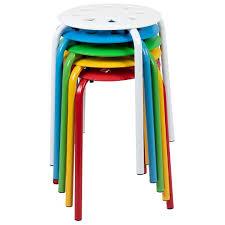
Plastic Stool selection becomes especially important when a home has limited floor space. In compact apartments, studio rooms, and smaller family houses, every piece of furniture needs to serve a practical purpose without making the room feel crowded. Seating that is easy to move, position, and put away can help residents manage changing daily activities. For household product manufacturers, this creates an opportunity to develop designs that balance convenient use with sensible storage requirements.
Compact Dimensions Make Placement Easier
The overall dimensions of a seat directly affect where it can be placed when not in use. A wide or unusually shaped model may be difficult to fit between a cabinet and a wall, while a compact design can offer more placement choices.
Before selecting a model, homeowners should measure the available storage area rather than relying only on product photographs. Useful measurements include:
Seat width and depth
Overall height
Distance between the legs
Available clearance beneath nearby furniture
Space required to move the item in and out
These details help buyers determine whether a particular design will fit beside a wardrobe, beneath a counter, or inside a utility area. For manufacturers, paying attention to external dimensions can make a product more suitable for different household layouts.
Stackable Structures Can Reduce Floor Usage
One reason some seating products are easier to store is their ability to fit together vertically. When several compatible units can be stacked, they occupy a shared floor footprint instead of requiring separate positions.
However, stackability depends on the relationship between the seat, legs, and underside structure. A design needs sufficient clearance for one unit to fit securely with another. If the gaps are too narrow or the shapes interfere with each other, stacking may become inconvenient.
Buyers considering multiple units should ask manufacturers for information about:
Whether the model is designed for stacking
The recommended stacking quantity
The overall height of a completed stack
Whether the surfaces may rub against each other
How easily individual units can be separated
These questions are particularly relevant to households that occasionally need extra seating for visitors. They also matter to retailers and distributors planning storage space for inventory.
Lightweight Construction Supports Flexible Use
Furniture that is difficult to move can become inconvenient in a small home. Residents may need to change room arrangements throughout the day, move seating between the kitchen and living room, or clear an area for cleaning.
A manageable product weight makes these tasks easier. Lightweight construction can also help retailers handle, pack, and display household products. Nevertheless, weight should not be considered independently of structural design. The seat, legs, and supporting areas still need to be suitable for the intended application.
Manufacturers should consider the balance between material distribution, product dimensions, and structural requirements during development. Buyers can request product specifications and check whether the stated use instructions match their household needs.
Simple Shapes Work With Different Storage Areas
A complicated outline can make furniture harder to position in narrow spaces. By comparison, a straightforward shape may fit more naturally beside cabinets, beneath work surfaces, or in an unused corner.
The leg arrangement is another important factor. Legs that leave enough clearance underneath can provide more placement possibilities, while a broad base may require additional room. Rounded edges, balanced proportions, and a practical seat profile can also influence how easily an item fits into an existing room layout.
For homeowners, the useful approach is to compare the product shape with the actual storage location. For manufacturers, it means considering storage convenience during the early design stage instead of treating it as an afterthought.
Easy Maintenance Helps Keep Small Rooms Organized
In a compact home, household items are often used in several locations. A seat may move from the kitchen to the balcony or from a bedroom to a shared living area. Surfaces that are straightforward to clean can make these changes easier to manage.
Many household seating designs feature surfaces that can be wiped with a damp cloth. Actual cleaning requirements depend on the material and surface finish, so users should follow the manufacturer's care instructions.
A practical product should also be easy to inspect and return to its storage position. Keeping frequently used furniture clean and properly arranged helps reduce unnecessary clutter.
Manufacturing Considerations Behind Space-Friendly Designs
Creating furniture for smaller homes involves more than reducing dimensions. Manufacturers need to consider how the product will be used, moved, stored, and produced. Seat proportions, leg geometry, material selection, mould structure, and surface finishing all contribute to the final design.
At cnsandine, household product development can be approached with attention to practical dimensions and everyday application needs. Buyers evaluating different models can communicate their intended market, preferred size, colour requirements, packaging expectations, and estimated order quantities before confirming specifications.
For wholesalers and distributors, this information also supports product selection for different retail channels. A model intended for apartment households may require a different size or appearance from one selected for larger family spaces or commercial environments.When choosing furniture for a compact interior, the goal is to make daily routines easier while keeping available floor space useful. Buyers can review the product details, compare dimensions with their planned storage location, and contact the manufacturer about specifications before placing an order. To learn more about household product options and manufacturing information, visit https://www.cnsandine.com/ and explore the range offered by cnsandine.

 English
 Arabic
 French
 Spanish
 Deutsch
 Turkish
 Dutch
 Italiano
 Russian
 Romaian
 Portuguese (Brazil)
 Greek