


How Chicago Businesses Can Build Mobile Apps People Actually Use
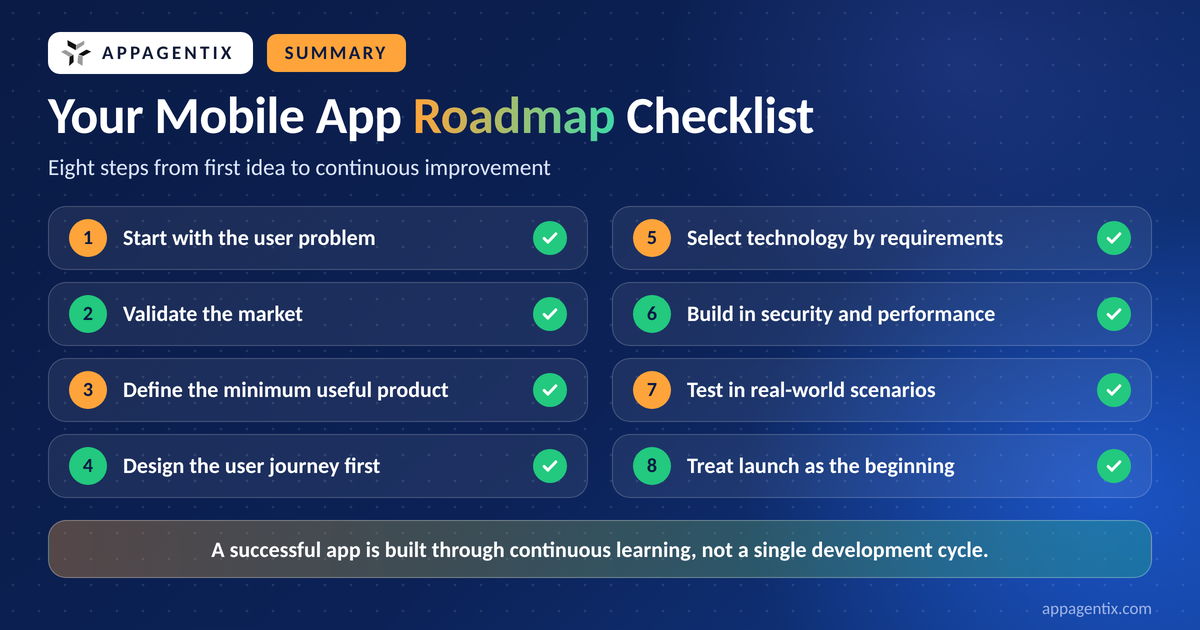
Key Takeaways
-
A successful app starts with a clear customer problem.
-
Simple navigation often matters more than having dozens of features.
-
Performance and reliability strongly influence user satisfaction.
-
MVP development can help validate an idea before a larger investment.
-
Regular updates keep an app useful after launch.
For a Mobile App Development Company in Chicago, one of the most interesting parts of the job is seeing how a simple idea becomes something people use every day. Chicago businesses serve customers with different habits, expectations, and needs, so a mobile application cannot simply be built around a list of features. It has to make sense in the real world.
A useful app does not necessarily need to be complicated. In many cases, the strongest products are the ones that make a specific task easier, faster, or more convenient.
Start With the Problem, Not the Features
One common mistake is beginning app planning with a feature list.
A better starting point is the customer problem.
What is difficult today? What takes too many steps? Where do customers experience frustration? Could a mobile experience make that process simpler?
Once the problem is clear, features become easier to prioritize. Instead of adding everything that sounds interesting, businesses can concentrate on functionality that has a genuine purpose.
The First Few Seconds Matter
People form an opinion about an app quickly.
If the opening screen is confusing, crowded, or slow, users may leave before discovering what the application can actually do.
The first experience should make the next action obvious. Clear navigation, readable content, familiar interactions, and a focused interface can make an application feel much easier to use.
Good UI/UX is not about decoration alone. It is about reducing unnecessary thinking.
Build the MVP Around Real Value
A minimum viable product does not mean releasing an unfinished application.
It means identifying the smallest useful version of the product that can be tested with real users.
For example, a local service application might initially need account creation, service discovery, booking, notifications, and payment. Additional features can come later when there is evidence that users actually need them.
This approach can make development more manageable while providing valuable feedback before expanding the product.
Android and iOS Require Thoughtful Planning
Choosing between Android and iOS is not simply a technical decision.
The intended audience, market, budget, functionality, and future roadmap all matter.
Some products may benefit from launching on one platform first. Others may require both platforms from the beginning. Cross-platform technologies such as Flutter and React Native can also be considered when businesses want to maintain a more unified development approach.
The right choice depends on the product rather than following a universal formula.
Performance Is Part of the User Experience
An application can look excellent and still fail if it feels slow.
Long loading times, delayed responses, crashes, battery-heavy behavior, or unreliable connectivity can quickly damage user confidence.
Performance should therefore be considered throughout development rather than treated as a final-stage task.
Efficient screens, optimized assets, reliable API communication, sensible data handling, and proper testing can all contribute to a smoother experience.
Security Should Be Considered Early
Mobile applications often handle information that users expect to remain protected.
Authentication, payments, personal information, account details, and other sensitive data require careful treatment.
Security should be included during architecture and development rather than added shortly before launch. Strong authentication practices, secure data handling, appropriate permissions, and regular updates can help create a more dependable product.
Testing Goes Beyond Finding Bugs
Testing is sometimes viewed as a final checklist before an application reaches users.
In reality, it can reveal much more than technical errors.
Testing can uncover confusing navigation, inconsistent layouts, poor performance on certain devices, accessibility issues, unexpected user flows, and problems caused by different operating-system versions.
Real-device testing is particularly valuable because an application may behave differently across screen sizes, hardware configurations, and network conditions.
Launch Is the Beginning, Not the Finish
Publishing an app does not mean the development journey is over.
User expectations change. Operating systems receive updates. Devices evolve. Competitors introduce new experiences.
A useful mobile product needs ongoing attention.
Analytics, reviews, support requests, and user behavior can reveal where improvements are needed. Small updates can sometimes make a bigger difference than a major redesign.
A business might discover that users repeatedly abandon one particular screen, for example. Fixing that single experience could be more valuable than adding several new features.
What Chicago Businesses Should Think About
Chicago has businesses across retail, hospitality, professional services, healthcare, logistics, education, entertainment, and many other sectors. Their mobile requirements can be completely different.
A restaurant may need ordering and reservations. A service provider may need scheduling. A retail brand may focus on mobile shopping and loyalty. A startup may be testing an entirely new customer experience.
That is why copying another company's application rarely produces the best result.
The application should reflect the business, its customers, and the specific problem it is trying to solve.
A Better App Is Often a Simpler App
There is a temptation to measure an application's value by the number of features it contains.
Users usually measure it differently.
Can I accomplish what I came here to do?
Can I find what I need?
Does it respond quickly?
Can I trust it?
Would I use it again?
Those questions matter more than a long feature list.
For businesses considering mobile development, the goal should not simply be to launch an app. The goal should be to create an experience that earns a place on the user's phone.
FAQs
1. How long does it take to build a mobile app?
The timeline depends on the application's features, design complexity, integrations, platforms, testing requirements, and overall scope.
2. Should a business launch on Android and iOS at the same time?
Not always. The decision depends on the target audience, market priorities, budget, and product strategy.
3. What is MVP development?
MVP development creates a focused first version containing the core functionality needed to test an idea with real users.
4. Is Flutter suitable for business applications?
Flutter can be useful for many applications because it supports development for multiple platforms from a shared codebase. Suitability depends on the project's requirements.
5. Why is UI/UX important for mobile apps?
Good UI/UX makes an application easier to understand and navigate, reducing friction during common tasks.
6. What happens after an app is launched?
Post-launch work can include monitoring, maintenance, performance improvements, bug fixes, compatibility updates, and new functionality.
7. How can businesses decide which features to build first?
Features should be prioritized according to customer needs, business objectives, technical requirements, and expected value rather than simply adding everything at once.
Conclusion
Building a mobile app is not just a development exercise. It is an opportunity to create a better way for customers to interact with a business.
For Chicago companies, the strongest approach is usually practical: understand the problem, simplify the experience, build the essential functionality, test it carefully, and keep improving after launch. When technology stays connected to real user needs, an app can become more than another digital channel—it can become part of the customer experience.
Contact on Appagentix

 English
 Arabic
 Spanish
 Portuguese
 Deutsch
 Turkish
 Dutch
 Italiano
 Russian
 Romaian
 Portuguese (Brazil)
 Greek