


ICD-10 Osteomyelitis of Left Foot and the Correct Diagnosis Code
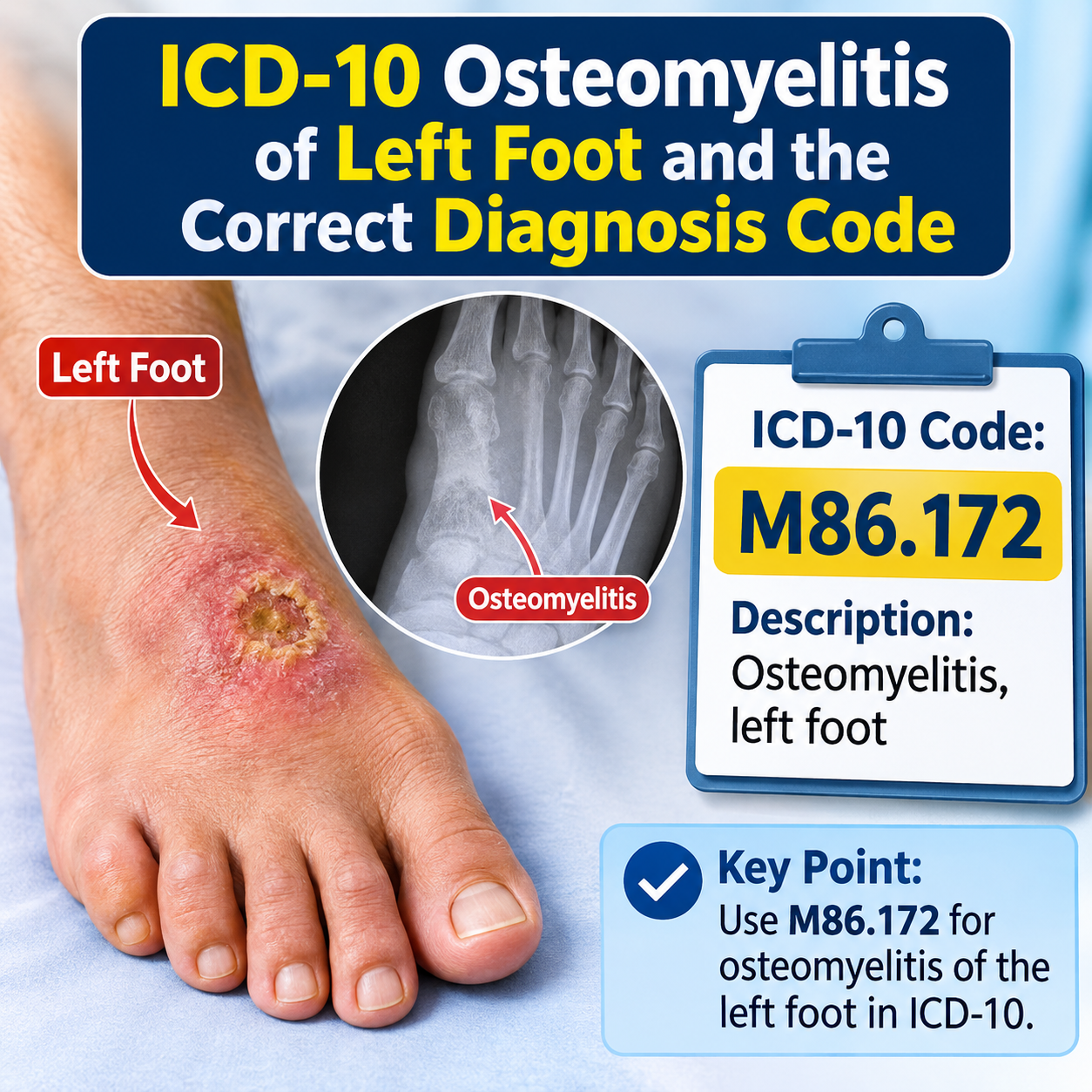
ICD 10 Osteomyelitis of Left Foot: Understanding the Correct Diagnosis Code
The icd 10 osteomyelitis of left foot classification helps healthcare professionals document bone infections accurately, identify the affected anatomical area, and support appropriate medical billing. However, selecting the correct code requires more than identifying the left foot. The type, duration, and clinical characteristics of the infection also matter.
Osteomyelitis is a serious infection involving bone tissue. It can affect the toes, metatarsals, heel, and other structures within the foot. Bacterial infections are the most common cause, although certain fungal infections can also affect bone.
The International Classification of Diseases, Tenth Revision, Clinical Modification (ICD-10-CM), provides different codes for acute, subacute, and chronic osteomyelitis. Understanding these distinctions helps prevent coding errors and improves communication between doctors, hospitals, insurance providers, and medical billing professionals.
This guide explains the relevant diagnosis codes, their differences, common symptoms, diagnostic procedures, treatment options, and frequently asked questions.
What Is the ICD 10 Osteomyelitis of Left Foot Code?
There is no single universal code for every case of osteomyelitis affecting the left foot. The correct ICD-10-CM code depends on the documented type of infection.
For the 2027 fiscal-year classification, relevant codes include:
-
M86.072: Acute hematogenous osteomyelitis, left ankle and foot.
-
M86.172: Other acute osteomyelitis, left ankle and foot.
-
M86.272: Subacute osteomyelitis, left ankle and foot.
-
M86.372: Chronic multifocal osteomyelitis, left ankle and foot.
-
M86.472: Chronic osteomyelitis with draining sinus, left ankle and foot.
-
M86.572: Other chronic hematogenous osteomyelitis, left ankle and foot.
-
M86.672: Other chronic osteomyelitis, left ankle and foot.
-
M86.8X72: Other osteomyelitis, left ankle and foot.
These codes describe different clinical conditions rather than interchangeable diagnoses. For example, M86.172 identifies other acute osteomyelitis, whereas M86.672 identifies other chronic osteomyelitis.
The appropriate selection must follow the medical documentation and the applicable fiscal-year code set. A coder should not assume that an unspecified diagnosis belongs to one of these categories.
According to the Centers for Disease Control and Prevention, ICD-10-CM provides a standardized system for classifying medical diagnoses in the United States. The official code browser and annual updates help users verify current classifications.
Why Is Correct Osteomyelitis Coding Important?
Accurate coding supports several important healthcare activities.
1. Medical documentation: Diagnosis codes communicate the patient's condition clearly across healthcare settings.
2. Insurance processing: Insurers use diagnosis information when reviewing claims and determining coverage under applicable policies.
3. Treatment planning: Proper documentation helps clinicians understand the infection's location, classification, and clinical history.
4. Healthcare statistics: Consistent coding supports research, disease monitoring, and public health reporting.
5. Medical record management: Correct codes make it easier to retrieve and compare information during future appointments.
An incorrect code can create confusion, claim delays, and inaccurate medical records. Therefore, healthcare professionals should review the complete clinical record before assigning a diagnosis code.
What Causes Osteomyelitis in the Left Foot?
Osteomyelitis develops when microorganisms enter bone tissue and establish an infection. Bacteria, particularly Staphylococcus aureus, are common causes.
Infections may reach the left foot through several pathways.
Direct contamination
An open fracture, puncture wound, surgical procedure, or deep injury can introduce bacteria into nearby bone.
Spread from surrounding tissue
A skin infection, infected ulcer, or deep soft-tissue infection can gradually spread into the underlying bone.
Bloodstream infection
Bacteria circulating through the bloodstream can travel to bone tissue. This pathway is called hematogenous spread.
Diabetes-related foot complications
People with diabetes may develop reduced sensation and poor circulation. Minor injuries can remain unnoticed, allowing wounds to become infected and potentially involve bone.
Other risk factors include:
-
Peripheral arterial disease.
-
Previous foot surgery.
-
Open injuries.
-
Weakened immune function.
-
Previous bone infections.
-
Poorly healing wounds.
Recognising these factors helps healthcare professionals investigate possible bone infections earlier.
What Symptoms Suggest Osteomyelitis in the Left Foot?
Symptoms vary according to the infection's severity, duration, and underlying cause.
Common warning signs include:
-
Persistent pain around the affected bone.
-
Swelling in the foot or ankle.
-
Redness and increased skin temperature.
-
Tenderness when pressure is applied.
-
Difficulty walking or bearing weight.
-
Fever and chills.
-
Drainage from an infected wound.
-
Delayed wound healing.
Acute infections may develop rapidly and cause significant pain, swelling, and fever. Chronic infections can produce intermittent discomfort, persistent wounds, or draining sinus tracts.
Some people, particularly those with diabetic neuropathy, may experience limited pain despite having a serious infection. Therefore, the absence of severe discomfort does not exclude osteomyelitis.
Seek urgent medical assessment if you experience worsening foot swelling, redness, warmth, fever, or a wound that appears infected. Confusion, rapid breathing, severe weakness, or other signs of serious systemic infection require emergency care.
How Is Osteomyelitis of the Left Foot Diagnosed?
Diagnosis involves combining clinical assessment, laboratory investigations, imaging, and sometimes microbiological testing.
Physical examination
The clinician examines the affected foot for swelling, tenderness, redness, wounds, discharge, and reduced movement. They may also assess circulation and sensation.
Blood investigations
Common tests include:
-
Complete blood count (CBC).
-
C-reactive protein (CRP).
-
Erythrocyte sedimentation rate (ESR).
-
Blood cultures when bloodstream infection is suspected.
Raised inflammatory markers can support the diagnosis, but normal results do not always exclude infection.
Imaging examinations
Different imaging methods provide information about bone damage and surrounding tissues.
X-ray: Often the initial investigation. Early infections may not produce visible abnormalities.
MRI: Particularly useful for identifying early bone inflammation, marrow changes, and surrounding soft-tissue infection.
CT scan: Provides detailed images of bone structure and may help identify destruction or areas of dead bone.
Bone biopsy and culture
A bone sample may be collected to identify the microorganism responsible for infection. Culture results help clinicians select suitable antimicrobial treatment.
When clinically safe, obtaining appropriate samples before starting antibiotics can improve the chances of identifying the organism. However, treatment must not be delayed in patients who are seriously ill.
How Do Doctors Select the Correct ICD-10 Diagnosis Code?
Selecting the correct icd 10 osteomyelitis of left foot classification requires careful examination of the provider's documentation.
The coding professional should establish four essential details:
-
Whether osteomyelitis has been confirmed.
-
Whether the infection is acute, subacute, or chronic.
-
Whether a specific disease subtype has been documented.
-
Whether the affected anatomical location and laterality are recorded.
For example, a documented diagnosis of acute hematogenous osteomyelitis involving the left ankle and foot supports M86.072.
However, a documented diagnosis of chronic osteomyelitis with a draining sinus involving the same region supports M86.472.
A diagnosis described only as osteomyelitis of the left foot may not provide enough information to select a more specific subtype. The coder should consult the Alphabetic Index and Tabular List and request clarification when necessary.
Understanding unspecified osteomyelitis
M86.9 represents osteomyelitis, unspecified. It does not communicate the same anatomical and clinical detail as a site-specific code.
Therefore, M86.9 should not automatically replace a more appropriate code when the documentation provides additional information.
The phrase left foot alone does not establish whether the infection is acute, chronic, hematogenous, or another specified type.
What Is the Difference Between Acute and Chronic Osteomyelitis?
Understanding the clinical classification is essential for accurate diagnosis coding.
Acute osteomyelitis generally develops over a relatively short period. Symptoms may include sudden pain, swelling, warmth, and fever. Early diagnosis and appropriate antimicrobial treatment can help prevent permanent damage.
Subacute osteomyelitis develops over a more gradual period. Symptoms may be less pronounced, and diagnosis can sometimes be delayed.
Chronic osteomyelitis involves persistent or recurrent bone infection. It may include dead bone tissue, repeated inflammation, and draining sinus tracts.
Chronic infections sometimes require prolonged treatment and surgical removal of infected or nonviable tissue.
These categories cannot be assigned solely according to symptom duration without considering the provider's clinical assessment and coding rules.
What Treatment Options Are Available for Left Foot Osteomyelitis?
Treatment aims to eliminate the infection, preserve healthy bone, prevent complications, and restore foot function.
Antibiotic therapy
Antibiotics are the main treatment for bacterial osteomyelitis. The choice depends on the suspected organism, culture results, infection severity, allergies, kidney function, and other patient-specific factors.
Treatment may involve intravenous antibiotics initially, followed by oral medication when clinically appropriate.
The treatment period varies. Many patients require several weeks of therapy, although complicated infections may need longer management.
Patients should follow their prescribed schedule and should not stop medication simply because symptoms improve.
Surgical treatment
Surgery may be necessary when antibiotics alone cannot adequately control the infection.
Possible procedures include:
-
Draining an abscess.
-
Removing infected or dead bone.
-
Cleaning damaged tissue through debridement.
-
Repairing soft-tissue defects.
-
Stabilising affected structures when necessary.
In selected severe cases, partial or complete amputation may be required to control infection and protect the patient's overall health.
Wound care and foot protection
Appropriate wound management supports recovery.
Patients may need professional dressing changes, pressure-relieving footwear, offloading devices, and regular wound assessments.
People with diabetes should receive appropriate glucose management and circulation assessment.
Can Natural Approaches Support Osteomyelitis Recovery?
People researching Natural Remedies for Osteomyelitis should understand the difference between supportive care and infection treatment. No herbal preparation, dietary supplement, or home remedy has been established as a reliable replacement for antibiotics or necessary surgery.
Healthy nutrition can support normal tissue repair. A balanced diet containing adequate protein, vitamins, minerals, and sufficient calories may help the body recover.
Other supportive measures include:
-
Following the prescribed treatment plan.
-
Keeping wounds clean according to professional instructions.
-
Avoiding unnecessary pressure on the affected foot.
-
Managing blood glucose when diabetes is present.
-
Attending scheduled medical appointments.
-
Avoiding smoking.
Before taking supplements, discuss possible interactions with a doctor or pharmacist. Some products can affect medication safety, bleeding risk, or kidney function.
What Is the Role of Nutrition During Bone Infection Recovery?
Nutrition contributes to normal bone (Natural Treatment for Bone Infection) maintenance, immune function, and tissue repair. However, nutritional support does not independently eradicate bacterial infection.
Important nutrients include:
Protein: Supports tissue maintenance and repair. Sources include eggs, fish, poultry, beans, and dairy products.
Calcium: Contributes to normal bone structure. Dairy products, fortified alternatives, and certain leafy vegetables provide calcium.
Vitamin D: Helps the body absorb calcium and maintain healthy bones.
Vitamin C: Supports collagen formation and normal wound healing.
Zinc: Participates in immune function and tissue repair.
People with restricted diets or nutritional deficiencies may benefit from professional dietary assessment.
A clinician can determine whether supplementation is necessary based on individual circumstances rather than recommending high doses without testing.
How Can Patients Prevent Further Foot Complications?
Preventive foot care is particularly important for people with diabetes, circulation problems, or previous infections.
Practical measures include:
-
Inspecting both feet daily.
-
Checking between the toes for injuries.
-
Wearing comfortable, properly fitted footwear.
-
Avoiding walking barefoot.
-
Cleaning minor wounds appropriately.
-
Seeking early assessment for redness or swelling.
-
Managing diabetes and vascular conditions.
-
Attending regular foot examinations.
Never attempt to remove deep foreign objects or cut into an infected wound yourself.
Early assessment can help prevent a minor injury from progressing into a serious infection.
Are Herbal Care Products Suitable for Treating Osteomyelitis?
Herbal Care Products may be marketed for general wellness, skin care, or nutritional support. However, marketing claims should not be confused with proven medical treatment for bone infections.
Osteomyelitis involves microorganisms within bone tissue, where topical creams and ordinary skin preparations cannot reliably reach or eliminate the infection.
Patients should avoid applying unverified substances to open wounds, surgical sites, or draining areas. Irritating ingredients can damage tissue or complicate wound assessment.
If someone wishes to use complementary products, the treating clinician should review their ingredients and potential interactions first.
The priority must remain evidence-based medical treatment, appropriate wound management, and regular monitoring.
What Complications Can Occur Without Proper Treatment?
Untreated or inadequately treated osteomyelitis can cause serious complications.
Possible problems include:
-
Permanent bone damage.
-
Bone necrosis.
-
Persistent abscess formation.
-
Chronic draining sinus tracts.
-
Spread into surrounding soft tissues.
-
Difficulty walking.
-
Recurrent infection.
-
Sepsis in severe cases.
People with diabetes or poor circulation may face additional risks because reduced blood flow can interfere with healing.
Early diagnosis and appropriate specialist care reduce the likelihood of severe complications.
Frequently Asked Questions
What is the correct ICD-10 code for osteomyelitis of the left foot?
There is no single code for every type. M86.072 describes acute hematogenous osteomyelitis, M86.172 describes other acute osteomyelitis, and M86.672 describes other chronic osteomyelitis involving the left ankle and foot.
Is M86.9 the correct code for every left foot bone infection?
No. M86.9 means unspecified osteomyelitis. More specific codes should be selected when the medical documentation supports them.
Can osteomyelitis affect the toes?
Yes. Infection can involve toe bones, metatarsals, and other foot structures. The appropriate code depends on the documented anatomical classification.
How long does osteomyelitis treatment take?
Treatment commonly lasts several weeks. The duration depends on infection severity, the responsible microorganism, surgical requirements, and the patient's response.
Can osteomyelitis return after treatment?
Yes. Chronic or complicated infections can recur, particularly when infected bone remains or underlying risk factors are not adequately managed.
Is surgery always necessary?
No. Some patients respond to appropriate antibiotics without surgery. Others require drainage or removal of infected bone, depending on the clinical findings.
Can a foot X-ray confirm early osteomyelitis?
Not always. Early X-rays may appear normal. MRI is generally more sensitive for identifying early bone infection.
Which specialist treats osteomyelitis?
Treatment may involve an orthopaedic surgeon, infectious disease specialist, podiatrist, radiologist, and wound-care professional, depending on the patient's condition.
Conclusion
Accurate coding of osteomyelitis affecting the left foot requires attention to the infection subtype, anatomical location, and medical documentation. The correct ICD-10-CM classification supports reliable medical records, appropriate billing, and clear communication between healthcare professionals.
Patients should seek timely medical evaluation when experiencing persistent foot pain, swelling, redness, fever, or infected wounds. Antibiotics, surgical procedures, wound management, and supportive care may all contribute to recovery.
Most importantly, diagnosis codes describe medical conditions; they do not replace clinical assessment. Healthcare professionals should always verify the applicable annual code set and select the most specific code supported by the patient's documented diagnosis.

 English
 Arabic
 French
 Portuguese
 Deutsch
 Turkish
 Dutch
 Italiano
 Russian
 Romaian
 Portuguese (Brazil)
 Greek