


What Role Do Buck Converters Play in Efficient DC Power Design?
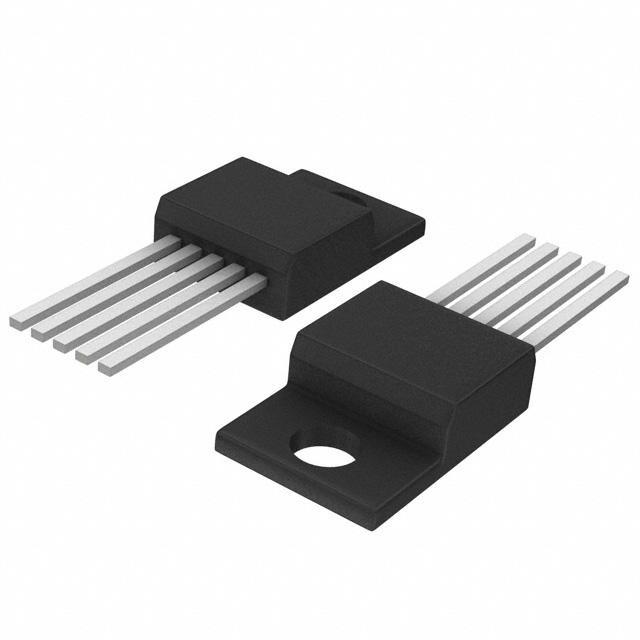
Modern electronics depend on precise and reliable power delivery. A single device may contain processors, sensors, communication modules, displays, memory circuits, and control components, all of which can require different operating voltages. Supplying the correct voltage to each section of a system is therefore a fundamental part of electronic design.
A buck converter is one of the most effective solutions for reducing a higher DC voltage to a lower regulated level. Instead of simply dissipating excess energy, it uses switching techniques to control how power is transferred. This makes the technology particularly valuable in applications where efficiency, heat management, battery life, and compact design are important.
Why Are Buck Converters Considered a Core Power Management Solution?
Buck Converters are step-down DC-to-DC power converters that produce an output voltage lower than their input voltage. They are widely used because they can provide efficient voltage conversion across many types of equipment, from small embedded systems to industrial electronics and automotive applications.
Their main advantage comes from the way they manage electrical energy. Rather than continuously dropping voltage through a resistive process, a buck converter rapidly switches power through an inductor and supporting components. This approach allows a large proportion of the input energy to reach the load instead of being lost as heat.
For engineers designing energy-conscious systems, this combination of regulation and efficiency makes buck converters an important building block.
How Does Energy Move Through a Buck Converter?
The operation of a buck converter is based on controlled switching. A semiconductor switch repeatedly turns on and off while an inductor and capacitor manage the flow and storage of energy.
When the switch turns on, current flows through the inductor to the load. During this period, energy is stored in the magnetic field of the inductor. When the switch turns off, the stored energy continues flowing toward the load through a secondary current path.
The output capacitor smooths the resulting voltage, helping maintain a stable supply for connected components.
Why Is the Inductor So Important?
The inductor is one of the key components in the conversion process because it resists rapid changes in current. This allows energy to be stored and released gradually rather than delivered in abrupt pulses.
Its value, current rating, resistance, and core characteristics can influence efficiency, ripple current, thermal behaviour, and overall converter performance.
How Does a Buck Converter Keep the Voltage Stable?
A feedback network continuously monitors the output voltage. The control circuit compares the measured voltage with an internal reference and adjusts the switching behaviour when necessary.
If the output begins to fall because the load increases, the controller can increase the amount of energy transferred during each switching cycle. If the output rises above the desired level, the controller reduces the transferred energy.
This closed-loop process allows the converter to maintain a stable output even when operating conditions change.
What Advantages Can Buck Converters Offer in Electronic Systems?
Buck converters are popular because they combine electrical efficiency with flexible design options. They can support many different input ranges, output levels, current demands, and operating environments.
Common advantages include:
- Efficient reduction of DC voltage
- Lower power loss than many linear regulation methods
- Reduced heat generation
- Better battery utilisation
- Support for high-current loads
- Compact circuit implementation
- Stable voltage regulation
- Compatibility with modern integrated control systems
- Flexible output-voltage options
These benefits can help improve both system performance and long-term reliability.
Why Are Buck Converters Useful in Battery-Powered Products?
Battery-powered devices operate with a limited amount of stored energy, so unnecessary power loss can reduce useful operating time. Efficient voltage conversion is therefore especially important in portable products.
A battery may provide a voltage that is too high for individual components. The buck converter reduces that voltage while preserving as much energy as possible.
This makes buck converters useful in products such as:
- Portable measurement equipment
- Wireless communication devices
- Smart home electronics
- Handheld industrial tools
- Embedded monitoring systems
- Battery-operated controllers
- Portable medical electronics
- Consumer digital devices
By reducing wasted energy, an efficient power architecture can help extend runtime between charging cycles.
How Are Buck Converters Used in Industrial Equipment?
Industrial power systems often use relatively high DC distribution voltages to supply multiple sections of a machine or control cabinet. Individual circuits, however, may require much lower voltage levels.
For example, an industrial system may use a 24 V supply while sensors, processors, interfaces, or communication modules operate at 12 V, 5 V, or 3.3 V.
Buck converters can create these lower voltage rails without requiring separate power supplies for every part of the system. This can simplify system architecture while supporting efficient power distribution.
Which Industrial Applications Commonly Need Them?
They are frequently found in automation controllers, factory sensors, robotics, remote monitoring devices, instrumentation, motor-control electronics, and communication modules.
Because many industrial systems operate continuously, reducing unnecessary power loss can also help limit heat accumulation inside enclosed equipment.
Why Are Automotive Designs Increasingly Dependent on Buck Conversion?
Vehicles are becoming increasingly electronic. Modern designs include advanced displays, cameras, radar systems, communication modules, sensors, electronic control units, infotainment systems, and assisted-driving technologies.
These components often operate at lower voltages than the main vehicle electrical system provides.
Buck converters make it possible to generate suitable voltage rails efficiently while maintaining a compact power architecture. Automotive-grade converters may also include features designed to handle wide input variations, temperature extremes, transient conditions, and demanding reliability requirements.
What Should Engineers Compare Before Selecting a Buck Converter?
Selecting a converter should involve more than checking the nominal input and output voltage. The complete operating environment should be considered.
Important specifications include:
- Minimum and maximum input voltage
- Regulated output voltage
- Maximum continuous current
- Peak current capability
- Efficiency across different loads
- Switching frequency
- Thermal resistance
- Output ripple
- Package type
- Operating temperature
- Protection functions
- Control mode
Evaluating these characteristics together helps ensure that the converter can perform reliably under real operating conditions.
Why Is Light-Load Performance Important?
Many electronic systems do not operate at maximum power all the time. Sensors, wireless devices, embedded controllers, and portable equipment may spend long periods in standby or low-power modes.
A converter that performs efficiently only at high current may waste significant energy during light-load operation.
Modern devices may use pulse-skipping, burst-mode, or other power-saving control techniques to maintain better efficiency when current demand is low.
This characteristic can be particularly important in battery-powered and always-on equipment.
How Can Protection Features Improve System Reliability?
Power converters may be exposed to short circuits, excessive current, overheating, unstable supplies, or abnormal operating conditions. Integrated protection functions can help prevent these situations from damaging the converter or connected components.
Useful protection features can include:
- Overcurrent protection
- Thermal shutdown
- Short-circuit protection
- Undervoltage lockout
- Overvoltage protection
- Soft-start functionality
These features can improve system robustness and reduce the risk of failure during electrical faults or startup events.
Why Does Thermal Management Still Matter in an Efficient Converter?
Even an efficient converter generates some heat. Power losses can occur in switching devices, inductors, capacitors, PCB traces, and internal control circuitry.
As output current increases, thermal management becomes more important. Designers may need to consider PCB copper area, airflow, component spacing, package thermal characteristics, and operating temperature.
A converter that remains within safe temperature limits is more likely to maintain reliable performance over its intended service life.
How Can PCB Design Affect Buck Converter Performance?
Switching converters operate with rapidly changing currents and voltages. Poor PCB layout can therefore create unwanted noise, voltage spikes, ripple, and electromagnetic interference.
Critical components should be positioned carefully to keep switching-current paths short. Grounding should be planned to minimise interference between power and sensitive control sections.
Following the recommended layout provided for the selected regulator can help improve stability and overall performance.
What Makes Buck Converters Important for the Future of Electronics?
The electronics industry continues to move toward smaller devices, higher processing performance, lower operating voltages, and improved energy efficiency. These trends increase the importance of effective power conversion.
Buck converters provide a practical way to transform available DC power into the lower voltage rails required by modern electronics. Their combination of efficiency, control, scalability, and integration makes them suitable for both simple and highly advanced systems.
As demand grows across automation, electric mobility, smart infrastructure, renewable-energy equipment, connected devices, and high-performance computing, efficient step-down conversion will remain a key part of electronic power design. Buck converters will continue to support this evolution by delivering dependable voltage regulation with reduced energy loss.

 English
 Arabic
 French
 Spanish
 Portuguese
 Deutsch
 Turkish
 Dutch
 Russian
 Romaian
 Portuguese (Brazil)
 Greek