


Who Owns the Insights? What is Intelligent Video Analytics Protect Data Privacy?
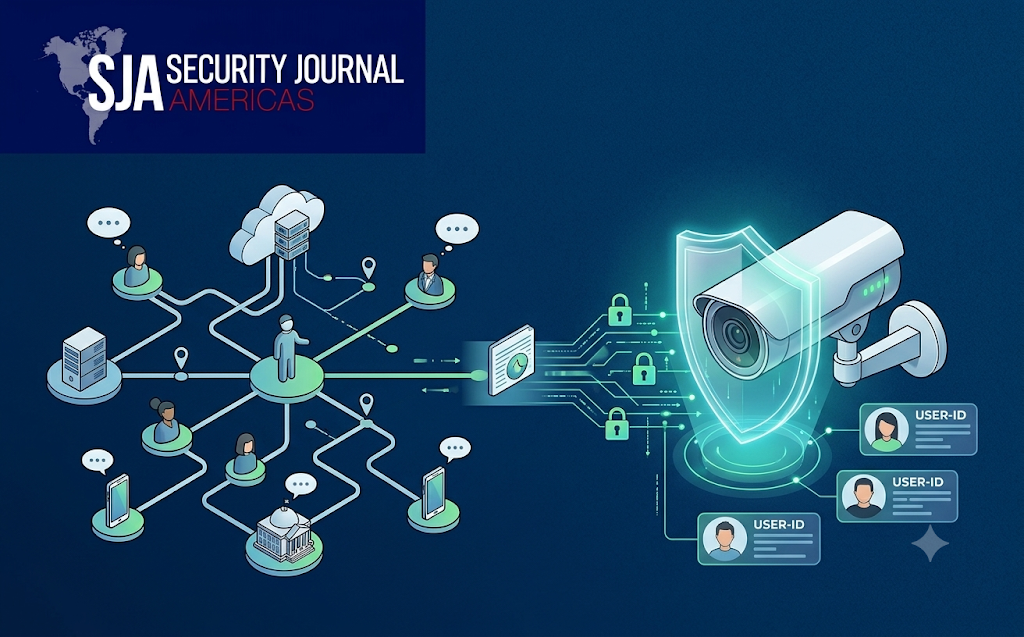
Video surveillance has traditionally focused on recording activities and providing footage for security investigations. However, modern monitoring technologies can now analyse visual information, identify objects, interpret movement and generate detailed operational insights.
While these capabilities create new opportunities for security management, they also introduce important questions about privacy, consent, data ownership and responsible information handling. Understanding what is intelligent video analytics requires more than examining its technical capabilities. Security professionals must also consider how visual information is collected, processed, stored and used.
As surveillance becomes increasingly data-driven, privacy should remain an essential part of system design.
Why Video Analytics Creates New Privacy Questions
Traditional CCTV primarily captures footage that security personnel can review when necessary. Advanced analytics introduces additional processing that may automatically classify people, vehicles and activities.
Depending on the system, this processing might include:
-
Identifying people entering specific areas.
-
Analysing movement patterns.
-
Monitoring occupancy levels.
-
Detecting unusual activities.
-
Recognising vehicle characteristics.
-
Generating reports about observed behaviour.
These capabilities can improve security awareness, but they also increase the amount of information that can be extracted from surveillance footage.
The central challenge is ensuring that collected information is used for legitimate and clearly defined purposes.
Understanding How Intelligent Video Analytics Processes Personal Information
When exploring what is intelligent video analytics, it is important to understand that the technology does not always process information in the same way.
Some solutions analyse movement and object characteristics without identifying individuals. Other systems may include facial recognition or other identity-related functions.
The distinction matters because different processing activities can create different privacy risks.
For example, detecting whether someone has entered a restricted zone is different from attempting to establish that person's identity.
Security teams should understand exactly which features are enabled and whether they are necessary for their operational requirements.
Five Major Privacy Challenges Security Teams Should Consider
1. Excessive Collection of Video Information
Installing cameras across every available location may appear to improve security coverage. However, collecting footage without a clearly defined purpose can create unnecessary privacy risks.
Camera placement should be based on genuine security requirements.
Sensitive areas, private spaces and locations where individuals reasonably expect privacy require particular consideration.
2. Unclear Data Ownership
Video footage may be collected by one party, processed by another and stored through an external infrastructure provider.
This can create uncertainty about who controls the information and who is responsible for protecting it.
Before implementation, organisations should establish clear responsibilities covering data access, processing, storage, retention and deletion.
3. Unauthorised Access to Surveillance Footage
Video data can become a valuable target for malicious individuals.
Weak passwords, poorly configured networks and outdated software can expose surveillance systems to unauthorised access.
Security controls should include strong authentication, access restrictions, encryption where appropriate and regular system updates.
4. Excessive Monitoring and Behavioural Profiling
Advanced analytics can identify patterns of movement and activity over time.
Although this information can support security operations, excessive monitoring may create concerns about how individuals are being observed and evaluated.
Systems should avoid collecting or interpreting information beyond their legitimate operational purpose.
5. Unclear Retention Policies
Keeping surveillance footage indefinitely can increase storage costs and create unnecessary exposure.
A defined retention policy should explain how long footage is stored, when it is deleted and which circumstances justify longer retention.
Can Intelligent Video Analytics Support Privacy Protection?
A well-designed system can incorporate privacy safeguards alongside its monitoring functions.
For example, privacy masking can obscure selected areas within a camera view. Access permissions can restrict footage to authorised personnel, while audit logs can record when sensitive information is accessed.
Some systems also support anonymisation or the removal of identifying details from analytical outputs.
These measures demonstrate that what is intelligent video analytics should be considered in the wider context of responsible data management.
Technology should be configured to collect only the information required for the intended security purpose.
The Importance of Privacy by Design
Privacy by design means considering data protection before surveillance technology is introduced rather than treating it as an additional requirement after installation.
Security teams can apply this approach through several practical steps.
Define the purpose: Establish why video analytics is required and which risks it should address.
Assess the data: Identify what information the system collects and whether personal information is involved.
Limit access: Ensure only authorised personnel can view sensitive footage.
Set retention periods: Establish reasonable storage and deletion procedures.
Review system performance: Regularly assess whether the technology continues to meet its intended purpose.
These measures can help create a more accountable surveillance environment.
What Role Do Data Protection Regulations Play?
Privacy requirements differ between jurisdictions, making it important to understand the legal framework applicable to each installation.
For example, the General Data Protection Regulation applies to relevant personal data processing within its territorial scope. In the United States, privacy obligations may arise from federal and state laws, depending on the type of information, industry and location.
Biometric information can receive additional legal protection in certain jurisdictions.
Organisations should obtain appropriate legal guidance before introducing identity-related analytics, particularly where facial recognition or behavioural profiling is involved.
How Should Organisations Build Trust Around Video Surveillance?
Public confidence is an important consideration when introducing advanced monitoring systems.
People should understand why surveillance is taking place, what information is being processed and how that information is protected.
Clear notices, accessible privacy policies and appropriate communication can help explain the purpose of surveillance.
Security teams should also establish processes for handling complaints, responding to information requests and investigating potential misuse.
Understanding what is intelligent video analytics therefore involves examining not only what the technology can detect but also how responsibly its capabilities are used.
Balancing Security Intelligence with Individual Privacy
The development of AI-powered video surveillance creates opportunities to identify risks more efficiently and improve security operations.
However, technological capability should not automatically justify every possible monitoring activity.
A responsible approach combines clearly defined security objectives, appropriate privacy controls and regular accountability reviews.
For readers of Security Journal Americas, privacy-conscious surveillance is an increasingly important consideration as video analytics becomes more sophisticated.
The future of intelligent monitoring will depend not only on detection accuracy but also on the confidence people have in how their information is handled.
Frequently Asked Questions
1. Does intelligent video analytics identify every person recorded by a camera?
No. Many systems detect objects and movement without identifying individuals. Identity recognition depends on whether specific biometric features are included.
2. Is video analytics considered personal data processing?
It can be, particularly when footage or analytical outputs identify or relate to an identifiable individual. Applicable privacy laws determine the relevant obligations.
3. How can organisations protect video surveillance data?
They can use encryption, access controls, authentication, audit logs, retention policies and regular security assessments.
4. Can surveillance footage be anonymised?
Certain systems can blur faces or remove identifying information. The effectiveness of anonymisation depends on the technology and the possibility of re-identification.
5. How long should intelligent surveillance footage be stored?
There is no universal retention period. Storage duration should reflect the legitimate purpose, applicable legal requirements and documented retention policies.

 Arabic
 French
 Spanish
 Portuguese
 Deutsch
 Turkish
 Dutch
 Italiano
 Russian
 Romaian
 Portuguese (Brazil)
 Greek