


Cheap International Calling Cards vs. Digital Calling Services: Which Saves More
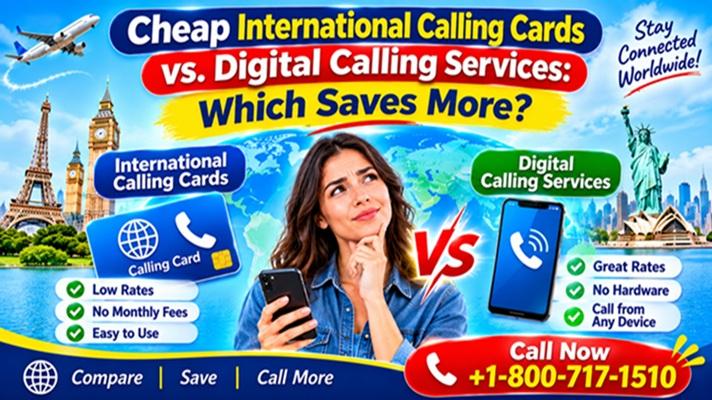
Calling family, friends, or business contacts abroad can be expensive if you rely on standard mobile rates. Cheap International Calling Cards and digital calling services both offer ways to reduce costs, but they work differently and suit different types of callers.
The best option is not always the one with the lowest advertised rate. To save money, you need to compare connection fees, maintenance charges, minute rounding, mobile surcharges, and how often you make calls.
What Are International Calling Cards?
International Calling Cards are prepaid services that let you make overseas calls using credit you buy in advance. You add a fixed amount of money, then use that balance until it runs out.
Traditional Calling Cards usually work like this:
1. Buy a physical card or digital credit.
2. Dial the provider’s access number.
3. Enter your PIN.
4. Dial the international phone number.
5. Talk until your balance is used.
These cards are useful because you pay before you call. You cannot accidentally spend more than the credit you added, which makes them helpful for people who want predictable calling costs.
What Are Digital Calling Services?
Digital calling services use an app, website, or online account to make international calls. Some services use VoIP, which routes calls over the internet instead of relying entirely on traditional telephone networks.
With a digital service, you can usually:
· Buy credit online.
· Check your balance in an app or account.
· See rates for different countries.
· Call without entering a PIN.
· Use a smartphone, tablet, or computer.
· Make calls through Wi-Fi or mobile data.
VoIP services can be cheaper than traditional phone services, especially for regular international calling. However, calls to standard landlines and mobile numbers may still cost money, and the rate depends on the destination.
Cheap International Calling Cards vs. Digital Services
|
Feature |
Cheap International Calling Cards |
Digital Calling Services |
|
Calling method |
Access number and PIN |
App, website, or PINless dialing |
|
Internet requirement |
Usually not required for the call |
Often required for setup or VoIP calls |
|
Payment |
Prepaid credit |
Prepaid credit, pay-as-you-go, or plans |
|
Best for |
Landlines and basic phones |
Smartphone and computer users |
|
Balance tracking |
Often by phone |
Usually, visible online |
|
Hidden-fee risk |
Can be higher if terms are unclear |
Varies by provider and pricing model |
|
Call quality |
Depends on phone network |
Depends on internet connection |
Cheap International Calling Cards may be the better choice if you use a landline, do not have reliable internet, or prefer a simple prepaid option. Digital calling services may be better if you call often, use a smartphone, and want easier account management.
Which Option Saves More?
The answer depends on how you call.
Cheap International Calling Cards may save more if you:
· Make occasional international calls.
· Use a landline or basic mobile phone.
· Do not have reliable internet access.
· Prefer paying a fixed amount before calling.
· Need to call from a hotel, public phone, or another location without an app.
Digital calling services may save more if you:
· Make frequent international calls.
· Have a stable Wi-Fi or mobile-data connection.
· Want to check rates and balances online.
· Prefer PINless calling.
· Call from a smartphone or computer.
For travelers, a calling card can sometimes be cheaper than using a hotel phone or paying mobile roaming charges. The FCC recommends using a calling card from a phone booth rather than a mobile phone, when possible, because regular mobile per-minute charges may still apply.
Watch Out for Hidden Fees
A low advertised rate does not always mean a Calling Card is the cheapest option. Some cards reduce your balance through connection fees, maintenance fees, or minute rounding.
Common charges include:
Connection fee: A charge added when a call connects.
Maintenance fee: A recurring deduction from unused credit.
Minute rounding: Calls may be billed in blocks, such as three or five minutes.
Mobile surcharge: A higher rate for calling mobile numbers.
Access-number fee: An extra charge for using a toll-free access number.
Expiration date: Credit may expire after a period of inactivity.
Post-call fee: A fee deducted after each completed call.
How to Choose the Right Service
Before buying, compare both options using the same calling pattern.
· Check the exact rate for the country you call most often.
· Confirm whether mobile numbers cost more than landlines.
· Look for connection, maintenance, and access-number fees.
· Check how calls are rounded and whether there is a minimum charge.
· Read the expiration and inactivity rules.
· Start with a small amount of credit.
· Make a test call and check how much balance was deducted.
· Compare the effective cost per minute, not just the advertised rate.
The FCC recommends researching prepaid calling cards, mobile-phone options, and internet-based VoIP services before making international calls.
Final Thoughts
Cheap International Calling Cards and digital calling services can both help you save money on overseas calls. Traditional Calling Cards offer prepaid control and can work without internet access, while digital services provide convenience, online balance tracking, and often easier calling through apps or browsers.
The cheapest option depends on your calling habits. If you make occasional calls from a landline, a prepaid Calling Card may be the better choice. If you call often and have reliable internet, a digital VoIP-based service may offer better value. Always read the terms, calculate the real cost per minute, and avoid services with unclear fees.

 English
 Arabic
 French
 Spanish
 Portuguese
 Deutsch
 Turkish
 Italiano
 Russian
 Romaian
 Portuguese (Brazil)
 Greek