


Beyond Lead Generation: Using AI to Accelerate Real Estate Sales
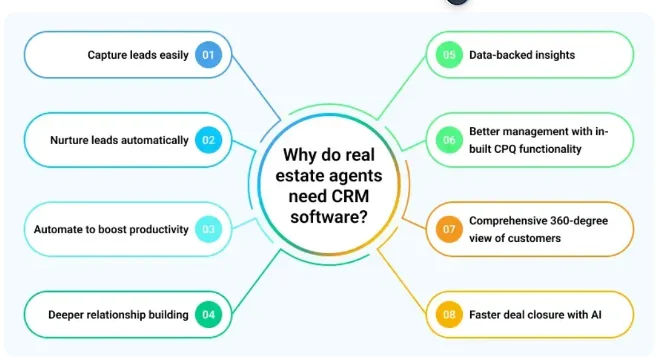
The real estate industry has always depended on one critical factor: turning interested prospects into serious buyers. Yet, managing thousands of leads, identifying high-intent prospects, following up at the right time, and encouraging potential buyers to schedule property visits can be challenging. This is where artificial intelligence (AI) in real estate sales is transforming the traditional sales process.
From intelligent lead scoring to personalized booking nudges, AI helps real estate businesses understand buyer intent and create more meaningful interactions. Instead of treating every lead equally, sales teams can use AI to prioritize prospects, automate repetitive tasks, and improve conversion opportunities.
How AI Is Changing Real Estate Sales
Real estate sales involve a long customer journey. A prospect may first discover a property through search engines, social media, property portals, or advertisements. They may then request pricing information, download a brochure, ask about amenities, or schedule a call before finally booking a site visit.
Traditionally, sales representatives have had to manually monitor these interactions. AI can analyze customer behavior across multiple touchpoints and identify patterns that indicate purchase intent.
AI-powered systems can evaluate factors such as website visits, property searches, inquiry frequency, responses to messages, preferred locations, budget ranges, and engagement with property listings. These insights allow sales teams to focus their efforts where they are most likely to generate results.
AI-Powered Lead Scoring
One of the most valuable applications of AI in real estate sales is intelligent lead scoring.
Traditional lead scoring often assigns points based on predefined actions. For example, downloading a brochure may receive five points, submitting an inquiry may receive ten points, and requesting a callback may receive fifteen points.
AI-powered lead scoring goes further by analyzing multiple behavioral signals simultaneously. It can recognize patterns that human teams may overlook.
For example, suppose two prospects submit inquiries for the same residential project. One prospect only provides contact information, while another repeatedly checks pricing, explores floor plans, visits the location page, and responds to WhatsApp messages. AI can identify the second prospect as having stronger buying intent.
This allows sales representatives to prioritize high-quality leads instead of spending equal time on every inquiry.
Understanding Buyer Intent
AI can help real estate companies move beyond basic lead information and understand buyer intent.
A prospect searching for “2 BHK apartments under ₹80 lakh” has different requirements from someone searching for luxury villas. AI can analyze search behavior and previous interactions to determine what type of property a customer is most interested in.
It can also identify buying signals, including:
- Frequent visits to specific property pages
- Repeated searches for pricing or payment plans
- Engagement with virtual tours
- Requests for brochures or floor plans
- Questions about possession dates
- Responses to sales messages
- Interest in location and nearby amenities
These signals can help sales teams determine which prospects are ready for a conversation and which ones need additional nurturing.
Personalized Follow-Ups at the Right Time
Following up with prospects is essential in real estate, but timing matters.
A sales representative who contacts a prospect too frequently may create a negative experience. Waiting too long can result in the prospect choosing a competitor.
AI can analyze engagement patterns and recommend suitable follow-up times. It can also help personalize communication based on the prospect's interests.
For instance, instead of sending a generic message such as “Are you still interested in the property?”, an AI-powered system could suggest a more relevant message:
“Hi, you recently viewed our 3 BHK floor plans. We have updated availability for similar units. Would you like to explore the latest options?”
Personalization makes communication more relevant and can increase the likelihood of a response.
From Follow-Ups to Booking Nudges
One of the most interesting applications of AI is the use of booking nudges.
A booking nudge is a timely reminder or recommendation designed to encourage a prospect to take the next step. In real estate, that next step could be scheduling a site visit, booking a consultation, attending a virtual property tour, or requesting a price quotation.
AI can determine when a prospect appears ready for such an action.
For example, if a customer has visited the same property several times, viewed available units, checked amenities, and interacted with pricing information, the system may recommend sending a site-visit invitation.
The message could be simple:
“Would you like to schedule a site visit this weekend? Our sales advisor can help you compare the available units and payment plans.”
The objective is not to pressure the customer. Instead, AI helps sales teams provide the right opportunity at the right moment.
AI and CRM Integration
AI becomes even more powerful when integrated with a real estate CRM.
A modern CRM can bring together leads, conversations, property preferences, sales activities, site visits, and follow-up history. AI can analyze this information and provide actionable recommendations to sales teams.
For example, an AI-enabled CRM might indicate that a lead has a high probability of conversion and recommend calling the customer within the next few hours.
It can also automatically update lead scores, assign leads to appropriate sales representatives, generate follow-up reminders, and identify inactive prospects who may need re-engagement.
This reduces administrative work and gives sales teams more time to focus on customer relationships.
Predictive Analytics for Sales Teams
AI can also help real estate companies forecast future sales.
By analyzing historical sales data and current lead behavior, predictive analytics can identify trends in demand and conversion rates. Businesses can use these insights to estimate how many leads may convert, which projects are attracting the most interest, and where sales teams should focus their resources.
For developers and real estate agencies managing multiple projects, this information can be especially valuable.
Instead of relying entirely on intuition, managers can make decisions using data-driven insights.
Chatbots and Conversational AI
AI-powered chatbots are another important component of modern real estate sales.
Potential buyers often have questions about property prices, floor plans, amenities, locations, possession dates, and financing options. A chatbot can answer common questions instantly and collect basic information from prospects.
Conversational AI can also qualify leads before transferring them to a human sales representative.
For example, the chatbot may ask about budget, preferred configuration, location, and expected purchase timeline. Based on the responses, it can categorize the prospect and route the lead to the appropriate salesperson.
This creates a smoother experience while reducing the workload for sales teams.
Balancing Automation With Human Interaction
Although AI can automate many parts of the sales journey, real estate remains a relationship-driven industry.
Buying a home or commercial property is a major financial decision. Customers often need advice, reassurance, negotiation, and personal interaction before making a purchase.
Therefore, AI should support sales representatives rather than completely replace them.
AI can identify the best opportunities, recommend actions, automate routine communication, and provide useful customer insights. Human sales professionals can then focus on conversations that require empathy, negotiation, and trust.
The Future of AI in Real Estate Sales
The future of real estate sales will likely involve an increasingly connected ecosystem where AI, CRM platforms, marketing automation, and sales teams work together.
From the first property search to the final booking, AI can help businesses understand customer intent and provide personalized experiences throughout the journey.
Lead scoring identifies promising prospects. Predictive analytics highlights conversion opportunities. Conversational AI answers questions. CRM systems organize customer information. Finally, intelligent booking nudges encourage prospects to take meaningful next steps.
For real estate companies, the goal is not simply to generate more leads. It is to understand those leads better and convert them more efficiently.
Conclusion
AI is redefining how real estate companies approach sales. Leadynest: By combining intelligent lead scoring, behavioral analysis, personalized follow-ups, CRM automation, predictive analytics, and timely booking nudges, businesses can create a more efficient and customer-focused sales process.
The biggest advantage of AI is its ability to turn large amounts of customer data into actionable insights. When combined with skilled sales professionals, these insights can help real estate businesses engage prospects at the right time, deliver more relevant experiences, and ultimately improve conversion rates.

 English
 Arabic
 French
 Spanish
 Portuguese
 Deutsch
 Turkish
 Italiano
 Russian
 Romaian
 Portuguese (Brazil)
 Greek
Greek