


EMF Proof Beanie Myths vs Facts | What is True and What Is not
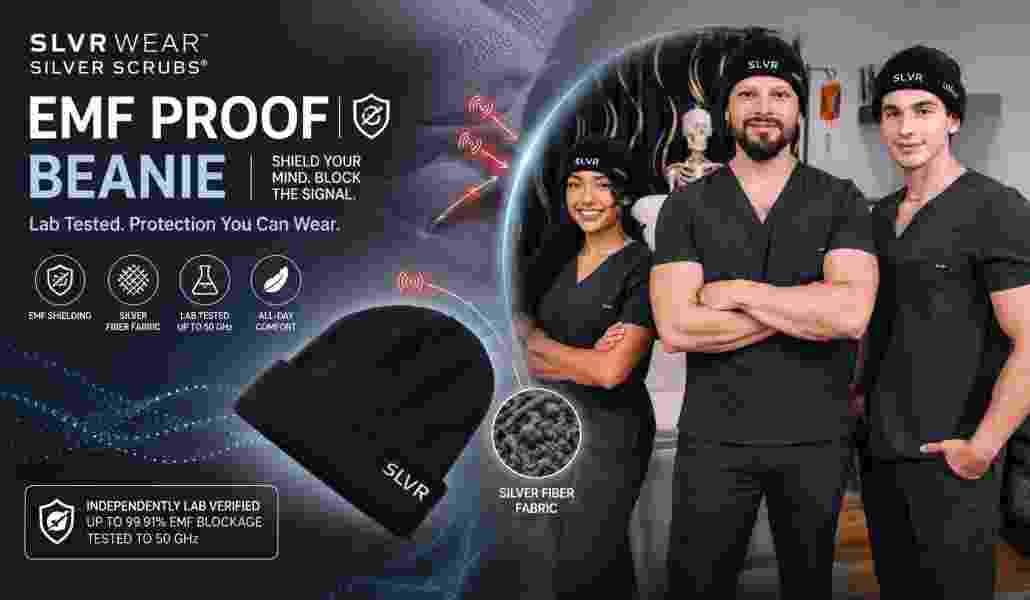
The emf blocking beanie category has grown fast, and with that growth has come a fair amount of confusion, some of it from overhyped marketing, some of it from genuine misunderstanding of how shielding textiles work. This article goes through the most common myths surrounding emf proof beanies and lays out what's actually accurate, based on the materials science behind conductive fabric.
Myth Any Beanie Labeled EMF Provides the Same Shielding
FactThis is one of the most common misconceptions in the category. Not all products labeled EMF blocking are constructed the same way. Some use silver fiber woven directly into the yarn, which tends to hold its shielding properties over time. Others use a surface coating that can wear off with washing and everyday friction, meaning the actual shielding performance can vary significantly between two products carrying an identical label. The construction method matters as much as arguably more than the label itself.
Myth More Silver Always Means Better Performance
FactFiber percentage is only one variable. Construction method (woven vs coated), knit density, and overall fabric engineering all play a role in how a shielding beanie performs and how long that performance lasts. A well engineered blend with a properly woven construction can outperform a higher percentage product that's poorly constructed or prone to washing out.
Myth EMF Shielding Fabric Is a New, Unproven Technology
FactThe underlying principle of conductive materials interacting with electromagnetic fields is a long established engineering concept used across multiple industries well beyond apparel, including electronics housings and specialized protective equipment. What's relatively newer is applying that principle to soft, wearable, washable knit textiles like beanies, which is a manufacturing and materials engineering challenge rather than an unproven scientific concept.
Myth A Shielding Beanie Has to Look Technical or Clinical
Fact, Fabric quality and styling are separate from the shielding function. A well made woven silverfiber beanie can look and feel like an ordinary knit beanie soft hand, normal stretch, standard styling because the conductive fiber is part of the yarn structure rather than a visible external layer. You can see this in practice on the lifestyle home headwear EMF blocking beanie product page, which is styled as everyday headwear rather than technical gear.
Myth Washing an EMF Beanie Ruins Its Shielding Ability
Fact , This depends entirely on construction. A beanie with silver fiber genuinely woven into the yarn is generally designed to be machine washable without the conductive fiber washing out, provided normal care instructions are followed (cold water, gentle cycle, avoiding fabric softener). It's coated fabrics where the conductive layer sits on the surface rather than being part of the yarn that are more vulnerable to washingrelated degradation.
Myth vs Fact Quick Reference
|
Claim |
Myth or Fact |
|
All EMF labeled beanies shield equally well |
Myth construction method varies significantly |
|
Woven silver fiber holds up better than coated fabric |
Fact coatings tend to wear off over time |
|
Shielding fabric always looks technical or stiff |
Myth wellmade woven knit feels like ordinary fabric |
|
Conductive shielding is an established engineering principle |
Fact used across multiple industries for decades |
|
Washing always destroys shielding performance |
Myth depends on construction; woven fiber generally holds up |
Myth One Beanie Covers All EMF Exposure Concerns
A beanie shields the area it physically covers the scalp and ears. It isn't a wholebody solution and isn't marketed as one. People who want broader coverage typically combine a beanie with other shielding products designed for different parts of the body or different use cases, such as a Faraday phone pouch for a device or shielding apparel for the torso, like SLVR Wear's Silver Scrubs ® line, which applies the same woven fiber principle to a different garment.
Myth Certification Labels Like OEKOTEX Relate to Shielding Performance
FactOEKOTEX Standard 100 certification verifies that the yarn has been tested and found free of a defined list of potentially harmful substances; it's a textile safety and manufacturing quality certification, not a measurement of EMF shielding performance. Both are useful, legitimate things to look for, but they answer different questions about a product.
Myth Cheap and Expensive EMF Beanies Are Basically Interchangeable
Fact Price differences in this category often trace back to construction method and fiber sourcing. A lowercost product achieved through a cheaper coating process rather than woven fiber construction is a meaningfully different product, even if the marketing language looks similar. Comparing based on construction details, not price alone, gives a clearer picture of what you're actually buying.
Getting the Real Facts Before You Buy
The best defense against marketing hype in this category is understanding the underlying materials science well enough to ask specific questions; is the fiber woven or coated, what's the blend composition, is the yarn certified, and how is it cared for. Brands that are transparent about these details are generally more trustworthy than those relying on vague claims. For a full look at how one brand approaches this transparency across its catalog, SLVR Wear ™ homepage outlines the full range of shielding apparel and accessories built on woven silverfiber construction.
Frequently Asked Questions(FAQs)
Is it true that all EMF beanies use the same shielding technology?
No, construction methods vary; some use silver fiber woven into the yarn, others use a surface coating, and the two perform differently over time, especially after washing.
Does a higher price always mean better shielding performance in a beanie?
Not automatically, but price differences often reflect construction methods and fiber sourcing, which do meaningfully affect long term performance and durability.
Is the science behind EMF shielding fabric considered legitimate?
The core principle of conductive materials interacting with electromagnetic fields is an established engineering concept used across multiple industries, applied here to wearable knit textiles.
Can I trust a beanie that doesn't list its fiber composition?
It's reasonable to be cautious. Transparent fiber and construction details are a good indicator of a trustworthy product listing.
Does an EMF beanie need special washing to preserve its shielding function?
Beanies with woven (not coated) silver fiber are generally designed for normal machine washing, following standard gentle cycle care instructions.

 English
 Arabic
 French
 Spanish
 Deutsch
 Turkish
 Dutch
Dutch
 Italiano
 Russian
 Romaian
 Portuguese (Brazil)
 Greek
Greek