


Medical Billing Company: How Better Billing Processes Help Healthcare Practices Improve Revenue
Healthcare practices provide essential medical services, but receiving payment for those services requires accurate documentation, insurance verification and consistent claim management. A single billing error can delay reimbursement and create additional administrative work.
Working with a medical billing company can help healthcare providers manage these processes, identify payment discrepancies and maintain organized revenue cycle operations.
What Does a Medical Billing Company Do?
A medical billing company manages the financial activities involved in collecting payments from insurance companies and patients.
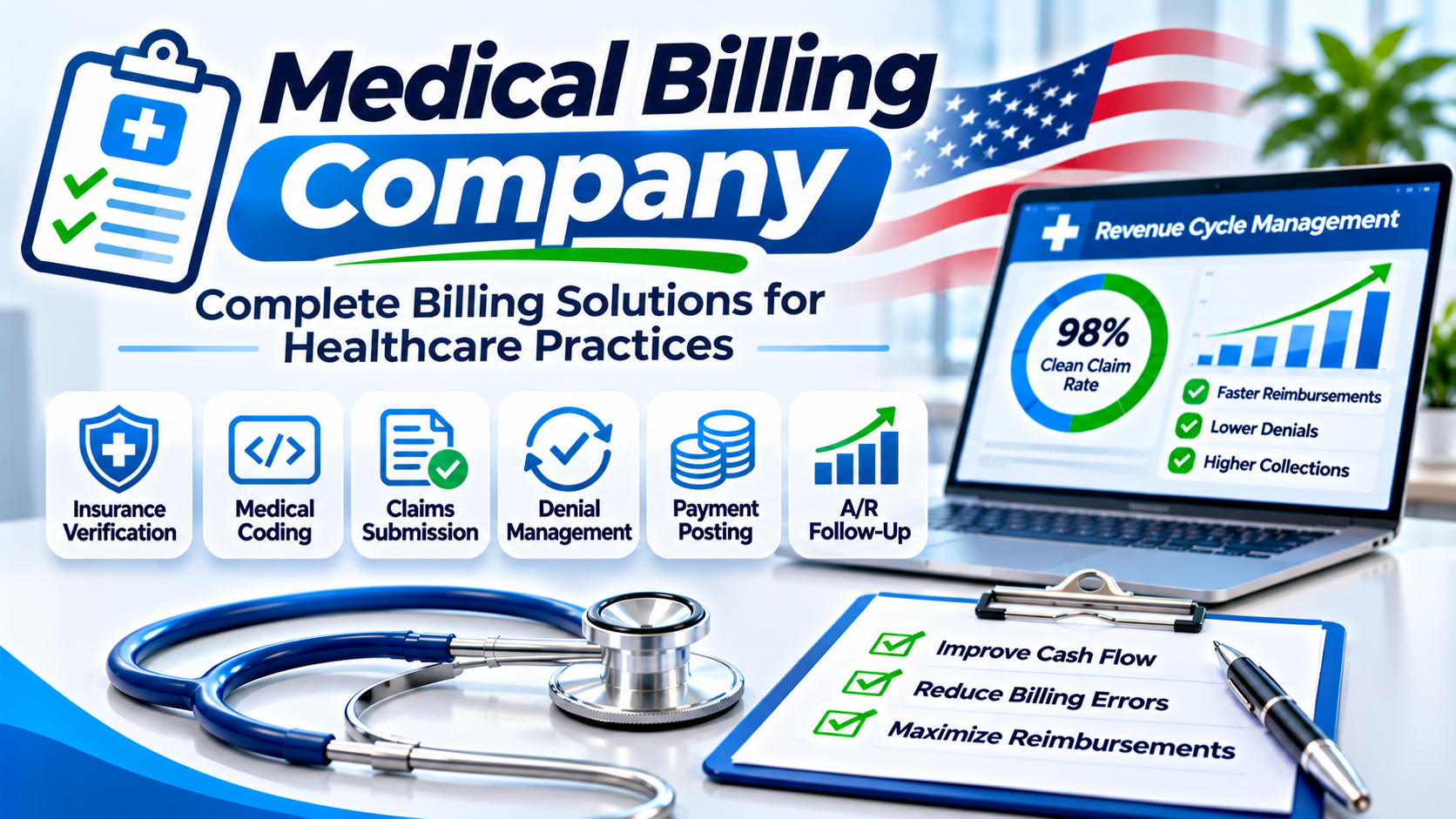
These services typically include:
-
Insurance Verification: Confirming patient eligibility, benefits and coverage requirements.
-
Medical Coding: Reviewing CPT, ICD-10-CM and HCPCS codes.
-
Claims Submission: Preparing and submitting accurate insurance claims.
-
Denial Management: Investigating denied claims and identifying appropriate corrections.
-
Payment Posting: Recording reimbursements and contractual adjustments.
-
Accounts Receivable: Monitoring unpaid claims and following up with insurers.
Together, these activities support the financial processes between patient registration and final reimbursement.
Why Do Medical Billing Errors Affect Practice Revenue?
Medical billing errors can occur at different stages of the revenue cycle.
For example, a healthcare practice may submit a claim using an outdated insurance member ID. The payer could reject the submission, requiring additional verification before processing.
Other common issues include incorrect procedure modifiers, missing authorizations and insufficient medical necessity documentation.
When these problems occur repeatedly, healthcare organizations may experience longer collection periods and increased administrative costs.
Identifying the underlying causes helps prevent similar errors.
How Can Medical Billing Companies Improve Claims Processing?
An experienced medical billing company can support healthcare practices through claim validation, coding reviews and reimbursement monitoring.
Before submitting claims, billing teams verify patient information, procedure codes and applicable payer requirements.
After submission, they review claim status and payment information to identify denied or underpaid services.
For example, repeated denials involving prior authorization may indicate weaknesses in scheduling procedures rather than medical coding.
Addressing the original problem can improve future claim accuracy.
What Should Healthcare Practices Look for in a Billing Partner?
Choosing a billing provider requires evaluating more than service fees.
Healthcare administrators should consider specialty experience, software compatibility, HIPAA safeguards and financial reporting capabilities.
Important performance indicators include denial rates, days in accounts receivable, clean claim rates and net collection rates.
Transparent reporting helps practices understand reimbursement trends and evaluate billing performance.
Final Thoughts
Medical billing requires coordination between clinical documentation, insurance requirements and payment collection.
Healthcare practices that verify coverage, maintain accurate coding and monitor outstanding claims can reduce preventable reimbursement delays.
Whether billing is managed internally or outsourced, consistent financial oversight supports efficient revenue cycle management and long-term practice stability.

 English
 Arabic
 Spanish
 Portuguese
 Deutsch
 Turkish
 Dutch
 Italiano
 Russian
 Romaian
 Portuguese (Brazil)
 Greek