


What Is the Difference Between Free Flow Salt and Regular Salt?
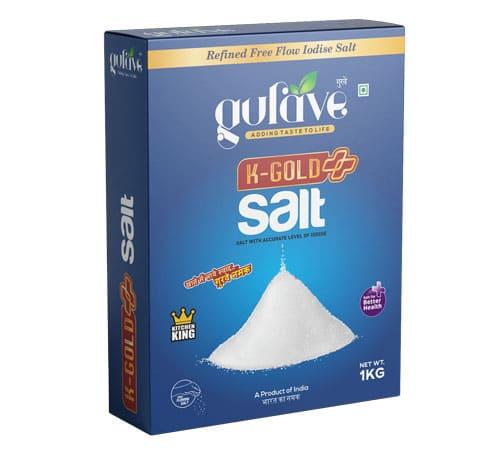
Two bags of salt may contain predominantly sodium chloride, yet behave differently when opened. One pours easily, while the other contains compacted lumps that require breaking apart.
The difference may arise from moisture, crystal size, processing methods or the addition of anti-caking ingredients.
Free-flow salt is commonly associated with material designed to resist clumping, while regular salt is a broader term that can describe different products without a particular flowability treatment.
For businesses comparing industrial salt manufacturers in india, understanding this distinction is useful because flow behaviour can affect storage, dosing and material handling.
However, free-flow salt is not automatically purer or more suitable than every other salt grade.
Understanding Regular Salt
Regular salt generally refers to sodium chloride sold without a specific emphasis on enhanced flowability.
Its characteristics vary by source and processing method.
Raw Salt
Raw solar salt may contain varying amounts of moisture, insoluble material and other impurities.
It is often processed further when particular specifications are required.
Washed Salt
Washing can remove some unwanted materials, depending on the process.
Refined Salt
Refining can produce a more consistent product with controlled physical and chemical characteristics.
Regular salt can therefore range from coarse industrial crystals to refined edible products.
What Makes Free Flow Salt Different?
Free-flow salt is designed to remain easier to pour or handle under specified conditions.
Drying and Moisture Management
Lower moisture can help reduce some causes of caking.
Controlled Granulation
More consistent particle sizes may improve handling in certain systems.
Anti-Caking Ingredients
Some free-flow products use additives to reduce clumping.
Does Every Free-Flow Product Contain Additives?
No. Flowability may be improved through drying, particle control and packaging, while other formulations include anti-caking agents.
The exact production method should be confirmed with the supplier.
This matters particularly where the industrial process restricts additive content.
Free Flow Salt Versus Regular Salt
|
Characteristic |
Regular salt |
Free-flow salt |
|
Main compound |
Sodium chloride |
Sodium chloride |
|
Flowability |
Depends on grade and conditions |
Specifically managed for flow |
|
Anti-caking agents |
May or may not be present |
May be present |
|
Particle size |
Varies by product |
Often controlled for the intended use |
|
Moisture |
Depends on processing |
Commonly managed to support handling |
|
Application |
Broad range |
Applications where flow is important |
Neither category guarantees a particular purity level without supporting specifications.
Why Caking Happens
Salt can absorb moisture under certain environmental conditions.
Changes in humidity and temperature may contribute to crystals bonding together.
Storage Conditions
Poorly protected material can be exposed to unwanted moisture.
Compression
Heavy stacking or extended storage can increase compaction.
Particle Characteristics
Very fine particles and mixed particle sizes can influence bulk behaviour.
Suppliers should be able to explain the expected handling characteristics of the particular grade.
Which Salt Is Better for Industrial Use?
There is no universal answer.
Chemical Manufacturing
Some chemical operations prioritise impurity limits and brine quality over the ability to pour dry salt freely.
Textile Processing
Dyeing facilities may focus on dissolution, hardness and consistent sodium chloride concentration.
Automated Feeding
Where salt passes through hoppers, feeders or metering equipment, free-flow behaviour may be especially valuable.
For this reason, buyers comparing industrial salt manufacturing companies in india should describe the intended equipment and process conditions.
Can Free Flow Salt Be Used Instead of Regular Salt?
Sometimes, but substitution should not be automatic.
Verify Additives
An anti-caking agent suitable for one use may be unsuitable for another.
Compare Chemical Specifications
Check NaCl purity, moisture and relevant impurities.
Consider Dissolution
Particle size and processing conditions can affect dissolution time.
Questions Before Substituting Grades
Ask:
-
Is the replacement grade chemically compatible?
-
Does it contain additional substances?
-
Are the particle sizes similar?
-
Will existing feeders handle it properly?
-
Does the process require new quality checks?
-
Will packaging or storage practices change?
Technical approval is sensible before changing an established industrial material.
Free-Flow Salt and Food-Grade Salt Are Not the Same Classification
Free-flow describes a handling characteristic.
Food-grade describes suitability for food use under applicable requirements.
A product may be free-flowing and edible, free-flowing and industrial, or neither.
Why Product Labels Matter
Industrial salt should never be assumed suitable for consumption.
Likewise, edible salt may not meet the purity, additive or particle specifications required by a particular industrial process.
The intended application must guide product selection.
What Should Buyers Request from Suppliers?
A complete product specification helps establish the differences between grades.
Chemical Analysis
Review sodium chloride, impurities and moisture.
Physical Properties
Check particle size, visible caking and other required handling characteristics.
Packaging Details
Confirm bag construction, storage recommendations and shipment conditions.
Businesses evaluating free flow salt manufacturers in india should seek evidence that the supplied product suits their intended use.
Why Choose Gurave Salt?
Gurave Salt offers industrial salt in different grades, including refined, coarse, fine and other specialised products.
Its published range also includes free-flow salt products.
Customers comparing industrial salt manufacturers in india can enquire about the chemical and physical characteristics of available grades.
For industrial use, additive content and specific flowability requirements should be confirmed before ordering.
About Us – Gurave Salt
Gurave Salt is a salt manufacturing and export business operating from Gandhidham, Gujarat.
Through Shree Krishna & Co, it supplies sodium chloride products for industrial, commercial and edible applications.
Its catalogue contains multiple forms of salt for customers with different processing and handling requirements.
Conclusion
The principal difference between free-flow and regular salt concerns how the material has been processed and how it behaves during handling.
Free-flow products are intended to reduce clumping, but their chemical specifications still need verification.
When consulting free flow salt manufacturers in india, evaluate additives, moisture and particle characteristics alongside purity.
The correct choice is the grade that meets the operating requirements of the intended application.

 English
 Arabic
 Spanish
 Portuguese
 Deutsch
 Turkish
 Dutch
 Italiano
 Russian
 Romaian
 Portuguese (Brazil)
 Greek