


Disconnected Journeys? What a Digital Experience Agency Fixes
A buyer sees your ad, clicks through to a page that talks about something slightly different, fills in a form that asks too many questions and then waits days for a generic reply. Each step was built by a different person, at a different time, with a different goal.
No single part is terrible, but the overall experience feels disjointed. Fixing that is exactly the job of a digital experience agency: making every digital touchpoint feel like one connected conversation.
The problem: a journey that feels stitched together
Most companies now have many digital touchpoints: ads, the main website, campaign landing pages, forms, chat, email, WhatsApp and the CRM behind them. Each one may work on its own, but buyers experience them as a sequence.
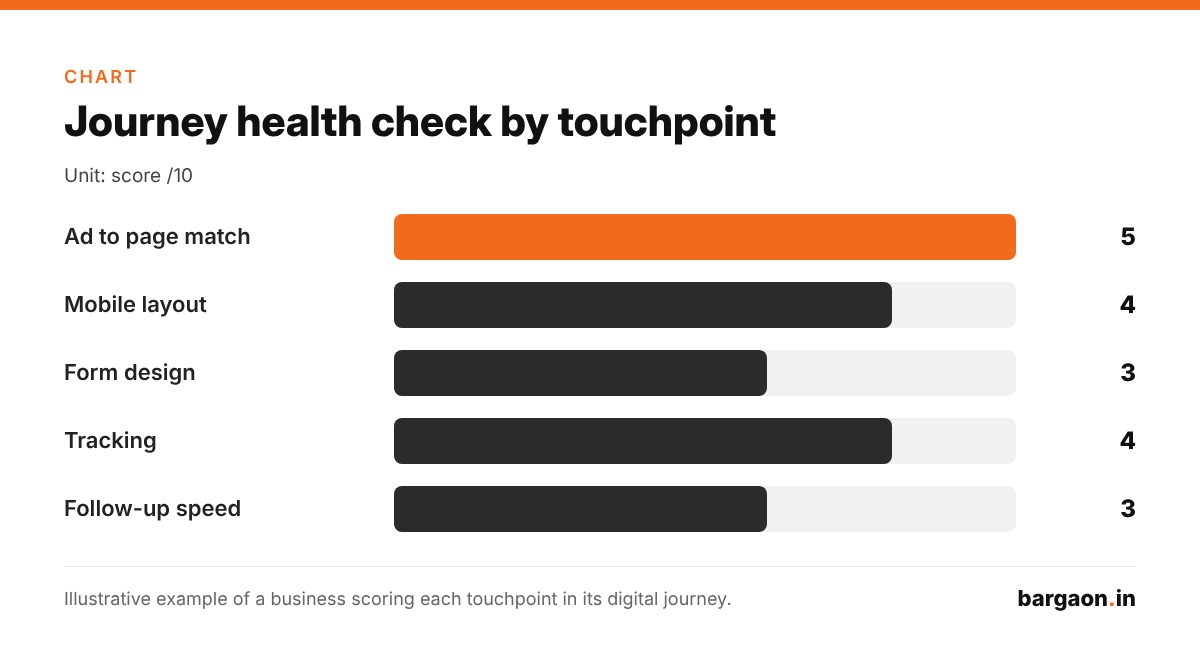
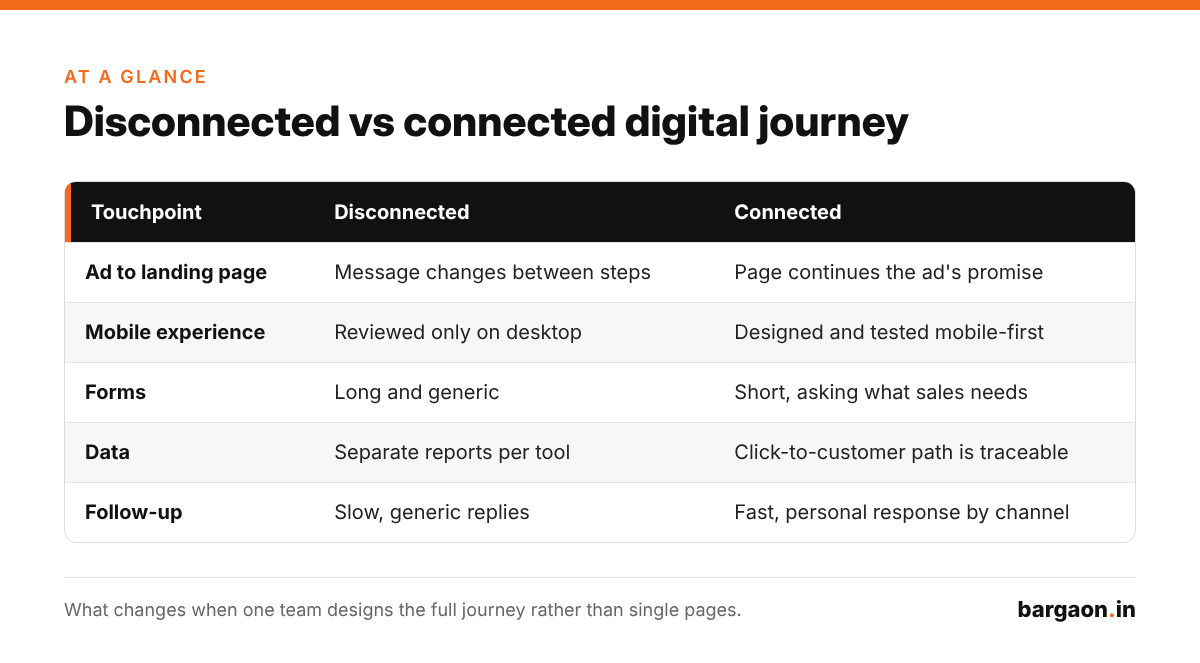
When the sequence breaks, people drop off. The message changes between ad and page. The mobile layout hides the call to action. The thank-you page leads nowhere. Follow-up arrives late or feels automated and impersonal.
Why digital journeys break
The root cause is usually ownership. Paid media, web development, content and CRM often sit with different teams or vendors, and each optimises its own piece.
Landing pages get built quickly for a campaign, using whatever template is available. Forms are added without thinking about what sales actually needs to know. Tracking is set up separately for each tool, so nobody can see the full path from click to customer.
Mobile is another common gap. Pages are reviewed on large office screens, while most real buyers arrive on phones with limited patience and slower connections.
Finally, the journey is rarely reviewed as a whole. Teams check whether their own piece works, but nobody regularly walks through the experience the way a buyer does, from first click to first reply.
The impact on leads and reputation
Every break in the journey loses a share of interested buyers. They may have been ready to talk, but friction, confusion or slow responses push them toward a competitor who made it easier.
Paid campaigns suffer the most visibly, because you pay for each visitor regardless of whether the experience converts them. Sales teams receive fewer enquiries, and many arrive with missing details that slow down the first conversation.
Over time, the brand starts to feel inconsistent. Buyers may not be able to say exactly what felt wrong, but they leave with less confidence than they should. Without connected data, the business cannot even see where people are dropping off, so the same leaks continue month after month.
The solution: a digital experience agency that owns the whole path
A good digital experience agency looks at the journey end to end rather than page by page. It aligns message, design and technology from the first touchpoint to the first sales conversation, and makes sure the data connects so improvements can be measured.
This often includes business website design services, but it also covers landing page systems, form design, analytics, CRM integration and the follow-up messages that complete the experience.
How the work is approached
The process starts with understanding how buyers move today, then fixes the biggest breaks first before scaling improvements across the whole site.
-
Map journeys: trace the main paths from ads, search and referrals to enquiry
-
Find friction: review pages, forms and follow-up on real mobile devices
-
Align messages: make sure each page continues the promise of the source that sent the visitor
-
Build a system: create reusable landing page templates and clear form patterns
-
Connect data: link forms, analytics and CRM so every enquiry can be traced
-
Improve follow-up: set fast, personal responses by email, WhatsApp or phone
-
Test and refine: review journey data regularly and fix the next weakest step
Benefits of a connected experience
Buyers move from interest to enquiry with less effort, so more of the traffic you already attract turns into conversations. The experience feels consistent, which builds confidence in the brand before the first call.
Marketing can launch campaigns faster, using tested page templates instead of building from scratch. Sales receives enquiries with the right information and context, so first conversations are more productive.
Leadership finally sees the full picture, from ad click to closed deal. That makes it much easier to decide where to invest next and which parts of the journey still need work.
A simple way to start
Try going through your own journey as a buyer would. Click one of your ads on your phone, read the page, fill in the form and note how long it takes to hear back and how personal the reply feels. Most teams find at least two or three obvious breaks within minutes.
Bargaon's websites and digital experience page shows how websites, landing pages, tracking and CRM are brought together into one journey. It is a helpful next read if your digital touchpoints feel more stitched together than designed.

 English
 Arabic
 French
 Spanish
 Portuguese
 Deutsch
 Turkish
 Italiano
 Russian
 Romaian
 Portuguese (Brazil)
 Greek