


Understanding Restaurant Pager Range
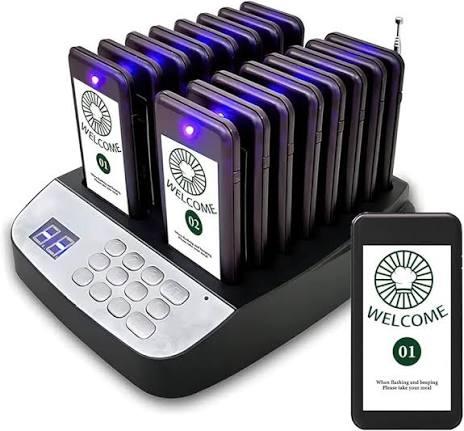
When their orders are ready or when their tables are available. Understanding restaurant pager range is important because it helps business owners select a reliable paging solution that provides convenient communication and improves customer service.
A restaurant pager system typically includes a transmitter, individual restaurant pager range customer pagers, and a charging station. When customers place an order, staff members provide them with a pager. Once the food is ready, employees use the transmitter to send a wireless signal to the assigned pager. The device then alerts the customer through vibration, flashing lights, sound, or a combination of these notifications.
The restaurant pager range determines how far customers can move from the transmitter while still receiving notifications. Depending on the technology, equipment quality, and surrounding environment, some systems offer relatively short indoor coverage, while others can cover large outdoor areas and extended commercial spaces.
How Far Can Restaurant Pagers Reach?
Restaurant pager range varies depending on the manufacturer and wireless technology. Many commercial restaurant paging systems advertise ranges of several hundred feet, while specialized systems may offer coverage approaching or exceeding 1,000 feet under suitable conditions.
However, advertised distances are generally measured in open environments with minimal interference. Actual performance inside a restaurant may be lower because walls, metal structures, kitchen equipment, furniture, and other electronic devices can weaken wireless signals.
For example, a small café may only need a paging system that covers its dining room and nearby waiting area. A large food court, outdoor restaurant, or entertainment venue may require a transmitter with a much longer operating range.
Factors That Affect Restaurant Pager Range
Several factors influence how effectively restaurant pagers communicate with their transmitters.
1. Building Structure
Walls, concrete floors, metal doors, and other construction materials can reduce wireless signal strength. Restaurants with multiple rooms or floors may experience weaker coverage than open-plan establishments.
2. Wireless Technology
Different paging systems use different radio frequencies and communication technologies. Their transmission capabilities, signal reliability, and resistance to interference can vary.
3. Transmitter Power
The transmitter plays an important role in determining coverage. A higher-quality transmitter designed for commercial environments may provide more consistent communication over longer distances.

 English
 Arabic
 French
 Portuguese
 Deutsch
 Turkish
 Dutch
 Italiano
 Russian
 Romaian
 Portuguese (Brazil)
 Greek