


What Factors Affect Automotive CRM Software Pricing?
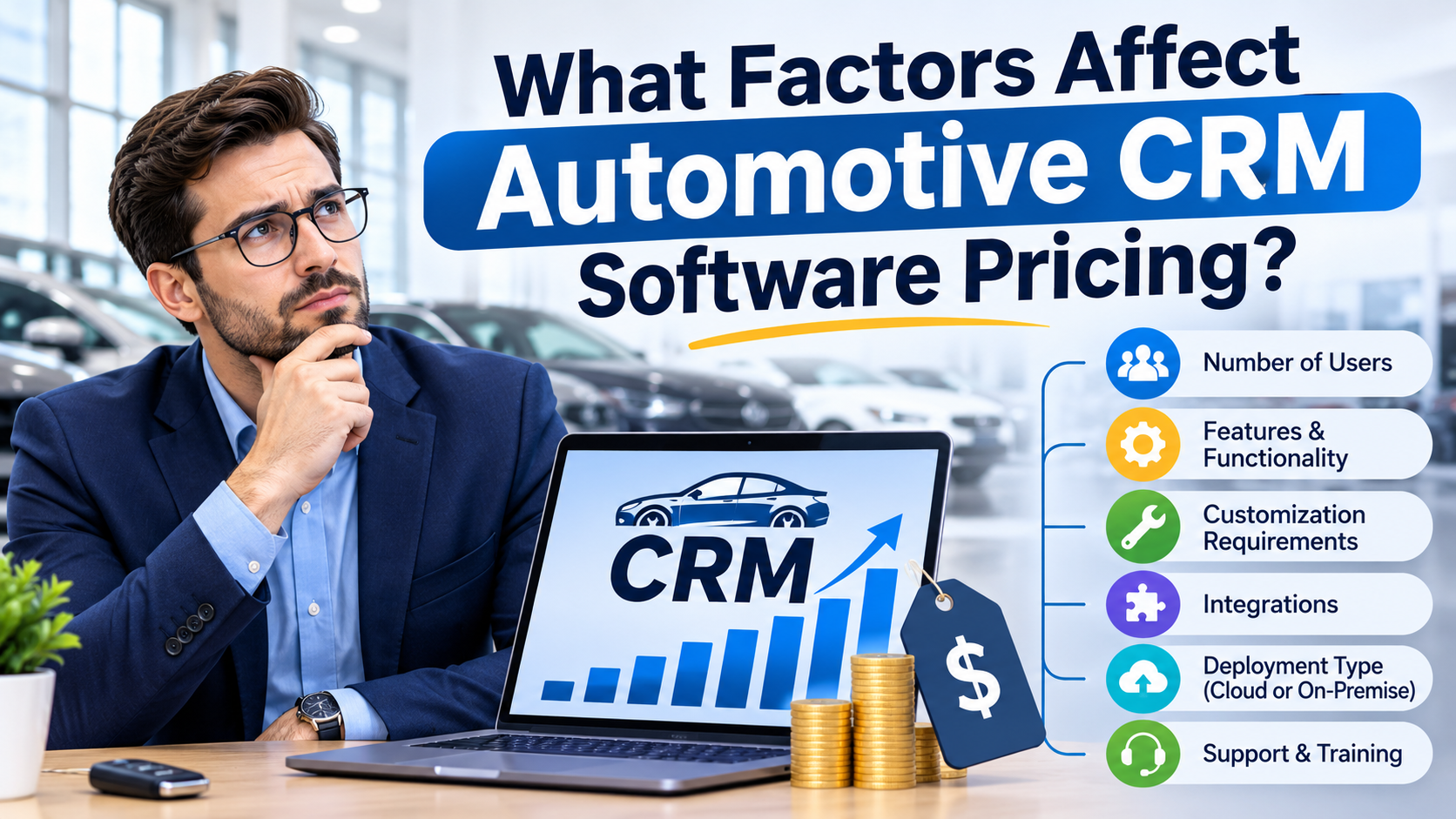
The automotive industry is becoming increasingly competitive, and car dealerships need efficient tools to manage customer relationships, sales activities, and daily operations. One of the most useful technologies for modern dealerships is Automotive CRM Software. It helps businesses organize customer information, track potential buyers, manage sales leads, automate follow-ups, and improve communication throughout the car-buying journey.
However, before investing in a CRM solution, dealerships often want to understand how much it costs and what influences its pricing. The cost of Automotive CRM Software can vary depending on business requirements, available features, the number of users, customization options, and integration capabilities.
Understanding these factors helps dealership owners choose a solution that fits their operational needs and budget. In this guide, we will explore the key factors that affect automotive CRM pricing and explain what businesses should consider before selecting a platform.
1. Number of Users and Dealership Employees
One of the primary factors affecting Automotive CRM Software Pricing is the number of employees who need access to the platform. Most CRM providers offer pricing plans based on the number of users or accounts.
A small dealership with a limited sales team may only require a few user accounts. In comparison, a large automotive business with multiple sales representatives, managers, customer support employees, and administrative staff may need more licenses.
As the number of users increases, the overall subscription cost may also increase. Therefore, dealerships should evaluate how many employees actually need CRM access before selecting a pricing plan.
2. Features and Functionality
The features included in an automotive CRM platform significantly influence its pricing. Basic CRM solutions generally provide essential tools for storing customer information, managing leads, and tracking sales activities.
More advanced platforms may include additional capabilities such as:
-
Lead management and tracking
-
Automated follow-up reminders
-
Sales pipeline management
-
Customer communication tools
-
WhatsApp and email integration
-
Sales performance reporting
-
Appointment scheduling
-
Customer history management
-
Marketing automation
-
Inventory management integration
A dealership that only needs basic customer management may find an entry-level solution sufficient. However, businesses looking for advanced automation, reporting, and communication features may need a more comprehensive package.
3. Customization Requirements
Every dealership operates differently. Some businesses focus on new vehicle sales, while others manage used cars, vehicle financing, trade-ins, or fleet sales.
For this reason, customization is another important factor affecting Automotive CRM Software Pricing.
Some CRM platforms offer standard features that work for most dealerships. Others allow businesses to customize sales pipelines, lead categories, customer fields, dashboards, notifications, and reporting systems.
Highly customized solutions may require additional development, configuration, and implementation costs. Dealerships should identify their essential requirements before investing in customization to avoid unnecessary expenses.
4. Integration With Other Business Systems
Modern car dealerships often use multiple software platforms to manage their operations. These may include Dealer Management Systems (DMS), accounting software, inventory management platforms, websites, and marketing tools.
An automotive CRM that integrates with existing business systems can help dealerships maintain consistent information and reduce manual work.
However, integration requirements can influence the total cost of a CRM solution.
For example, a dealership may need integrations for:
-
Dealer Management Systems
-
Vehicle inventory platforms
-
Website lead forms
-
Email marketing software
-
WhatsApp communication
-
Accounting and financial systems
-
Third-party advertising platforms
Some CRM providers include standard integrations in their subscription packages, while others charge additional fees for advanced connections or custom integration services.
5. Cloud-Based vs. On-Premise CRM Solutions
The deployment method can also affect the cost of automotive CRM software.
Cloud-based CRM platforms are hosted online and accessed through web browsers or mobile devices. Businesses usually pay monthly or annual subscription fees. These solutions generally require less investment in physical infrastructure because hosting and maintenance are handled by the provider.
On-premise CRM systems are installed on a company's own servers. They may involve higher initial expenses for hardware, installation, infrastructure, and technical support.
The right option depends on the dealership's technical resources, security requirements, budget, and operational preferences.
6. Implementation and Setup Costs
The subscription price does not always represent the complete cost of an automotive CRM system. Some providers charge separate implementation and setup fees.
Implementation may involve:
-
Initial system configuration
-
Customer database migration
-
User account creation
-
Sales pipeline setup
-
Third-party integrations
-
Workflow customization
-
Employee training
A dealership moving from spreadsheets or an older CRM platform may require additional assistance to transfer existing customer records and sales information.
Businesses should ask providers whether implementation services are included in the package or charged separately.
7. Data Storage and Security Requirements
Automotive dealerships handle large amounts of customer information, including contact details, vehicle preferences, purchase history, and communication records.
The amount of data a business stores can influence CRM pricing, especially when providers offer different storage limits across subscription plans.
Advanced security features may also affect the overall cost. These can include role-based access, data encryption, backup systems, user permissions, and activity monitoring.
Dealerships should prioritize platforms that provide appropriate data protection and reliable access controls rather than choosing a solution based only on its lowest price.
8. Reporting and Analytics Capabilities
Reporting and analytics help dealership managers understand business performance and make informed decisions.
Basic CRM packages may provide simple reports about leads, sales activities, and customer interactions. Advanced solutions can offer detailed dashboards and performance analysis.
Common reporting capabilities include:
-
Lead conversion rates
-
Sales representative performance
-
Monthly sales activity
-
Lead source performance
-
Customer follow-up tracking
-
Sales pipeline analysis
-
Revenue and deal reporting
Businesses that require detailed performance insights may need advanced reporting features, which can be available in higher-priced subscription plans.
9. Customer Support and Training
Customer support is another factor worth considering when comparing Automotive CRM Software Pricing.
CRM providers may offer different levels of assistance depending on the subscription package. Basic plans might include email support or access to online documentation, while premium packages may provide priority assistance, dedicated account managers, and personalized training.
Training is particularly important for dealerships with large teams or employees who are unfamiliar with CRM systems.
A platform with reliable technical support can help businesses resolve issues quickly, reduce operational disruptions, and improve employee adoption.
10. Subscription Plans and Payment Models
Automotive CRM providers use different pricing structures. Understanding these models helps dealerships compare solutions more effectively.
Common pricing models include:
Monthly Subscription: Businesses pay a recurring monthly fee to access the CRM platform. This model provides flexibility for dealerships that want to manage expenses on a monthly basis.
Annual Subscription: Some providers offer discounted rates when businesses pay for a full year in advance.
Per-User Pricing: The cost depends on how many employees require access to the platform.
Custom Enterprise Pricing: Larger dealerships or automotive groups may receive customized pricing based on their number of locations, users, integrations, and operational requirements.
Before selecting a plan, businesses should review its features, limitations, renewal conditions, and any additional charges.
11. Scalability and Business Growth
A CRM platform should support a dealership's current operations while allowing room for future expansion.
For example, a small dealership may initially need a basic system for managing leads and customer interactions. As the business grows, it may require additional users, advanced automation, multiple locations, and more detailed reporting.
Scalable CRM solutions allow dealerships to upgrade their plans as their requirements change.
Although advanced plans may involve higher costs, choosing a flexible platform can help businesses avoid switching systems when their operations expand.
How Can Dealerships Choose the Right Automotive CRM Within Their Budget?
Selecting the right CRM requires more than comparing subscription prices. Dealerships should evaluate the overall value of the platform and how effectively it supports their sales and customer management processes.
Here are some practical considerations:
-
Identify Business Requirements: List the essential features your dealership needs before comparing providers.
-
Compare Pricing Plans: Review monthly and annual costs, user limits, and included functionality.
-
Check Integration Options: Make sure the CRM works with your existing dealership software.
-
Evaluate Ease of Use: Choose a platform that employees can learn and use without unnecessary complexity.
-
Review Support Services: Understand what technical assistance and training are included.
-
Consider Long-Term Growth: Select software that can support additional users and expanding operations.
-
Request a Demonstration: Test the platform to understand its features and practical value before making a decision.
The goal is to find a solution that meets operational requirements without paying for unnecessary features.
Conclusion
The cost of Automotive CRM Software depends on several factors, including the number of users, available features, customization, integrations, deployment methods, implementation, security, and customer support. Each dealership has different requirements, so there is no single pricing structure that works for every business.
By understanding these factors, dealership owners can compare CRM solutions more confidently and identify a platform that fits their budget and business objectives. Instead of focusing only on the initial subscription fee, businesses should consider the overall value, usability, scalability, and long-term benefits of the software.
Choosing the right automotive CRM can help dealerships manage leads more effectively, improve customer communication, organize sales activities, and build stronger customer relationships.
Frequently Asked Questions (FAQs)
1. What is Automotive CRM Software?
Automotive CRM Software is a customer relationship management solution designed for car dealerships. It helps businesses manage customer information, track sales leads, automate follow-ups, and organize customer interactions.
2. What factors affect Automotive CRM Software pricing?
Pricing depends on several factors, including the number of users, software features, customization requirements, integrations, data storage, implementation, and customer support.
3. Is Automotive CRM Software available on a monthly subscription?
Yes. Many CRM providers offer monthly subscription plans. Some also provide annual subscriptions and customized enterprise pricing depending on business requirements.
4. Does the number of users affect CRM pricing?
Yes. Some providers charge according to the number of employees using the platform. Dealerships with larger teams may need more user licenses, which can increase the subscription cost.
5. Are implementation costs included in CRM pricing?
Not always. Some providers include basic setup in their subscription packages, while others charge additional fees for customization, data migration, integration, and employee training.
6. How can a dealership reduce Automotive CRM costs?
Dealerships can control costs by identifying essential features, selecting an appropriate user plan, avoiding unnecessary customization, comparing providers, and choosing scalable software that supports future growth.

 English
 Arabic
 Spanish
 Portuguese
 Deutsch
 Turkish
 Dutch
 Italiano
 Russian
 Romaian
 Portuguese (Brazil)
 Greek