


Panic Attacks and Telepsychiatry: When Virtual Psychiatric Care May Be Appropriate
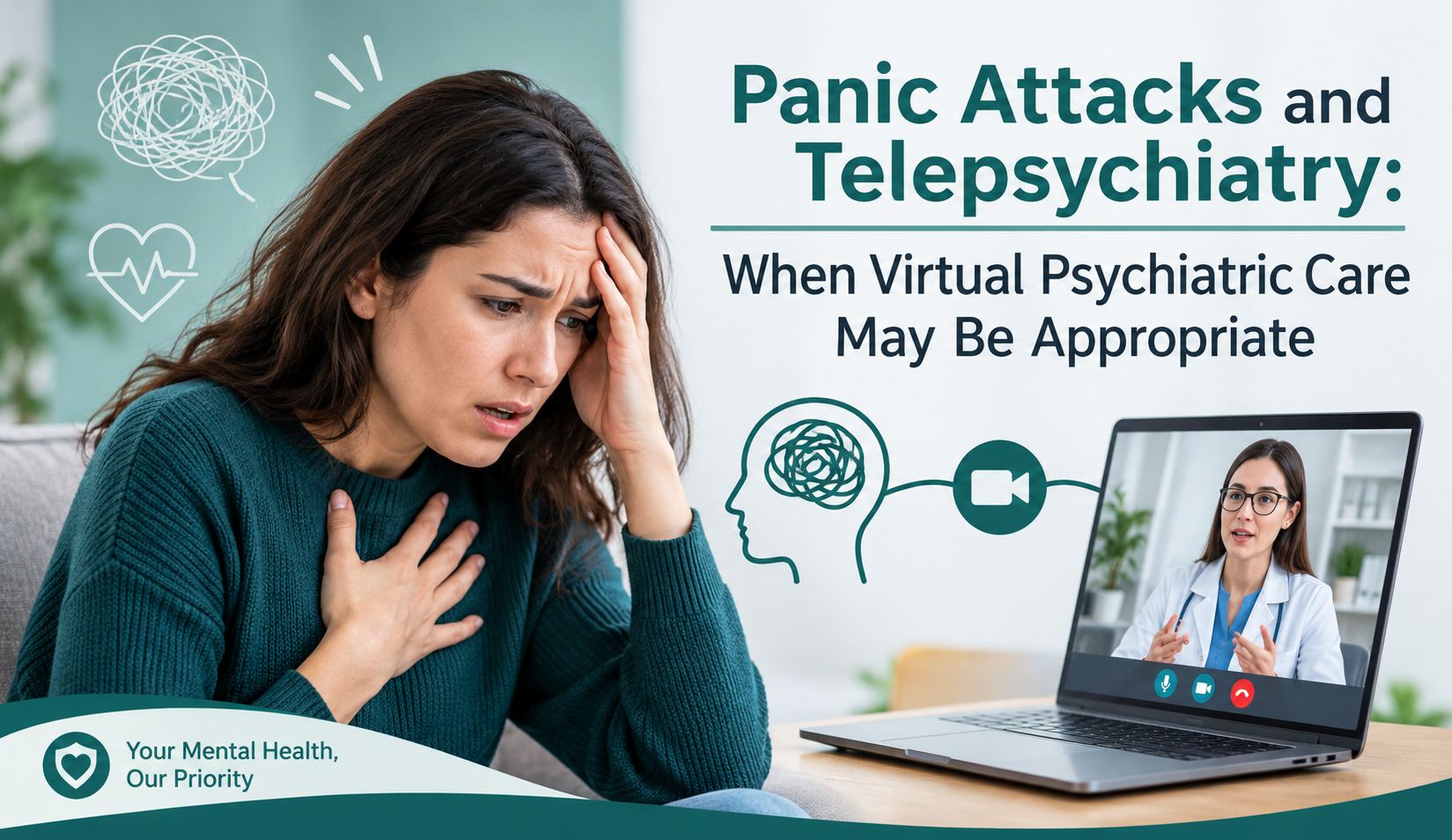
Panic attacks can cause sudden feelings of intense fear, discomfort, and physical distress. A person may experience a racing heartbeat, dizziness, sweating, or difficulty breathing without understanding what is happening. These symptoms can interfere with daily activities, work, relationships, and overall well-being.
Seeking mental health support can feel difficult, especially when leaving home or traveling causes additional anxiety. Telepsychiatry offers an alternative by allowing patients to connect with psychiatric professionals through secure video appointments.
Virtual appointments may help people discuss panic symptoms, receive a psychiatric evaluation, and maintain follow-up care without traveling to an office. However, online care is not appropriate for every situation. Understanding its benefits, limitations, and role in treatment can help individuals make informed decisions.
Understanding Panic Attacks and Their Symptoms
A panic attack is a sudden episode of intense fear or discomfort that may occur without an obvious trigger. Although the experience can feel overwhelming, panic attacks are not always a sign of panic disorder.
According to the National Institute of Mental Health (NIMH), panic attacks may involve physical and emotional symptoms that develop suddenly.
Common symptoms include:
-
Rapid or pounding heartbeat
-
Sweating or trembling
-
Shortness of breath
-
Chest discomfort
-
Dizziness or lightheadedness
-
Nausea or stomach discomfort
-
Tingling or numbness
-
Fear of losing control
-
A feeling of impending danger
Some people experience panic attacks occasionally, while others develop repeated episodes and worry about experiencing another one.
This ongoing fear may cause individuals to avoid crowded places, public transportation, driving, or social activities. Over time, these concerns can affect daily routines and quality of life.
For additional information, readers can review the National Institute of Mental Health’s guide to panic disorder and its symptoms.
Important: Panic-like symptoms can also occur because of medical conditions. New, severe, or unexplained chest pain, breathing difficulty, fainting, or other concerning symptoms should not automatically be assumed to be anxiety. Seek urgent medical evaluation when appropriate.
What Is Telepsychiatry?
Telepsychiatry is a form of psychiatric care delivered remotely through technology, usually by secure video conferencing.
It allows patients to communicate with psychiatric professionals without attending an in-person appointment. Depending on the provider and available services, virtual appointments may include:
-
Psychiatric evaluations
-
Mental health consultations
-
Medication management
-
Follow-up appointments
-
Discussion of anxiety and panic symptoms
-
Treatment planning and progress monitoring
An online psychiatrist can discuss a patient's symptoms, medical history, emotional concerns, and treatment goals during a virtual appointment.
A virtual psychiatrist may also help determine whether additional services, such as in-person medical assessment or specialized psychotherapy, are needed.
Although remote appointments offer convenience, they still require careful assessment, professional judgment, and appropriate safety planning.
When Virtual Psychiatric Care May Be Appropriate for Panic Attacks
Virtual appointments may be useful for people experiencing panic symptoms when their condition is stable enough to be managed through outpatient psychiatric care.
When Anxiety Makes Traveling Difficult
Some individuals experience anxiety when leaving home, entering crowded environments, or traveling long distances.
These concerns may make attending an in-person psychiatric appointment challenging.
Virtual psychiatric care allows patients to discuss their concerns from a familiar environment. This may reduce some practical barriers to seeking professional support.
However, telepsychiatry should not become a reason to avoid necessary medical assessments or gradually address avoidance behaviors with appropriate professional guidance.
When Someone Needs an Initial Psychiatric Evaluation
People experiencing repeated panic attacks may benefit from an initial psychiatric evaluation.
During a virtual appointment, a psychiatric professional may ask about:
-
When the symptoms first appeared
-
How frequently panic attacks occur
-
How long episodes typically last
-
Physical and emotional symptoms
-
Possible triggers or stressful situations
-
Sleep patterns and daily functioning
-
Previous mental health treatment
-
Current medications and medical history
This information helps the clinician understand the patient's experience and determine appropriate next steps.
An initial evaluation may also identify symptoms that require further medical examination or in-person assessment.
When Follow-Up Appointments Are Needed
Panic symptoms may change over time. Some patients experience fewer attacks after beginning treatment, while others continue to experience anxiety or develop new concerns.
Regular follow-up appointments help clinicians review progress and discuss treatment adjustments.
During follow-up visits, patients may discuss:
-
Changes in panic symptoms
-
Frequency and intensity of episodes
-
Medication effectiveness and side effects
-
Sleep and stress levels
-
Challenges with daily activities
-
Questions about treatment
Online psychiatry may make these appointments easier to maintain, particularly when transportation, scheduling, or anxiety creates barriers.
When Medication Management Is Part of Care
Medication may be considered as part of panic disorder treatment when clinically appropriate.
A psychiatric professional can review medication history, discuss possible benefits and risks, monitor side effects, and determine whether treatment adjustments are needed.
Medication decisions depend on individual symptoms, medical history, other medications, and professional evaluation.
Patients should not start, stop, or change psychiatric medication without guidance from their prescribing clinician.
How Telepsychiatry Supports Psychiatric Evaluation and Follow-Up
An important part of managing panic symptoms is understanding how they affect everyday life.
A virtual psychiatric appointment provides an opportunity to discuss symptoms in detail and develop a plan for ongoing care.
Initial Assessment
The first appointment typically focuses on understanding the patient's concerns.
The clinician may explore symptom history, emotional experiences, daily functioning, and previous treatment.
A psychiatric evaluation can help determine whether symptoms may be associated with panic disorder, another anxiety condition, or a different mental or physical health concern.
A diagnosis should not be based only on a brief description of symptoms.
Developing a Treatment Plan
Following the evaluation, the clinician may discuss potential treatment approaches.
Depending on the patient's needs, recommendations may include psychotherapy, medication management, lifestyle adjustments, or referral to another healthcare professional.
Cognitive behavioral therapy (CBT) is commonly used for panic disorder. It can help individuals understand how thoughts, physical sensations, and behaviors influence anxiety.
Some therapy techniques involve gradually addressing feared sensations or situations under professional guidance.
Monitoring Progress
Follow-up appointments allow patients and clinicians to review changes over time.
Keeping a simple record of panic symptoms may help patients identify patterns.
For example, someone may notice that attacks occur more frequently during periods of poor sleep, high stress, or excessive caffeine consumption.
Sharing these observations during follow-up appointments may help guide treatment discussions.
How Cordial Psychiatry Supports Virtual Psychiatric Care
Cordial Psychiatry provides psychiatric services in New York, including psychiatric evaluations, medication management, and telehealth psychiatry.
For individuals experiencing panic symptoms, understanding available psychiatric services may be an important step toward seeking professional support.
Through telepsychiatry, patients may be able to discuss anxiety-related concerns, review their mental health history, and explore appropriate treatment options during virtual appointments.
Cordial Psychiatry offers information about its psychiatric services and appointment options for individuals seeking mental health care in New York.
Patients can learn more about Cordial Psychiatry's telehealth psychiatry services to understand how virtual appointments work and whether this service may be suitable for their needs.
The appropriate treatment approach depends on an individual's symptoms, clinical history, and professional assessment. Virtual care may be helpful for some patients, while others may require in-person evaluation or additional medical support.
When Telepsychiatry May Not Be Enough
Although telepsychiatry can provide convenient access to psychiatric care, it has limitations.
Virtual appointments may not be appropriate when someone requires immediate medical attention, emergency psychiatric intervention, or a physical examination that cannot be completed remotely.
In-person care may be necessary when:
-
Panic-like symptoms may be caused by an untreated medical condition.
-
Symptoms are severe, unusual, or rapidly worsening.
-
A physical examination or diagnostic testing is needed.
-
The patient cannot safely participate in a virtual appointment.
-
There is an immediate risk of self-harm or harm to others.
-
Emergency psychiatric or medical support is required.
A clinician may recommend combining virtual appointments with in-person medical care when necessary.
People experiencing a medical emergency should contact emergency services or visit the nearest emergency department rather than waiting for a scheduled online appointment.
Practical Tips for Preparing for a Virtual Psychiatric Appointment
Preparing for an online appointment can help patients communicate their concerns more clearly.
Find a Quiet and Private Space
Choose an environment where you can speak comfortably without unnecessary interruptions. Privacy can help patients discuss personal concerns more openly.
Check Your Technology
Make sure your internet connection, camera, microphone, and device are working properly before the appointment.
Write Down Your Symptoms
Record when panic attacks occur, how they feel, and how frequently they happen. This information can help the clinician understand symptom patterns.
Prepare Your Medication Information
Include current medications, supplements, and previous treatment experiences. Mention any side effects or concerns.
List Your Questions
Write down concerns about symptoms, treatment options, or follow-up care so you can discuss them during the appointment.
Keep Emergency Information Accessible
Know how to contact local emergency services and identify your location in case urgent assistance is required.
These steps can make communication easier and help the clinician gather relevant information.
Frequently Asked Questions
Can telepsychiatry help with panic attacks?
Yes. Telepsychiatry may help individuals discuss panic symptoms, receive psychiatric evaluations, explore treatment options, and participate in follow-up appointments when virtual care is appropriate.
Can an online psychiatrist diagnose panic disorder?
An online psychiatrist may evaluate symptoms and determine whether panic disorder or another condition may be present. Diagnosis requires a comprehensive assessment, and additional medical evaluation may be necessary.
Is virtual psychiatric care effective for anxiety and panic symptoms?
Virtual psychiatric care may be helpful for many people experiencing anxiety and panic symptoms. Its suitability depends on symptom severity, treatment needs, access to appropriate services, and the patient's clinical circumstances.
What happens during a virtual psychiatric evaluation?
A virtual psychiatric evaluation may include questions about symptoms, medical history, medication use, emotional concerns, and daily functioning. The clinician uses this information to determine appropriate recommendations.
Can a virtual psychiatrist prescribe medication for panic disorder?
A virtual psychiatrist may prescribe medication when clinically appropriate and permitted by applicable laws and regulations. Prescribing decisions depend on the evaluation, medical history, and individual treatment needs.
When should someone seek in-person care instead of telepsychiatry?
In-person care may be necessary for physical examinations, medical testing, severe symptoms, or situations requiring immediate intervention. Emergency symptoms should be assessed urgently rather than managed through a routine virtual appointment.
How can I prepare for an online psychiatry appointment?
Prepare a list of symptoms, medications, medical history, and questions. Choose a quiet, private location and check your internet connection before the appointment.
Does Cordial Psychiatry offer telepsychiatry in New York?
Cordial Psychiatry provides telehealth psychiatry services in New York. Individuals can review the practice's telehealth psychiatry services and appointment options to learn more about available virtual psychiatric care.
Conclusion
Panic attacks can affect emotional well-being, physical comfort, and everyday activities. Seeking professional psychiatric support may help individuals understand their symptoms and explore appropriate treatment options.
Telepsychiatry offers a convenient way to access psychiatric evaluations, medication management, and follow-up appointments when virtual care is clinically appropriate.
An online psychiatrist can help assess panic symptoms, discuss treatment options, and monitor progress over time. However, virtual appointments are not a substitute for emergency care or necessary physical examinations.
Understanding available treatment options and discussing symptoms with a qualified healthcare professional can help individuals determine whether virtual psychiatric care is an appropriate next step.

 English
 Arabic
 French
 Portuguese
 Deutsch
 Turkish
 Dutch
 Italiano
 Russian
 Romaian
 Portuguese (Brazil)
 Greek