


Bipolar Disorder and Telepsychiatry: What Ongoing Virtual Care May Include
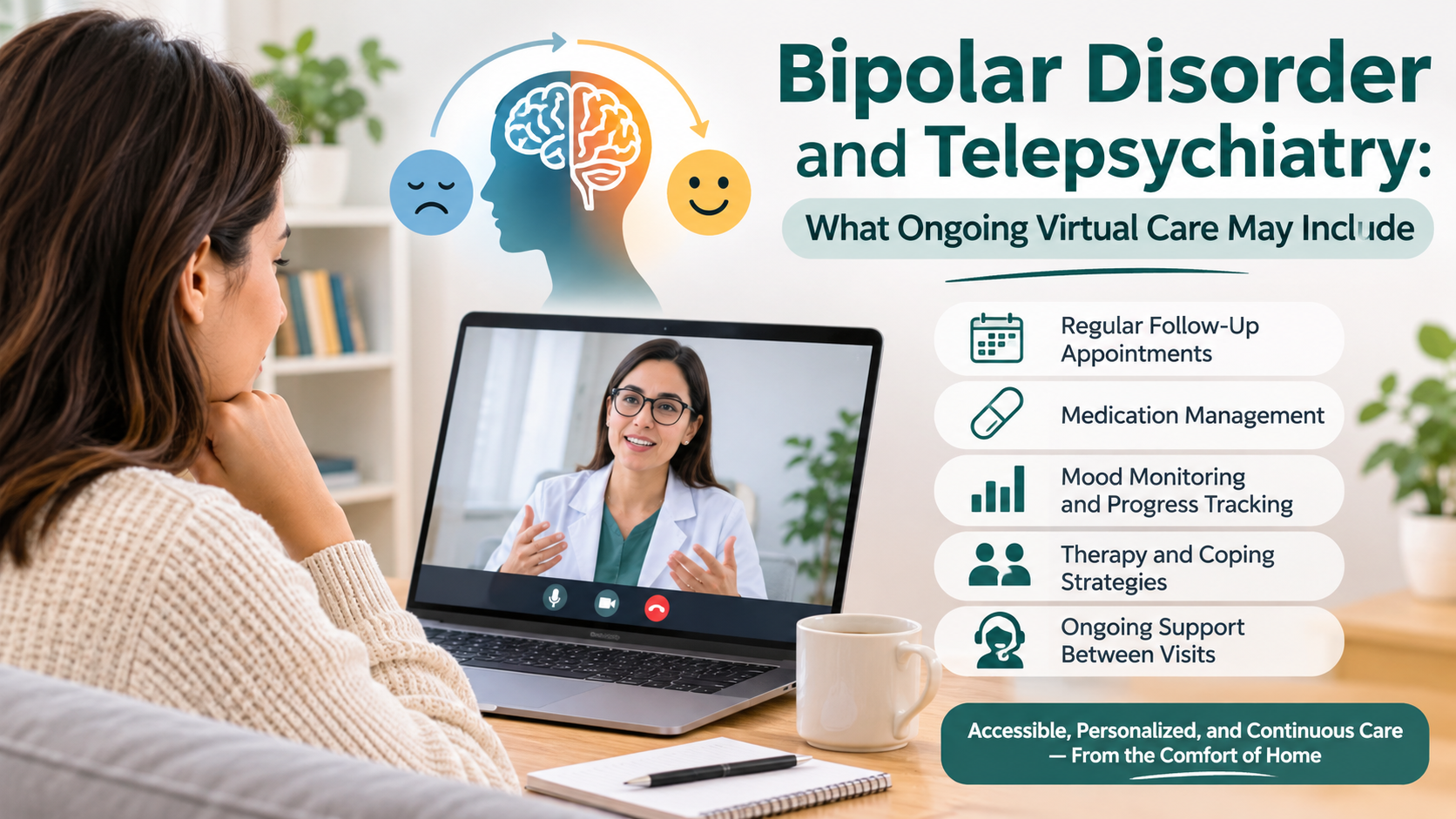
Bipolar disorder is a mental health condition that causes changes in mood, energy, activity levels, and daily functioning. People living with this condition may experience periods of elevated mood, known as mania or hypomania, as well as episodes of depression. These changes can affect relationships, work, sleep, and everyday responsibilities. Managing bipolar disorder often requires ongoing psychiatric care rather than a one-time appointment.
With advances in digital healthcare, telepsychiatry has become another way for people to access psychiatric support. Virtual appointments allow patients to communicate with mental health professionals through secure video platforms without regularly traveling to a clinic. For individuals managing bipolar disorder, ongoing virtual care may include psychiatric follow-ups, medication reviews, symptom monitoring, and discussions about treatment progress.
Understanding the Importance of Ongoing Bipolar Disorder Care
Bipolar disorder can affect people differently. Some individuals experience longer periods of depression, while others may have more frequent episodes of elevated mood. Symptoms can also change over time, making regular psychiatric monitoring an important part of long-term care.
Treatment commonly involves medication, psychotherapy, or a combination of both. A psychiatrist evaluates symptoms, medical history, treatment response, and potential side effects before recommending an appropriate care plan.
According to the National Institute of Mental Health (NIMH), bipolar disorder generally requires long-term treatment. Consistent care can help people manage symptoms and improve their daily functioning.
This is where online psychiatry may offer a practical way to maintain regular communication with a psychiatric provider, particularly when attending in-person appointments is difficult.
What Ongoing Telepsychiatry Care May Include
Virtual psychiatric care is not limited to an initial consultation. Depending on a person's symptoms, treatment needs, and clinical circumstances, follow-up appointments may cover several areas.
1. Regular Psychiatric Follow-Up Appointments
Follow-up appointments help psychiatrists understand how a patient is responding to treatment. During a virtual session, the provider may ask about recent mood changes, sleep patterns, energy levels, concentration, and daily activities.
Patients can also discuss challenges they have experienced since their previous appointment. For example, someone may report difficulty sleeping, reduced motivation, increased irritability, or unusual levels of energy.
A virtual psychiatrist can use these discussions to assess changes in symptoms and determine whether further evaluation or adjustments to the treatment plan are needed.
The frequency of appointments depends on factors such as symptom severity, treatment response, and individual safety needs. More frequent contact may be necessary when symptoms change or treatment is being adjusted.
2. Psychiatric Medication Management
Medication is an important part of managing bipolar disorder. Treatment may involve mood stabilizers, certain antipsychotic medications, or other medicines depending on the individual's clinical presentation.
Psychiatric medication management involves reviewing how medications are working and whether they are causing unwanted effects.
During virtual appointments, a psychiatrist may discuss:
-
Whether symptoms have improved or changed.
-
Possible medication side effects.
-
Difficulties following the prescribed medication schedule.
-
Changes in sleep, mood, or energy.
-
Concerns about the effectiveness of current treatment.
-
Whether further evaluation or medication adjustments are appropriate.
Patients should report medication concerns rather than making changes independently. Stopping or changing prescribed medication without medical guidance can increase the risk of mood episodes.
Some medications also require laboratory testing or physical health monitoring. For example, lithium treatment may require regular checks of blood levels, kidney function, and thyroid function. These tests must be arranged through appropriate healthcare services, even when psychiatric appointments take place online.
3. Monitoring Mood Changes and Early Warning Signs
Recognizing mood changes early can help patients and psychiatrists respond before symptoms become more disruptive.
During telepsychiatry appointments, patients may discuss changes such as:
-
Sleeping significantly less than usual.
-
Feeling unusually energetic or restless.
-
Experiencing racing thoughts.
-
Having difficulty concentrating.
-
Losing interest in normal activities.
-
Feeling persistently sad or withdrawn.
-
Becoming unusually irritable or impulsive.
A psychiatrist may also encourage patients to maintain a mood journal. Recording daily mood, sleep, medication use, and major changes in routine can provide useful information during follow-up appointments.
This information helps the provider understand patterns over time rather than relying only on how the patient feels during a single appointment.
4. Discussing Sleep and Daily Routines
Sleep patterns and daily routines can play an important role in bipolar disorder management. Changes in sleep may occur alongside mood episodes and can sometimes be an early warning sign of a developing episode.
During virtual follow-ups, a psychiatrist may ask about bedtime, waking hours, sleep quality, work schedules, and daily activities.
Patients may also discuss practical ways to maintain a consistent routine, including:
-
Following regular sleep and waking times.
-
Maintaining consistent meal schedules.
-
Planning manageable daily activities.
-
Avoiding excessive stimulation before bedtime.
-
Tracking changes in energy and mood.
These habits do not replace professional treatment, but they can support a broader management plan.
Can Online Psychiatry Support Long-Term Bipolar Disorder Management?
Yes. Online psychiatry can support several aspects of ongoing bipolar disorder care when virtual appointments are clinically appropriate.
Regular communication allows patients to discuss treatment progress, report new concerns, and receive guidance from a qualified psychiatric provider. It may also make it easier to maintain follow-up appointments for individuals who have transportation difficulties, busy schedules, or limited access to nearby psychiatric services.
The availability of virtual psychiatric appointments depends on the provider's professional licensing, the patient's location at the time of the appointment, and whether telepsychiatry is clinically appropriate for their needs. Licensing requirements and telehealth regulations vary by state and jurisdiction. A psychiatrist must assess whether remote care is suitable before providing ongoing virtual treatment.
However, virtual appointments are not suitable for every situation. A patient experiencing severe mania, psychosis, significant confusion, or immediate safety concerns may require urgent in-person assessment or emergency services.
The psychiatrist should determine whether virtual care provides an appropriate level of support based on the patient's condition.
The Role of Psychotherapy Alongside Virtual Psychiatric Care
Medication is not the only component of bipolar disorder management. Psychotherapy may also help individuals understand their condition, recognize patterns, and develop practical coping strategies.
Some therapeutic approaches used in bipolar disorder care include:
Cognitive Behavioral Therapy (CBT): This approach helps individuals identify unhelpful thinking patterns and develop healthier ways to respond to difficult situations.
Interpersonal and Social Rhythm Therapy: This approach focuses on maintaining consistent daily routines and improving interpersonal relationships.
Family-Focused Therapy: When appropriate, family involvement can help improve communication, increase understanding of bipolar disorder, and support treatment consistency.
Depending on clinical needs and provider availability, some psychotherapy services may also be delivered through virtual appointments.
Combining medication management with appropriate psychological support may help individuals develop a more consistent approach to long-term care.
When Virtual Care May Not Be Enough
Although telepsychiatry offers convenient access to psychiatric services, it has limitations. Certain symptoms and medical needs require direct assessment.
Virtual appointments may not be sufficient when someone experiences:
-
Severe manic or depressive symptoms.
-
Hallucinations or significant psychotic symptoms.
-
Immediate risk of self-harm or suicide.
-
Severe behavioral changes requiring urgent assessment.
-
Medical complications that require physical examination.
People experiencing an immediate mental health emergency should contact local emergency services or visit the nearest emergency department rather than waiting for a virtual appointment.
A psychiatrist may also recommend in-person care when laboratory testing, physical examinations, or additional medical evaluations are necessary.
How to Prepare for an Ongoing Virtual Psychiatric Appointment
Preparing for a virtual appointment can make discussions more productive. Patients may find it helpful to organize important information before meeting their provider.
Consider preparing the following:
-
Medication information: Keep a current list of prescribed medications, doses, and any concerns about side effects.
-
Mood observations: Record noticeable changes in mood, energy, sleep, or behavior.
-
Recent challenges: Write down concerns affecting work, relationships, or daily responsibilities.
-
Questions for the psychiatrist: Prepare questions about treatment progress, medication, and follow-up recommendations.
-
Appointment setup: Choose a private location with a stable internet connection and a suitable device.
Sharing accurate information helps the psychiatrist understand the patient's experiences and make informed clinical decisions.
Frequently Asked Questions
1. How does telepsychiatry support ongoing bipolar disorder care?
Telepsychiatry allows patients to attend regular psychiatric follow-ups remotely. These appointments may include symptom assessments, medication reviews, mood monitoring, and discussions about treatment progress.
2. What should I expect during an online psychiatry follow-up for bipolar disorder?
An online psychiatry follow-up typically involves discussing recent mood changes, sleep patterns, energy levels, medication effectiveness, and any side effects. The psychiatrist may recommend further monitoring or adjustments to the treatment plan.
3. Can a virtual psychiatrist monitor bipolar disorder symptoms?
Yes. A virtual psychiatrist can assess reported mood changes, behavioral patterns, sleep disturbances, and treatment response during scheduled appointments. Additional in-person assessment may be necessary when clinically indicated.
4. How does psychiatric medication management work through virtual appointments?
Psychiatric medication management may include reviewing prescribed medications, evaluating side effects, assessing treatment effectiveness, and discussing appropriate adjustments. Some medications also require laboratory testing or physical health monitoring.
5. When should someone with bipolar disorder seek an additional psychiatric appointment?
An additional appointment may be appropriate when someone notices significant mood changes, sleep disturbances, increased irritability, unusual energy levels, or new medication side effects. Severe symptoms or immediate safety concerns require urgent professional assessment.
6. Can online psychiatry replace in-person bipolar disorder treatment?
Not in every situation. Online psychiatry can support routine follow-ups and medication discussions, but severe symptoms, medical complications, and certain monitoring requirements may need in-person or emergency care.
Conclusion
Managing bipolar disorder often involves consistent psychiatric care, medication monitoring, and attention to changes in mood and daily functioning. Telepsychiatry provides another way to maintain communication with psychiatric providers through virtual follow-up appointments when remote care is appropriate.
With regular assessments, medication reviews, and ongoing discussions about symptoms, online psychiatry can become a useful part of a broader treatment approach. The most appropriate care plan should always be based on individual clinical needs, professional evaluation, and the level of support required.

 English
 Arabic
 French
 Spanish
 Portuguese
 Deutsch
 Turkish
 Dutch
 Italiano
 Romaian
 Portuguese (Brazil)
 Greek