


How the Best Pediatric Orthopedic Doctor In Chennai Helps Address Childhood Bone Problems
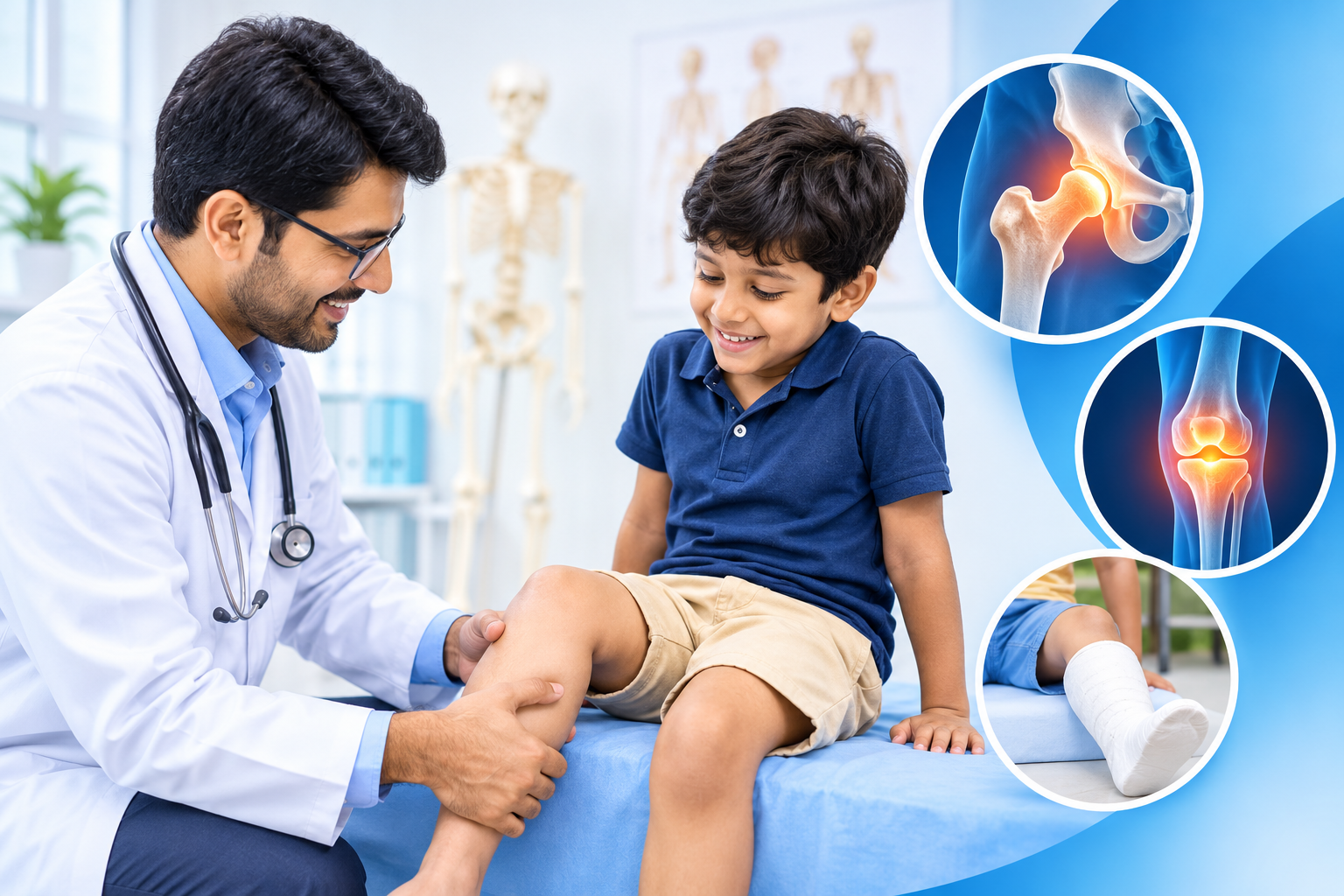
Parents rarely walk into an orthopedic clinic with a diagnosis. They arrive because a daughter has limped for a week and insists it doesn’t hurt, or because a baby’s left foot has never quite matched the right. Between the pediatrician’s visit and the second opinion, the search narrows to a single phrase: Best Pediatric Orthopedic Doctor In Chennai.
What that phrase should mean in practice, and what to look for behind it, is what this article covers.
A Child’s Bone Is Not a Small Adult Bone
The difference is the growth plate, a band of soft cartilage near the end of each long bone where new length is laid down. It is weaker than the bone beside it, which is why a fall that would only bruise an adult can injure it in a child. When a fracture crosses the plate, the concern is not only healing but whether that bone will keep growing evenly. That is why a child’s cast often comes off and the follow-up X-rays carry on for months.
Young bone also remodels. A slight bend in a six-year-old’s forearm may straighten with growth. The same bend in a fourteen-year-old, close to full height, will not. Much of pediatric orthopedics is the judgement of what will correct itself and what will not.
Problems Parents Hear About Most
Clubfoot
The foot is turned inward and downward at birth. Treatment begins in the first weeks of life with the Ponseti method, in which the doctor moulds the foot gently and applies a new plaster cast every week, usually five or six in all. A small heel-cord release is often needed near the end. After that comes the part families underestimate: a brace worn at night for several years. Skipping it is the most common reason the deformity returns.
Hip Dysplasia in Infants
In developmental dysplasia of the hip (DDH), the socket is too shallow to hold the ball of the thigh bone firmly. A baby’s hips are mostly cartilage, so ultrasound, not X-ray, is the screening tool in the early months. A soft Pavlik harness corrects many hips found early. A diagnosis made later may call for a reduction under anaesthesia or an operation.
Whatever the treatment, the aim is to keep the child’s own joint. Hip replacement, the operation a Hip Replacement Surgeon In Chennai performs, is meant for adult joints that have worn out and has no role here.
The Limping School-Age Child
Perthes disease, a temporary loss of blood supply to the hip’s ball, tends to appear between ages four and ten. Slipped capital femoral epiphysis (SCFE) belongs to adolescence, particularly during growth spurts, when the ball slides off the neck of the bone. Both can show up as knee pain, so a normal knee X-ray in a limping child should not end the conversation. SCFE needs prompt attention, and the child is usually told to stop putting weight on the leg until it is treated.
Scoliosis
A sideways curve of the spine tends to be noticed in early adolescence, often by a parent or teacher rather than the child. The curve is measured on X-ray as a Cobb angle. Small curves are watched. Moderate ones in a child who still has growing to do are commonly braced. Surgery is kept for severe or rapidly progressing curves.
Bow Legs and Knock Knees
Toddlers are often bow-legged, and many go through a knock-kneed phase around three or four. Symmetrical and mild usually means harmless. A curve that is severe, affects one leg only, or keeps worsening is worth a proper look.
|
Condition |
Typical age |
Usual first step |
Why timing matters |
|
Clubfoot |
Birth |
Serial casting |
Soft tissues respond best in early infancy |
|
Hip dysplasia (DDH) |
Infancy |
Ultrasound, harness |
Late detection narrows the options |
|
Perthes disease |
4 to 10 years |
X-ray follow-up, activity limits |
The hip’s shape is still developing |
|
SCFE |
10 to 16 years |
Stop weight-bearing, surgical stabilisation |
Delay risks further slippage |
|
Scoliosis |
Mostly 10 to 16 years |
Observation or bracing |
Bracing works only while the child grows |
|
Growth-plate fracture |
Any age |
Cast or fixation, then growth review |
Growth disturbance can appear months later |
Signs Worth Acting On
A limp that lasts more than a few days deserves a visit, as does a child who won’t put weight on a leg or complains of pain at night. Hip or knee pain in a teenager should be examined, not filed under “growing pains.” Take note too of one leg that seems shorter, a foot that stays turned in, an uneven waist or rib cage when the child bends forward, and any swelling or deformity after a fall.
What a Good Consultation Looks Like
It starts with questions: how the pregnancy and birth went, when the child first walked, whether anyone in the family had hip or foot problems. Then the doctor watches the child walk, checks joint movement and limb length, and looks at the spine from behind. Scans come only when they will change the plan, and ultrasound is preferred in infants to avoid radiation.
You should leave able to say what the problem is, what the options are (casts, braces and physiotherapy often come before surgery), what happens if you wait, and when the next review is. Growing children are usually followed until they stop growing.
Choosing the Right Specialist
No ranking can tell you who is the Best Pediatric Orthopedic Doctor In Chennai for your child. Better questions are how often the surgeon treats this exact condition, whether non-surgical options were discussed first, and who will follow your child as they grow. How a doctor handles a frightened five-year-old matters nearly as much as technical skill.
Many families also have older relatives who need orthopaedic care. Dr. Jeshwanth Netaji is an AIIMS-trained orthopaedic and joint replacement surgeon in Chrompet, and his listed work covers joint replacement, arthroscopy and fracture care, which is mainly adult practice. For clubfoot, hip dysplasia or similar problems in a child, a surgeon with dedicated pediatric training is the better fit.
Frequently Asked Questions
When should I worry that my child isn’t walking?
Most children take their first steps between 9 and 18 months. If yours isn’t walking by 18 months, or limps or favours one side, have them examined.
Are flat feet in children a problem?
Usually not. Many toddlers have flat feet that develop an arch with age. See a doctor if the foot is painful, stiff, or makes walking or shoes difficult.
Do all childhood fractures need surgery?
No. Many heal in a cast or splint. Surgery is considered when the bone is badly displaced, involves a growth plate or joint surface, or can’t be held in position by a cast.
Can a heavy school bag cause scoliosis?
There is no good evidence that it does, and most scoliosis in children has no identifiable cause. A heavy bag can still strain the back and shoulders, so keep the load reasonable.
Does my child need calcium or vitamin D supplements?
Not automatically. A balanced diet and time outdoors cover most children’s needs. Supplements should follow a doctor’s advice, especially if a deficiency is suspected.
Can I wait and see if the pain settles?
After a minor knock, a day or two of observation is reasonable. Pain with a limp, night pain, joint pain with fever, or pain that keeps coming back should be examined without delay.
This article is for general information and does not replace a personal medical examination.
Conclusion
Childhood bone problems often look small at first and are easiest to treat early. Trust what you notice at home, and don’t wait for a limp, a curve or an unusual joint to worsen before asking. If a bone, joint or injury concern in your family needs a specialist’s opinion, you can book an appointment at Jeshwanth Orthopaedics in Chrompet, Chennai.

 Arabic
 French
 Spanish
 Portuguese
 Deutsch
 Turkish
 Dutch
 Italiano
 Russian
 Romaian
 Portuguese (Brazil)
 Greek