


Commercial Kitchen Preparation Equipment Maintenance: Cleaning Frequency, Blade Care, Motor Load and Machine Life Optimization
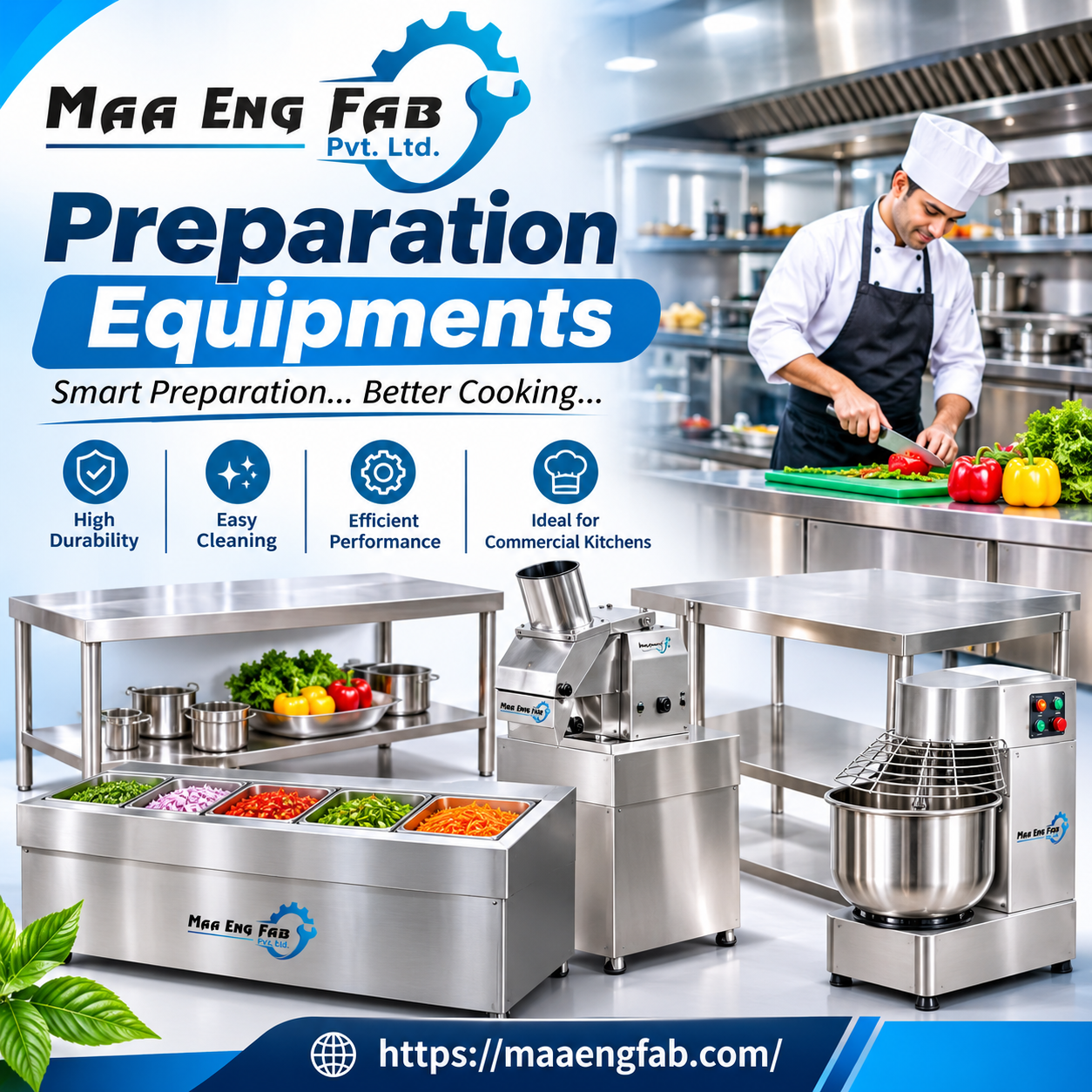
Commercial kitchens depend on preparation equipment for daily operations such as vegetable cutting, dough kneading, peeling, grinding, mixing and bulk food preparation. When these machines operate continuously, regular maintenance becomes essential for maintaining production efficiency, food hygiene and consistent output.
However, many restaurants, hotels, bakeries and catering businesses focus mainly on purchasing equipment and overlook its maintenance requirements. Improper cleaning, excessive motor load, worn-out blades and delayed servicing can increase downtime and operating expenses.
For businesses investing in Preparation Equipments, understanding maintenance practices is important for protecting equipment performance and supporting long-term kitchen operations.
This guide explains practical maintenance methods for commercial kitchen preparation machines, including cleaning frequency, blade care, motor protection, preventive inspection and spare-parts planning.
1. Why Regular Maintenance Is Important for Commercial Kitchen Preparation Equipment
Preparation machines handle different ingredients and production requirements throughout the day. Continuous operation can cause wear on blades, mixing components, bearings, electrical connections and other moving parts.
Regular maintenance helps businesses:
-
Maintain consistent cutting, mixing and processing performance.
-
Identify worn components before they cause major problems.
-
Reduce unexpected machine breakdowns.
-
Maintain proper cleaning and hygiene practices.
-
Improve operational reliability.
-
Plan servicing and replacement costs.
-
Reduce unnecessary production interruptions.
Maintenance requirements vary according to machine design, operating hours, ingredient characteristics and manufacturer recommendations.
2. Vegetable Cutter Blade Cleaning, Sharpening and Replacement
Vegetable cutting machines are commonly used in hotels, restaurants, institutional kitchens and catering facilities. Their blades handle ingredients such as potatoes, onions, carrots, cabbage and other vegetables.
Over time, blades may become blunt, damaged or contaminated with food residues.
Important blade maintenance practices:
Cleaning after operation: Remove food particles from blades and cutting areas according to the manufacturer's cleaning instructions. Always isolate the machine from its power source before cleaning.
Blade inspection: Check for visible damage, corrosion, cracks, loose fittings and unusual wear.
Sharpness evaluation: Blunt blades may produce uneven cuts and increase processing effort. Check cutting quality regularly.
Correct replacement: Replace damaged blades with compatible components recommended for the machine.
Safe handling: Use appropriate protective equipment and follow safe handling procedures when removing or installing blades.
Blade sharpening should only be performed when permitted by the manufacturer. Some blade designs require replacement instead of sharpening.
3. Dough Kneading Machine Maintenance and Motor Load Management
Dough kneading machines are used in commercial kitchens, bakeries, pizza outlets and catering operations. They handle different dough formulations and batch sizes.
Excessive loading can place unnecessary stress on the motor, drive system and mixing components.
To maintain reliable operation, consider the following:
-
Follow the recommended working dough capacity.
-
Avoid overloading the mixing bowl.
-
Use the machine according to its specified operating cycle.
-
Check for unusual vibration and abnormal noise.
-
Inspect mixing tools and their attachment points.
-
Keep ventilation areas clear as specified by the manufacturer.
-
Allow cooling periods where required by the operating instructions.
For example, if a machine is designed for a recommended working load of 10 kg, regularly processing larger batches may increase mechanical stress. The correct capacity must always be confirmed from the manufacturer's specifications.
Motor performance should not be judged only by horsepower. Actual suitability also depends on dough consistency, batch size, operating duration and machine design.
4. Cleaning and Hygiene Management of Food-Contact Surfaces
Food-contact surfaces require proper cleaning because food residues can accumulate in bowls, blades, mixing attachments, processing chambers and discharge areas.
A practical cleaning approach includes:
After every production cycle: Remove visible food residues from accessible food-contact areas according to the equipment instructions.
At the end of the shift: Perform the prescribed cleaning of removable components, bowls, covers and processing surfaces.
During scheduled maintenance: Inspect difficult-to-reach areas, joints, seals and other locations where food particles may accumulate.
Before restarting: Ensure that components are properly cleaned, reassembled and dry where required.
Additional precautions:
-
Use cleaning chemicals suitable for the equipment materials.
-
Follow the recommended dilution and contact time for cleaning products.
-
Avoid directing water towards motors, switches and electrical connections unless the machine is specifically designed for that cleaning method.
-
Do not operate equipment until removable components are correctly installed.
-
Maintain separate cleaning procedures for different food-contact applications where required.
Cleaning procedures should follow the equipment manual and the kitchen's food-safety programme.
5. Preventive Maintenance for Peeling, Grinding and Mixing Machines
Different preparation machines have different maintenance requirements. A single maintenance routine cannot be applied to every machine.
Vegetable Peeling Machines
Inspect the peeling chamber, abrasive surfaces, water connections where applicable, discharge arrangements and moving components. Check whether peeling performance has become inconsistent.
Grinding Machines
Inspect grinding components, processing chambers, seals and discharge outlets. Remove accumulated ingredient residues and check for unusual noise or vibration.
Mixing Machines
Inspect mixing tools, bowl locking arrangements, drive components and attachment points. Check for uneven mixing or abnormal movement during operation.
Vegetable Cutting Machines
Inspect blades, cutting discs, safety guards, feed arrangements and discharge areas. Confirm that all removable parts are fitted correctly before operation.
Preventive maintenance should be based on actual machine design, usage frequency and manufacturer instructions.
6. Identifying Early Signs of Machine Problems
Small changes in equipment behaviour can indicate developing maintenance issues.
| Warning sign | Possible area to inspect |
|---|---|
| Unusual noise | Bearings, drive components or loose fittings |
| Excessive vibration | Mounting, alignment or rotating components |
| Uneven cutting | Blade condition or blade installation |
| Slow processing | Overloading, wear or operating conditions |
| Motor overheating | Excessive load, ventilation or electrical issues |
| Leakage | Seals, connections or damaged components |
| Inconsistent mixing | Mixing attachment or batch loading |
These symptoms do not automatically identify a specific fault. A qualified technician should inspect electrical, mechanical or safety-related issues before further operation.
7. Preventive Maintenance Schedule for Commercial Kitchens
A maintenance schedule helps kitchen managers organise cleaning, inspection and servicing activities.
| Maintenance activity | Suggested frequency |
|---|---|
| Remove food residues | After each production cycle |
| Inspect blades and cutting tools | Before use and during routine checks |
| Check machine noise and vibration | During operation |
| Inspect removable attachments | Daily or as specified |
| Check electrical cables and visible fittings | At scheduled inspection intervals |
| Inspect seals and moving components | According to usage and manufacturer guidance |
| Professional servicing | As recommended by the manufacturer |
This is a general planning framework. Actual maintenance frequency should be based on the equipment manual, operating conditions and applicable safety procedures.
8. Spare Parts Availability and Equipment Downtime Reduction
Unexpected equipment failure can interrupt food preparation and affect kitchen service schedules.
For this reason, spare-parts planning should be considered when purchasing commercial preparation machines.
Important components to discuss with suppliers include:
-
Replacement blades and cutting discs.
-
Mixing attachments.
-
Seals and gaskets.
-
Belts and drive components, where applicable.
-
Switches and approved electrical components.
-
Other machine-specific replacement parts.
Before purchasing, ask about spare-part availability, expected service response, warranty coverage and maintenance support.
Keeping compatible replacement components available for frequently used machines can help reduce repair delays. However, spare parts should be selected according to the exact machine model.
9. Maintenance Cost vs Machine Replacement Cost
Businesses should evaluate equipment expenses beyond the initial purchase price.
A low-cost machine may become expensive if it requires frequent repairs, causes production delays or has limited spare-parts availability.
Consider these cost factors:
-
Initial equipment investment.
-
Routine cleaning and maintenance expenses.
-
Replacement blade and component costs.
-
Electricity and operating expenses.
-
Technician and servicing charges.
-
Production losses during downtime.
-
Expected service life under actual operating conditions.
For example, if a frequently used vegetable cutter repeatedly stops during peak preparation hours, the resulting production delays may become more expensive than planned preventive servicing.
The objective should be to maintain reliable equipment operation rather than simply reducing maintenance expenditure.
10. How to Select Preparation Equipments with Easy Maintenance
Maintenance should be considered before purchasing any commercial kitchen machine.
Businesses comparing Preparation Equipments should evaluate:
Machine accessibility: Can important cleaning and inspection areas be accessed conveniently?
Removable components: Are blades, bowls and attachments easy to remove safely?
Construction quality: Are food-contact surfaces suitable for the intended kitchen application?
Cleaning requirements: Does the machine have clear cleaning instructions?
Spare-parts support: Are compatible replacement components available?
Technical documentation: Does the supplier provide operating and maintenance guidance?
Service support: Is technical assistance available when maintenance or repairs are required?
These factors help buyers evaluate equipment based on long-term operational requirements rather than appearance alone.
11. What to Check When Choosing Preparation Equipments Suppliers in India
Selecting a suitable supplier involves more than comparing machine prices.
Businesses looking for Preparation Equipments Suppliers should ask:
-
What are the recommended cleaning procedures?
-
Which components require regular inspection?
-
What is the recommended working capacity?
-
Are replacement blades and attachments available?
-
What are the warranty and servicing conditions?
-
Is technical guidance provided after installation?
-
Are operating instructions available?
-
Can the supplier explain maintenance requirements for the intended application?
Companies exploring Preparation Equipments Supplies in India should compare suppliers using these practical factors to make a more informed purchasing decision.
12. Choosing a Reliable Preparation Equipments Manufacturer
A reliable Preparation Equipments Manufacturer should be able to explain machine specifications, working capacity, cleaning requirements and maintenance considerations.
Before finalising a purchase, buyers should evaluate:
-
Machine design and construction.
-
Suitability for the intended food-processing application.
-
Recommended operating capacity.
-
Safety arrangements.
-
Availability of replacement components.
-
Warranty and service conditions.
-
Technical information and operating guidance.
Maa Engineering & Fabrication provides commercial kitchen and food preparation equipment solutions. Businesses can discuss their preparation requirements and evaluate suitable equipment configurations before making a purchasing decision.
Conclusion
Regular maintenance plays an important role in the performance and reliability of commercial kitchen preparation machines. Proper blade care, motor load management, cleaning of food-contact surfaces, preventive inspection and spare-parts planning can help businesses reduce avoidable equipment problems.
Restaurants, hotels, bakeries and catering kitchens should establish maintenance schedules according to machine specifications and actual operating conditions.
When comparing Preparation Equipments Manufacturer options and Preparation Equipments Suppliers in India, buyers should evaluate maintenance accessibility, technical support and spare-parts availability along with machine capacity and construction quality.
A well-maintained preparation machine supports smoother kitchen operations, consistent food preparation and better control over long-term operating costs.

 English
 Arabic
 French
 Spanish
 Portuguese
 Deutsch
 Turkish
 Italiano
 Russian
 Romaian
 Portuguese (Brazil)
 Greek