


How to Build a Scalable On-Demand App for Long-Term Business Growth
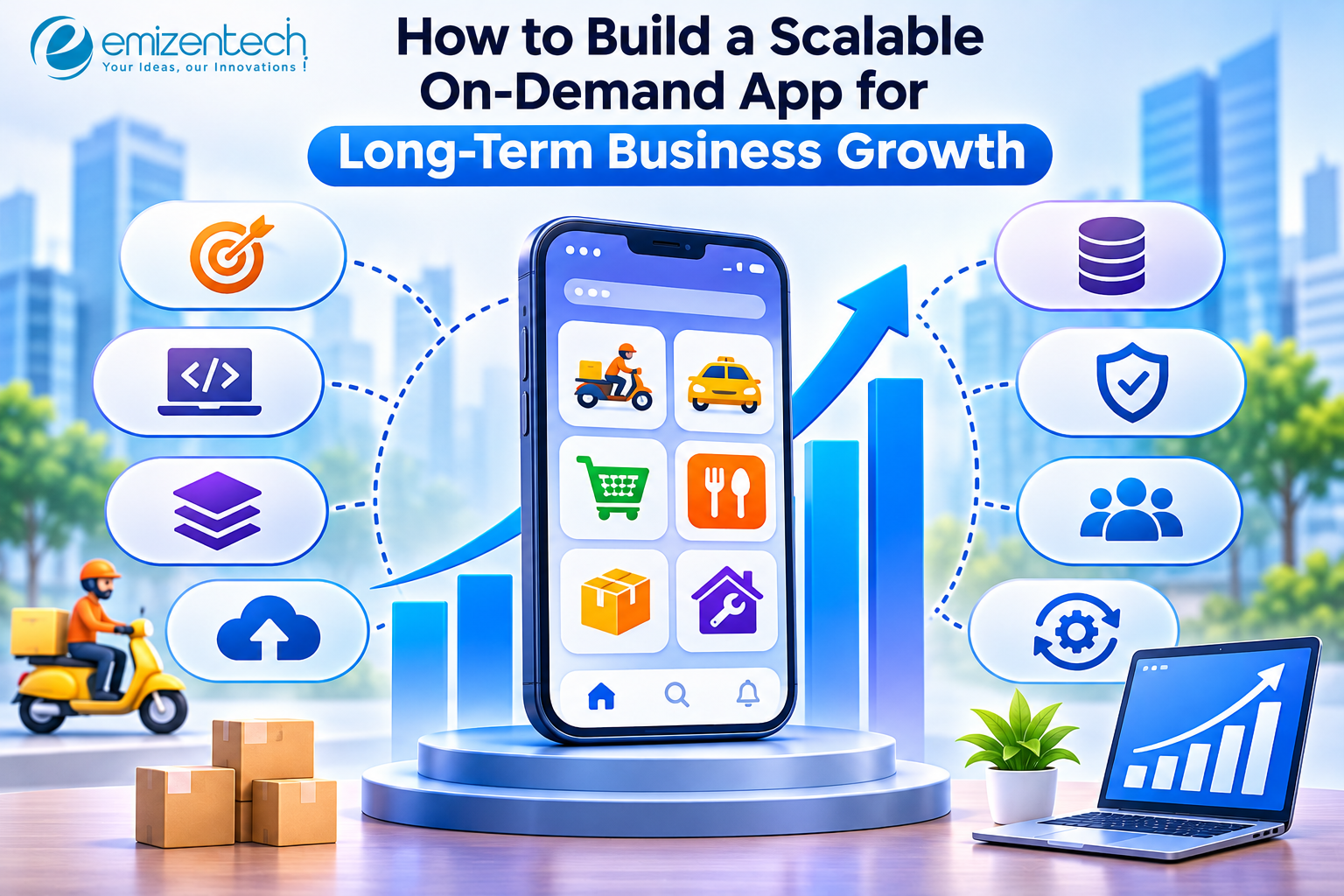
On-demand applications help businesses connect customers with services through convenient digital platforms. However, launching an application is only the first step. As customer demand increases, businesses must ensure their technology can support more users, service providers, transactions, and operational complexity.
A scalable application requires careful planning, a suitable technology architecture, and a development strategy that accommodates future requirements. Businesses that address these factors early can reduce performance issues, control maintenance costs, and improve the customer experience.
What Makes an On-Demand App Scalable?
Scalability is an application’s ability to handle increasing demand without compromising performance, reliability, or user experience. A scalable platform can accommodate more customers, service providers, bookings, and transactions as the business grows.
For example, a ride-hailing app may initially serve one city but later expand to multiple locations. Its technology must support higher booking volumes, more drivers, and additional service areas without slowing down.
As a business expands into new cities or serves more customers, on demand app development services can help ensure its app continues to handle growing bookings and user activity smoothly.
Scalability also helps businesses introduce new features, manage peak demand, and adapt to changing customer expectations.
How Should Businesses Plan an On-Demand App Before Development?
A clear business plan helps define the app’s purpose, audience, and operational requirements before development begins. Businesses should identify the problem they want to solve and determine how the platform will deliver value to customers and service providers.
Key planning considerations include:
-
Business model: Decide whether the app will generate revenue through commissions, subscriptions, service fees, or another model.
-
Target audience: Understand customer needs, service-provider expectations, and the locations the app will serve.
-
Core features: Prioritize essential functions such as registration, booking, payments, notifications, and order tracking.
-
Growth strategy: Consider future expansion into new regions, services, or customer segments.
Planning these requirements early helps avoid costly changes as the application grows.
Which Features Help an On-Demand App Support Business Growth?
An app’s features should support both current operations and future expansion. A well-designed feature set can simplify transactions, improve customer satisfaction, and reduce manual work.
Important features include:
-
Real-time tracking: Lets customers monitor service providers, deliveries, or booking progress.
-
Automated booking: Reduces manual coordination and helps manage increasing transaction volumes.
-
Flexible payment options: Supports convenient transactions through multiple payment methods.
-
Notifications: Keeps customers and service providers informed about booking updates, payments, and service status.
-
Admin dashboard and reporting: Helps businesses monitor activity, manage users, and make operational decisions.
Businesses should prioritize features based on user needs rather than adding unnecessary functionality at launch.
How Does Technology Architecture Affect App Scalability?
The technology architecture determines how efficiently an application handles growing traffic and more complex operations. A poorly planned architecture can lead to slow response times, system failures, and expensive redevelopment.
A scalable architecture may include:
-
Reliable backend services: Support bookings, user accounts, payments, and business logic.
-
Efficient database design: Organizes information and supports faster data retrieval as records increase.
-
Cloud infrastructure: Allows businesses to adjust computing resources as demand changes.
-
Modular components: Make it easier to update or expand individual functions without disrupting the entire application.
The right architecture depends on the app’s business model, expected usage, and long-term roadmap.
How Can Businesses Maintain App Performance as User Demand Increases?
Performance should be monitored throughout the app’s lifecycle, not only before launch. As user activity grows, businesses need to identify bottlenecks and address them before they affect customers.
Useful practices include:
-
Conducting load and stress testing before major launches or expansions.
-
Monitoring response times, crashes, and server resource usage.
-
Optimizing database queries and application code.
-
Reviewing infrastructure capacity as traffic patterns change.
-
Releasing updates and security patches regularly.
These measures help maintain a reliable experience during busy periods and support continued growth.
When Should Businesses Invest in Custom On-Demand App Development?
Custom development may be suitable when a business has specific workflows, service requirements, or plans for expansion that standard solutions cannot support. It can also help businesses build a distinct user experience and integrate the application with existing systems.
For example, a business operating across several cities may need location-specific pricing, provider management, and different service categories. On-demand app development services can help build these capabilities around the business’s requirements and support future expansion.
Businesses evaluating a development provider should assess its technical capabilities, experience with similar platforms, development process, and approach to ongoing maintenance.
How Can Businesses Measure the Success of a Scalable On-Demand App?
App performance should be evaluated using both technical and business metrics. These measurements help identify what is working and where improvements are needed.
Businesses can track:
-
App response time and uptime
-
Booking completion and cancellation rates
-
Customer retention and repeat usage
-
Service-provider activity
-
Customer acquisition and transaction costs
-
Revenue and average order value
Reviewing these metrics regularly helps businesses make informed decisions about product improvements and expansion.
Conclusion
Building a scalable on-demand app requires more than launching a set of features. Businesses need a clear growth strategy, a reliable technology architecture, and ongoing performance monitoring to support increasing demand.
By planning for future users and operational complexity from the beginning, businesses can create applications that remain reliable as their services expand. EmizenTech provides on-demand app development services to help businesses build applications aligned with their operational needs and long-term growth plans.

 English
 Arabic
 French
 Spanish
 Portuguese
 Deutsch
 Turkish
 Italiano
 Russian
 Romaian
 Portuguese (Brazil)
 Greek