


Small Space, Big Impact: Menu Board Strategies for Food Trucks and Cafés
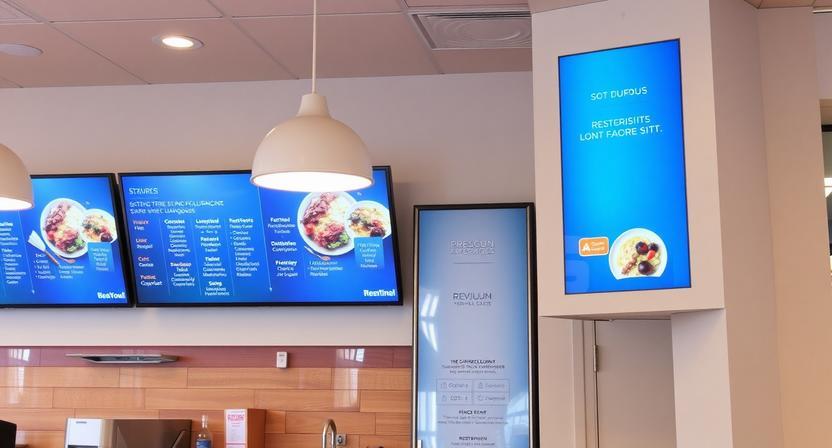
A food truck may have only a few feet of counter space and a line of customers waiting to order. A cafe has a menu board above the register and customers who have already walked in but are still deciding what they want.
Neither business can afford a cluttered, outdated, or unclear menu. Both depend on quick customer decisions, and the menu board plays a central role in making those decisions easier.
This article discusses how food truck menu boards and cafe menu boards differ from larger restaurant signage, what to prioritize when space and budgets are limited, and how to create displays that encourage sales without overwhelming customers.
Food Truck Menu Boards: Selling on the Sidewalk
Food truck menu boards face a unique set of challenges. Customers often scan them quickly while standing outdoors, sometimes under direct sunlight. The boards must be readable from a distance, withstand weather and road vibrations, and remain flexible enough to accommodate changes in location and daily specials.
The Core Challenges
Space is limited. Most food trucks have room for only one printed board or a couple of digital screens. Every item displayed needs to earn its place.
Sunlight is a challenge. Ordinary displays can become difficult to read in direct sunlight. High-brightness screens or well-shaded printed boards with strong contrast are essential. Reducing glare is often more important than increasing screen resolution.
Menus change frequently. Daily specials, sold-out items, and location-specific offerings mean food truck menus often change more frequently than those of other food businesses. Digital boards that can be updated through a smartphone can make these changes much easier.
The ordering window is the storefront. Whether customers join the queue often depends on what they can read from the sidewalk. If the board is confusing, potential customers may simply walk away.
Power and durability matter. Food trucks often operate with limited electrical capacity, making simple media players and energy-efficient displays more practical. Hardware must also withstand vibration, heat, and moisture.
Design Considerations for Food Trucks
Use fewer items and larger text. A food truck menu should be readable within a few seconds. Five to eight clearly presented core items, where appropriate, can work better than a long list with small text. Give your signature dish a prominent position.
Make photography count. One appealing photograph of your bestseller can communicate more than several paragraphs of description. Use images selectively and leave enough space around them to avoid clutter.
Display prices clearly. Missing or unclear prices can make customers hesitant. Keep prices visible, easy to understand, and consistently formatted.
Highlight daily specials. If you offer a daily special, give it a dedicated space. Update that space through digital scheduling or a simple interchangeable printed panel.
Make everything weather-resistant. For printed boards, choose waterproof and UV-resistant materials. For digital displays, make sure the equipment is suitable for outdoor use and provide shade where possible.
Prioritize mobile-friendly updates. A cloud-based system that allows you to change the menu from your phone between service periods is often more useful to a food truck than advanced enterprise features it may never need.
Cafe Menu Boards: Guiding the Daily Ritual
Cafe menu boards serve a different purpose. Many cafe customers are regular visitors who know what they want, while newcomers may need more time to explore the offerings.
The board must support speed, familiarity, and discovery at the same time. It is usually positioned above or next to the register and viewed from a relatively short distance, often indoors.
The Core Challenges
Regular customers and newcomers have different needs. Regulars are familiar with the menu, but first-time visitors are not. A clear visual hierarchy helps both groups. Keep core items in consistent positions and place seasonal offerings in a clearly marked section.
Coffee orders involve customization. Sizes, milk alternatives, syrups, and extra espresso shots can make cafe menus complicated. Keep the main menu simple, and either display customization options clearly or allow staff to explain them without overcrowding the board.
The board represents the brand. For independent cafes, the menu board is an important part of the brand's identity. Typography, materials, and tone communicate whether the cafe is cozy, minimalist, playful, or premium.
Seasonal offerings change regularly. Cold brew season, pumpkin spice drinks, and holiday beverages all create opportunities to refresh the menu. Digital boards make seasonal changes easier, while printed boards require more planning.
Design Considerations for Cafes
Keep the core menu consistent and specials flexible. Place your regular offerings in permanent sections and reserve a separate area for seasonal or featured drinks. Regular customers appreciate predictability, while featured items encourage discovery.
Let typography reflect the brand. Choose fonts that match the cafe's personality but remain easy to read. Avoid overly decorative lettering for item names and prices.
Organize by category, not alphabetically. Espresso drinks, brewed coffee, tea, food, and retail coffee beans should have their own sections. Customers generally find categories easier to navigate than a long alphabetical list.
Use the board to encourage add-on purchases. A subtle reminder about pastries near the counter or an appealing image of a featured drink can encourage customers to add something to their order without aggressive selling.
Consider digital boards for flexibility. Digital displays are useful for cafes that frequently introduce specials, operate multiple locations, or want to show changing artwork and community announcements. Smaller cafes with stable menus may prefer quality printed or chalkboard-style displays that complement their interior design.
Get the lighting right. Some cafes have relatively low lighting, which can make menu boards difficult to read. Make sure lighting is sufficient and evenly distributed so customers can clearly see item names and prices from the counter.
Printed vs. Digital: Making a Practical Choice
There is no universal winner between printed and digital menu boards.
Chalkboards and printed displays offer character, affordability, and freedom from technical failures. They can be particularly suitable for independent cafes with stable menus and a strong visual identity.
Digital boards offer instant updates, daypart scheduling, food photography, and consistency across multiple locations. These features are especially useful for food trucks with rotating specials, cafes with seasonal menus, and businesses that frequently change prices.
A hybrid approach can also work well. For example, a business might use a permanently printed or handwritten chalkboard for its core menu alongside a small digital display featuring daily specials and seasonal products.
This preserves the charm of traditional signage while adding flexibility where it is most useful.
Some of the Most Common Errors
Food trucks and cafes often face similar menu board problems.
Common mistakes include displaying too many dishes without highlighting any of them, making prices difficult to find, and leaving outdated information on the board.
Another issue is designing a board for close viewing when customers actually need to read it from several feet away. Digital screens placed in direct sunlight without suitable brightness or shading can also become ineffective.
Finally, some businesses rely on a single employee to make every menu update. If that person is unavailable, specials remain outdated and prices may become incorrect.
These problems can usually be prevented with a little planning. Keep menus focused, use readable text, display prices clearly, and make sure the updating process is simple enough for trained staff members to manage.
The Bottom Line
For food trucks and cafes, the menu board is more than signage. It is part of the sales conversation.
A food truck board has only seconds to persuade a passerby to join the queue. A cafe menu board needs to serve regular customers, welcome newcomers, and make everyday ordering straightforward.
Design for clarity, choose a format that matches how often your menu changes, and keep the content accurate and fresh.
Even in a small space, a well-designed menu board can make a big difference to the customer experience and the success of the business.

 English
 French
 Spanish
 Portuguese
 Deutsch
 Turkish
 Dutch
 Italiano
 Russian
 Romaian
 Portuguese (Brazil)
 Greek