


Lost, Stolen or Cloned Cards: Addressing the Emerging Risks of Modern Access Control Technology
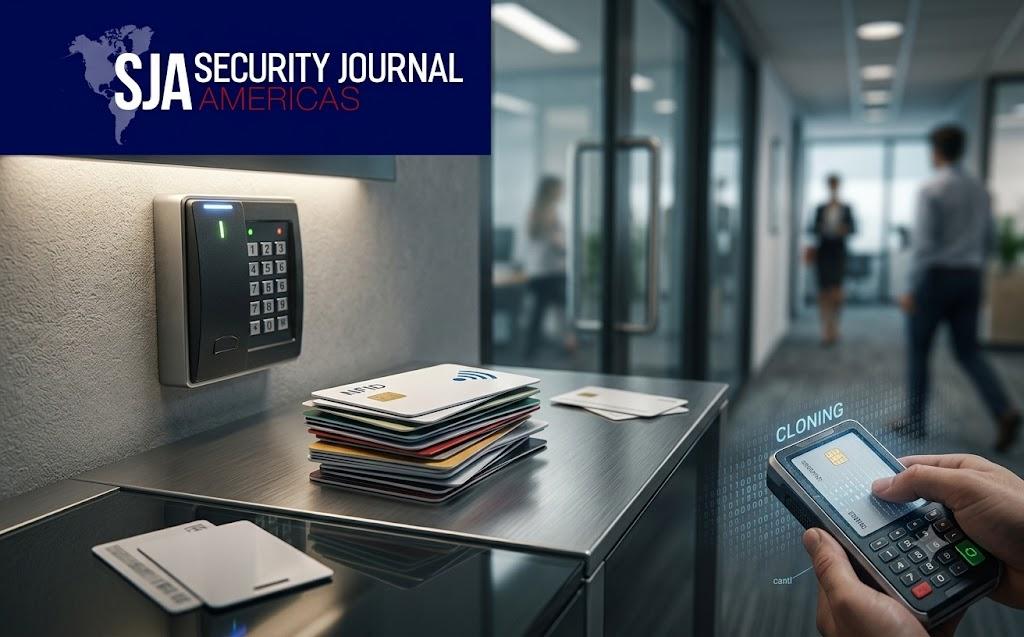
Electronic credentials have made building security more flexible, but they have also introduced new challenges that require careful attention. Lost cards, stolen credentials, unauthorised duplication and weak authentication procedures can create opportunities for individuals to bypass physical security arrangements.
As facilities become more dependent on electronic entry management, understanding these risks is essential for security professionals. Card access control systems can improve entry monitoring and permission management, but their effectiveness depends on how credentials are issued, protected and monitored.
Understanding the Risks of Lost Access Cards
Lost access cards are among the most common credential-related security concerns. An employee may accidentally leave a card in a public location, misplace it during travel or lose it while entering a workplace.
If the credential remains active, another individual may attempt to use it to enter a restricted area.
The risk increases when cards are not linked to individual identities or when administrators lack an effective reporting procedure.
Organisations should establish clear instructions requiring employees to report missing credentials immediately. Administrators should then deactivate the affected card and review relevant access activity.
How Credential Cloning Creates Security Concerns
Credential cloning involves copying information from an access card onto another compatible credential. Depending on the technology and security protections used, this may allow an unauthorised individual to create a duplicate credential.
Older access technologies may rely on weaker authentication methods, making them more vulnerable to certain forms of copying or replay attacks.
Modern encrypted credentials can offer stronger protection by using improved authentication protocols and more secure communication methods.
However, security teams should avoid assuming that every electronic card provides the same level of protection.
Understanding Different Card Technologies
Access cards use different technologies to communicate with readers. Common examples include proximity cards, radio-frequency identification credentials and smart cards.
Some basic proximity technologies offer relatively simple identification, while advanced smart credentials can support encryption and more sophisticated authentication processes.
When evaluating card access control systems, facility managers should consider the security capabilities of the credential technology rather than focusing only on convenience or installation costs.
Important considerations include:
-
Encryption and authentication methods
-
Resistance to credential duplication
-
Reader compatibility
-
Secure credential issuance
-
Available revocation procedures
-
Manufacturer security updates
The correct technology should reflect the sensitivity of the protected environment.
Protecting Credentials Through Better Administration
Technical safeguards are important, but administrative weaknesses can also expose access infrastructure to misuse.
For example, shared cards make it difficult to establish accountability because several individuals may use the same credential. Similarly, failing to deactivate cards belonging to former employees can leave unnecessary access permissions active.
Card access control systems are more effective when every credential is assigned to a specific individual and connected to clearly defined permissions.
Administrators should maintain accurate credential records and review them whenever employees change roles, leave the workplace or receive new responsibilities.
Introducing Multi-Factor Authentication
Facilities protecting sensitive environments may benefit from stronger authentication arrangements.
Multi-factor authentication combines two or more verification methods, such as an access card, personal identification number or biometric characteristic.
This approach can reduce the likelihood that a stolen card alone will be sufficient to gain entry.
For example, a restricted server room may require both a valid electronic card and an additional authentication factor.
The level of verification should be proportionate to the risk associated with the protected area.
Detecting Unusual Access Activity
Monitoring access activity can help identify potential credential misuse.
Repeated rejected attempts, unexpected entry times and unusual access patterns may indicate a misplaced card, incorrect permissions or deliberate attempts to bypass security.
Card access control systems can provide electronic records that help administrators identify these events and investigate them.
However, access logs should be reviewed regularly rather than collected without further analysis.
Security teams should also establish procedures for responding to suspicious activity, including credential suspension and incident documentation.
Securing the Technology Infrastructure
Access credentials are only one part of the overall security environment. Readers, controllers, management platforms and network connections also require protection.
Weak passwords, outdated software and poorly secured network devices can create vulnerabilities that affect the wider access infrastructure.
Recommended measures include:
-
Applying available security updates
-
Restricting administrative privileges
-
Using strong authentication for management accounts
-
Protecting network communications
-
Maintaining secure backups
-
Reviewing system access records
Regular security assessments can help identify weaknesses before they are exploited.
Building an Effective Credential Response Strategy
A practical response plan should define what happens when a card is lost, stolen or suspected of being duplicated.
Employees should know whom to contact, administrators should understand how to deactivate credentials and security personnel should be prepared to investigate suspicious access activity.
Smith Matthew emphasises that credential protection should be treated as an ongoing responsibility rather than a one-time technology installation.
As discussed in Security Journal Americas, effective physical security requires continuous attention to both technological vulnerabilities and everyday operational practices.
Conclusion
Electronic credentials can improve building security, but they must be protected against loss, theft, duplication and unauthorised use.
Card access control systems offer valuable administrative and monitoring capabilities, particularly when combined with encrypted credentials, strong authentication and regular permission reviews.
By establishing clear reporting procedures and maintaining secure infrastructure, facilities can reduce credential-related risks and strengthen their overall access management strategy.
Frequently Asked Questions
1. Can access cards be cloned?
Some older or less secure credential technologies may be vulnerable to cloning. Advanced encrypted credentials can provide stronger protection.
2. What should happen when an access card is lost?
The card should be reported immediately, deactivated by an authorised administrator and replaced with a new credential.
3. How can organisations prevent unauthorised card use?
They can use individual credentials, encryption, access monitoring, regular audits and additional authentication for sensitive areas.
4. What is multi-factor authentication in access control?
It requires two or more verification methods, such as an electronic card and a personal identification number.
5. How often should access permissions be reviewed?
Permissions should be reviewed regularly and whenever employees change roles, leave the organisation or no longer require specific access.

 English
 Arabic
 French
 Spanish
 Portuguese
 Deutsch
 Turkish
 Dutch
 Italiano
 Russian
 Romaian
 Greek