


Freedom to Operate Search: What an IP Patent Lawyer Wants You to Know Before Launch
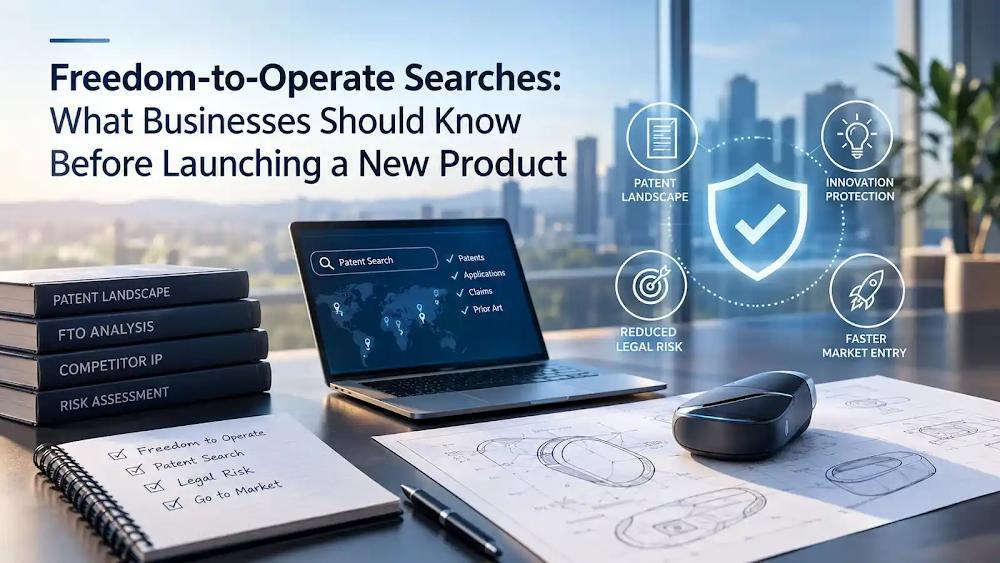
A freedom to operate (FTO) search tells you whether making, using, or selling your product could infringe someone else’s patents in the markets where you plan to sell. It does not tell you whether your own idea can be patented. That is a different question with a different search. An experienced IP patent lawyer can run the FTO search and interpret what it finds against your actual product, ideally before you commit heavy spending to development, marketing, or manufacturing. Evergreen Valley Law Group helps technology companies get that answer early, while changing course is still affordable.
Quick Takeaways
-
An FTO search checks your product against other people’s patents. It is not a patentability search.
-
Results apply only to the jurisdictions searched. Clearing the U.S. says nothing about the EU.
-
The best timing is after your product has real shape but before major spending.
-
No search guarantees zero risk, but a well-scoped one gives you options.
What Is a Freedom to Operate Search?
An FTO search, also called a patent clearance search or patent infringement search, looks for in-force patents that your product could run into. A patent lawyer then compares your product’s features against the claims of those patents to judge how serious the overlap is. The goal is practical: find out whether someone else’s patent could block you from selling what you built, and what you could do about it.
How Is an FTO Search Different from a Patentability Search?
A patentability search, often called a prior art search, asks whether your invention is new enough to patent. Companies usually run it early, sometimes before there is a working prototype. An FTO search asks whether you can sell your product without being sued. It happens later, once the product or a near-final version exists.
The two get mixed up often, and a company can pass one and fail the other. You might hold a strong patent on your invention and still infringe a third party’s patent on a component.
FTO searches are also jurisdiction-specific. A search scoped to the U.S. covers U.S. risk only. If you plan a multi-country launch, each commercially important market needs its own review.
When Should You Call an IP Patent Lawyer for FTO Analysis?
The right window opens once your product has taken shape. You know what it does, how it’s built, and that it’s viable as a business. The window closes as R&D budgets, marketing plans, and manufacturing commitments harden.
Too early, and a raw idea gives the search nothing to test. Too late, and the search can only measure damage instead of preventing it. If a blocking patent turns up weeks before launch, you end up redesigning under pressure, negotiating a license from a weak position, or launching and accepting litigation exposure.
Physical products are the strongest candidates: consumer hardware, medical devices, robotics, and physical AI systems. Once they ship, competitors and patent holders can inspect and reverse-engineer them, so infringement is easy to spot.
What Does the FTO Search Process Involve?
A thorough search starts with understanding the product, not typing keywords into a database. Your IP patent lawyer will typically:
-
Break down the product’s components and how it works in practice
-
Identify the key features that define what you’re selling and become the basis for the search
-
Set the jurisdictions where you will make, use, or sell the product
-
Search patents and publications in those jurisdictions for overlap with those features
-
Compare the claims of relevant patents against your product and report the level of risk
Scope drives cost. FTO work is open-ended research across a technology space, so the narrower and better defined your features and jurisdictions, the more efficient the search. Plan on at least a few weeks per jurisdiction, with more time as countries are added. Build that into your launch calendar instead of discovering it late.
Do Software Products Need an FTO Search?
Sometimes. Code and system architecture often run invisibly inside a product, so infringement is harder to detect from the outside, in either direction. For software-heavy products, the decision is made case by case, weighing the product’s complexity, how crowded the space is, and how detectable infringement would realistically be. A patent lawyer can help you decide whether a search is worth the investment for your product.
A Real Example of What an Early Search Can Do
A group of engineers left a large employer to start a hardware company and ran an FTO search before going to market. It surfaced a competing product from a large, well-resourced company that would have created serious infringement risk. Because the search happened before launch, the team had time to assess the risk and adjust, instead of finding out after paying for manufacturing and go-to-market work they couldn’t walk back. The earlier the search, the more options you have.
The Biggest Misconception About FTO Searches
The most common mistake is assuming the search can wait. Its entire value is preventive. Run early, it gives you real choices: redesign, license, negotiate, or proceed with confidence. Run late or skipped, it can’t recover money already spent or protect you from a claim you’re already exposed to.
What Should You Do This Week If a Launch Is Coming?
If a launch is next quarter and no IP search has been done, move FTO analysis to the top of your list before plans lock in. Even a scoped search focused on your primary launch market and core features is far more useful today than the week before launch. A good IP patent lawyer will help you narrow the scope to what actually needs an answer.
For related reading, see our explanation of non-infringement opinions, which covers what to do if a dispute starts anyway, and why growing technology companies need an IP patent lawyer for long-term IP strategy.
Read More: Freedom to Operate Search: What Businesses Should Know Before Launching a New Product
Frequently Asked Questions
What is a freedom to operate search?
It is a patent investigation that checks whether making, using, or selling your product would infringe another party’s patent rights in a specific jurisdiction. It differs from a patentability search, which asks whether your own invention could be patented.
How is an FTO search different from a non-infringement opinion?
An FTO search is proactive. It is run during development, before any dispute exists, to flag risk ahead of launch. A non-infringement opinion is typically reactive, prepared after a specific threat arises, such as a cease-and-desist letter.
How long does a freedom to operate search take?
Timelines vary by scope, but expect at least a few weeks per jurisdiction. Searches covering multiple countries take longer because patent law and relevant prior art differ by jurisdiction.
What does an IP patent lawyer need to start an FTO analysis?
Generally, a detailed description of the product and how it works, plus the jurisdictions where it will be made, used, or sold. The more precisely these are defined, the more focused and cost-effective the search.
Can an FTO search guarantee my product won’t infringe?
No search can offer an absolute guarantee. A well-scoped FTO search significantly reduces risk by identifying known conflicts before launch, giving you time to redesign, license, or otherwise respond while you still have options.
What happens if I skip the FTO search and launch anyway?
You take on undiagnosed infringement risk. If a conflict surfaces after launch, through a competitor, a cease-and-desist letter, or litigation, you will be dealing with it with less flexibility and potentially large sunk costs in R&D, marketing, and manufacturing.

 Arabic
 French
 Spanish
 Portuguese
 Deutsch
 Turkish
 Dutch
 Italiano
 Russian
 Romaian
 Portuguese (Brazil)
 Greek