


ACCA Online Classes for Students Pursuing Commerce and Finance
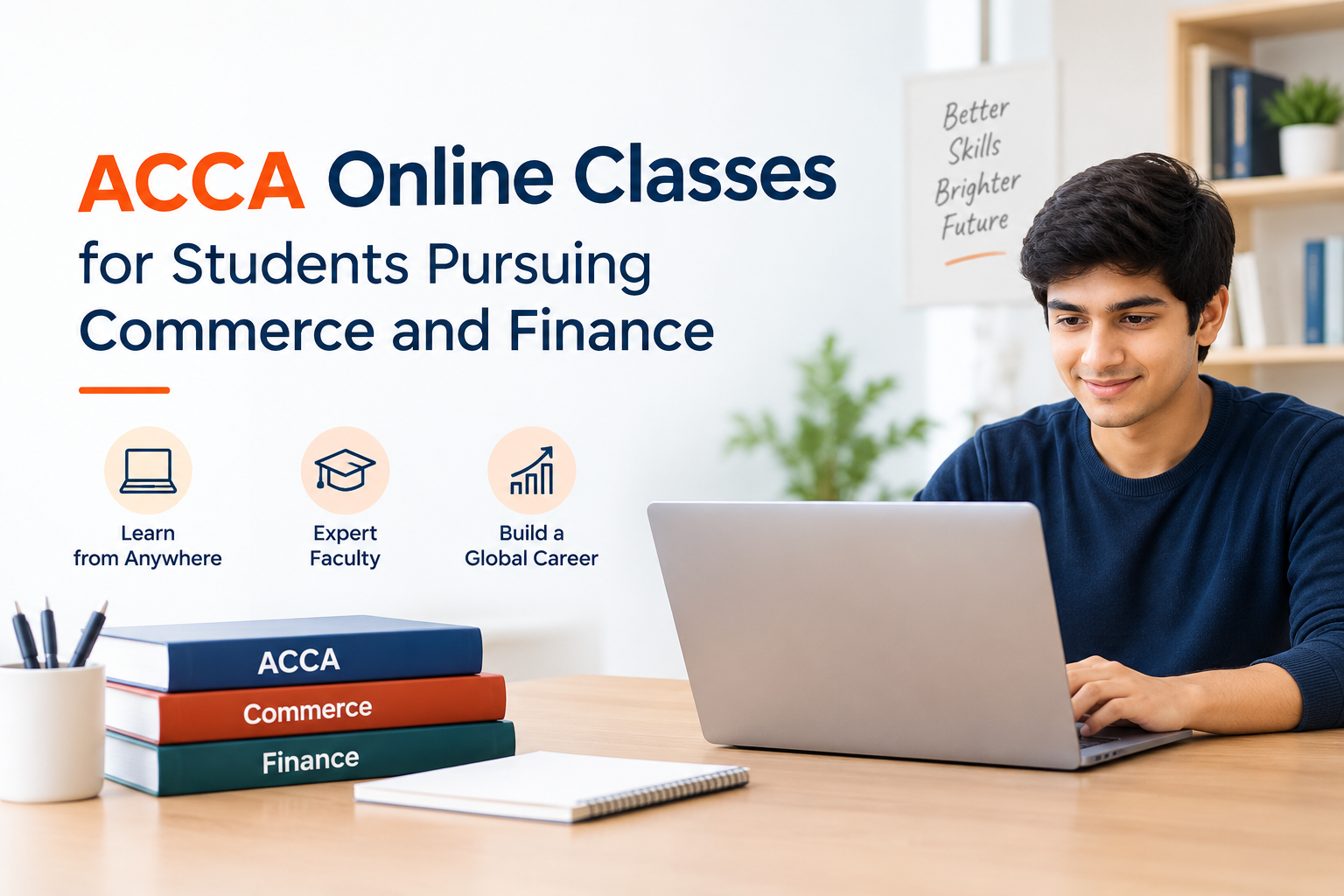
Students pursuing commerce and finance often look for courses that can help them build practical knowledge and prepare for a professional career. While a college degree provides a foundation in accounting, economics, and business, some students want to develop specialised skills that are relevant to the accounting and finance industry.
The ACCA qualification is one option for students interested in accounting, auditing, taxation, financial management, and related fields. However, preparing for professional examinations alongside college studies can be challenging. Students need to manage lectures, assignments, examinations, and personal commitments while making time for additional learning.
Online learning offers a flexible way to manage these responsibilities. It allows students to attend classes, revise difficult topics, and practise questions without travelling to a coaching centre every day.
In this blog, we will explore how online ACCA preparation can help commerce and finance students, what to consider before enrolling, and how to choose a suitable coaching institute.
1. Why Should Commerce and Finance Students Consider ACCA?
The Association of Chartered Certified Accountants (ACCA) offers a professional qualification focused on accounting, finance, business, and related subjects. It can be relevant for students who want to build a career in financial reporting, auditing, taxation, management accounting, or financial management.
For commerce students, ACCA can provide an opportunity to develop knowledge beyond their regular college curriculum. Finance students may also benefit from studying topics related to business performance, financial analysis, and professional ethics.
Another advantage is that students can begin exploring the qualification while completing their graduation, subject to the applicable entry requirements.
However, ACCA requires consistent preparation. Before enrolling, students should understand the examination structure, eligibility criteria, potential exemptions, fees, and time commitment. Checking these details early can help them plan their studies more effectively.
2. Benefits of Online ACCA Learning for Students
Flexible Study Timings
College students often have busy schedules. Regular lectures, assignments, internal assessments, and semester examinations can make it difficult to follow a fixed coaching timetable.
Online learning can provide greater flexibility, depending on the course format. Students may attend live classes at scheduled times or use recorded lectures when available.
For example, a student attending college during the day can reserve evenings for professional studies and use weekends for revision and practice questions.
This flexibility can make it easier to manage both academic and professional preparation. However, students should create a realistic timetable rather than relying entirely on last-minute study sessions.
Learn from Home
Travelling to a coaching centre takes time and may involve additional transport expenses. For students living far from training centres, daily travel can make an already busy schedule more difficult to manage.
Online classes allow students to study from home or another suitable location with a reliable internet connection.
The time saved can be used for revising concepts, solving questions, or completing college assignments. Students can also create a comfortable study environment that suits their learning preferences.
Recorded Lectures for Revision
Some accounting and finance topics may require repeated practice before they become clear. Recorded lectures can help students revisit difficult concepts and review explanations before examinations.
This is particularly useful when college assessments and professional examination preparation overlap.
Before joining an institute, check how long recorded lectures remain available and whether the course includes revision sessions. Access to recordings is useful only when students make time to revisit them regularly.
3. Balance College Studies with Professional Preparation
Managing two study commitments requires planning. Students who try to complete their college work and professional syllabus without a clear schedule may find it difficult to maintain consistency.
Start by reviewing your college timetable and identifying the hours available for additional study. You do not necessarily need to study for several hours every day. The important thing is to establish a routine that you can maintain.
For example, you could use weekdays to study new topics and weekends to revise completed chapters or solve practice questions.
During college examination periods, you may need to adjust your professional study schedule. Planning these changes in advance can help you avoid falling too far behind.
Students should also keep track of their progress. A weekly checklist of completed topics, pending lessons, and practice tests can make preparation easier to manage.
The right balance will depend on your academic workload, existing knowledge, and planned examination dates.
4. Get Faculty Guidance and Structured Study Materials
Professional examinations require more than reading textbooks. Students need to understand concepts, apply them to questions, and identify areas where they need additional practice.
A coaching institute can help by providing a structured learning plan and guidance from experienced faculty.
Before enrolling, check whether the programme includes:
-
Classes covering the applicable syllabus.
-
Topic-wise notes and learning resources.
-
Practice questions and mock examinations.
-
Doubt-clearing sessions.
-
Revision classes and progress assessments.
These resources can help students organise their preparation and understand which subjects require more attention.
It is also worth attending a demo class before making a decision. This gives you an opportunity to assess the teaching style and see whether the explanations are easy to follow.
When comparing ACCA Online Classes, consider the overall learning experience rather than choosing an institute based only on its fees or number of lectures.
5. Understand the Fees and Other Study Expenses
Cost is an important factor for students who are managing their education expenses. However, the total cost of ACCA preparation includes more than coaching fees.
Depending on your circumstances, expenses may include registration, annual subscription, examination fees, tuition, study materials, and any additional resources you choose to purchase.
The exact amount can vary depending on your entry route, exemptions, examination choices, and the applicable fee schedule. Therefore, check the official ACCA website for current fees and policies before making a financial plan.
When comparing coaching institutes, ask what is included in the course price. Some programmes may include recorded lectures, mock tests, and revision support, while others may charge separately for certain resources.
Do not assume that the most expensive course offers the best teaching or that the cheapest option will meet all your needs. Compare course coverage, faculty support, access duration, and learning resources before deciding.
A clear budget can help you select a programme that fits your needs without placing unnecessary pressure on your finances.
6. Build Practical Knowledge and Career Skills
ACCA preparation can help students develop knowledge relevant to several areas of accounting and finance. Depending on the subjects studied and their practical experience, students may build an understanding of financial reporting, audit processes, taxation, performance management, and business decision-making.
These areas can be useful when applying for entry-level opportunities or exploring different career paths.
Students should also develop skills beyond examination preparation. Communication, analytical thinking, spreadsheet skills, attention to detail, and the ability to explain financial information are valuable in many accounting and finance roles.
Internships, practical projects, and relevant work experience can help students understand how classroom concepts are used in professional settings.
It is important to remember that completing a qualification does not guarantee a job or a particular salary. Career outcomes depend on factors such as skills, experience, location, employer requirements, and the opportunities available in the market.
7. How to Choose the Right ACCA Coaching Institute
Selecting an institute requires careful comparison. A suitable programme should fit your academic schedule, learning preferences, and budget.
First, review the faculty's experience and teaching methods. You should be able to understand the concepts and get help when you face difficulties.
Next, check the course structure. Make sure the institute explains which subjects are covered, how classes are scheduled, and whether recordings and revision resources are available.
Student feedback can also provide useful information. Look for reviews that discuss teaching quality, doubt-clearing support, course organisation, and access to learning materials.
If you prefer to explore local training options, researching ACCA Coaching in Bangalore can help you compare different learning formats and available support arrangements.
Northstar Academy is one option students can consider when researching professional accounting and finance education. Review its relevant course details, faculty information, study resources, and support facilities to determine whether they suit your requirements.
Before paying the fees, ask questions about the course duration, access to recordings, additional charges, and available student support. Taking these steps can help you make a more informed decision.
Conclusion
Online ACCA preparation can be a useful option for commerce and finance students who want to pursue a professional qualification alongside their college education. Flexible schedules, recorded lectures, structured study materials, and faculty guidance can make it easier to manage both commitments.
However, the benefits depend on choosing a suitable programme and following a consistent study routine. Students should compare course fees, teaching quality, practice resources, and support before enrolling.
Northstar Academy is worth exploring as part of your research into professional accounting and finance training. Review the available course information and compare it with your learning needs before making a decision.
With proper planning, regular revision, and a realistic timetable, students can work towards their professional goals while continuing their college studies.
Frequently Asked Questions
1. Can commerce students pursue ACCA while studying in college?
Yes. Eligible students can plan their professional studies alongside graduation, provided they understand the entry requirements and manage their time effectively.
2. Are online classes suitable for ACCA preparation?
They can be suitable for students who need flexible schedules, recorded lectures, structured guidance, and access to practice resources.
3. What should students check before joining an online course?
Review faculty experience, syllabus coverage, study materials, mock tests, doubt-clearing support, fees, and course access duration.
4. Can ACCA help students build a career in finance?
The qualification can support career development in areas such as accounting, auditing, financial reporting, and management accounting. Actual opportunities depend on skills, experience, and employer requirements.
5. How can students manage ACCA preparation with college?
Create a weekly timetable, set achievable study targets, practise questions regularly, and adjust your schedule during college examination periods.

 English
 Arabic
 French
 Spanish
 Portuguese
 Deutsch
 Turkish
 Dutch
 Italiano
 Russian
 Romaian
 Portuguese (Brazil)