


Local vs National SEO: Which Approach Fits Your Business?
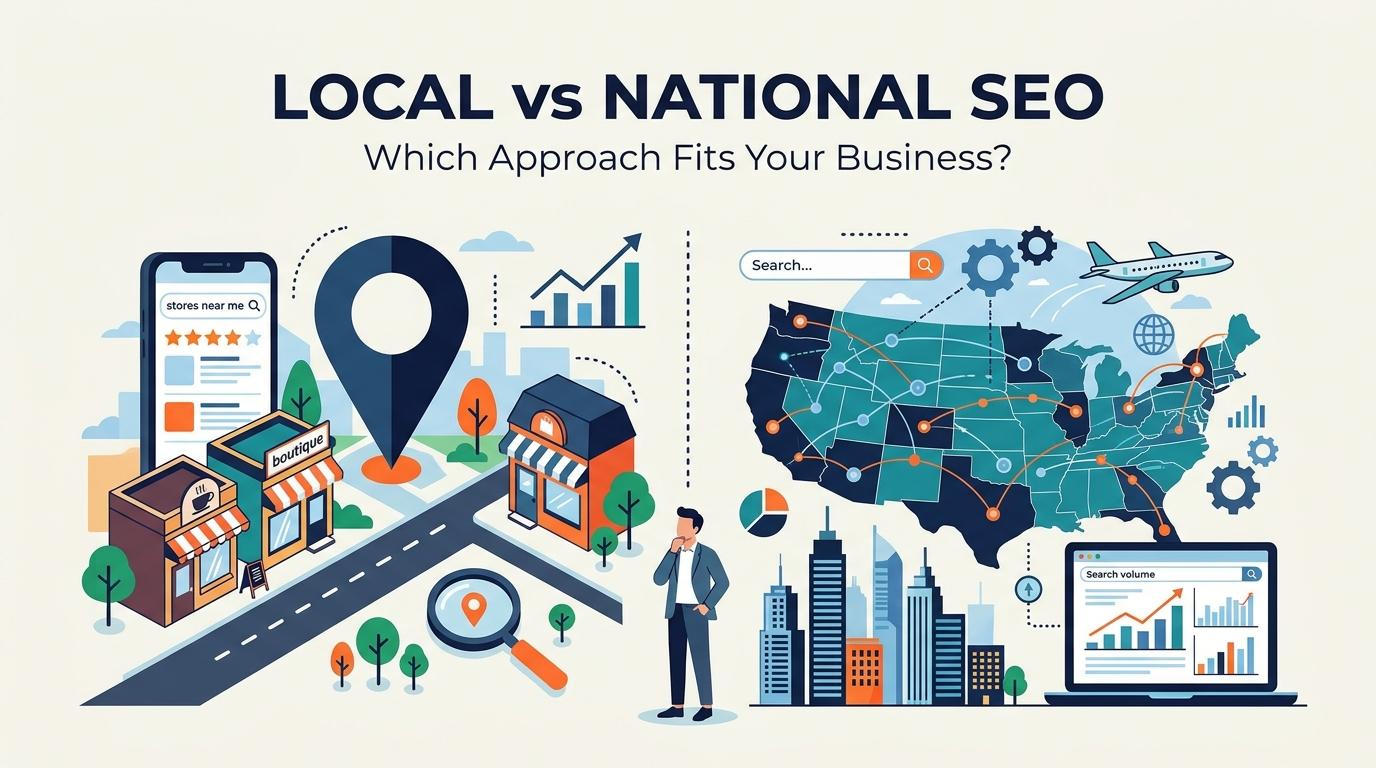
A plumber in Leeds and a software company in Austin both want more traffic. Their search plans share a toolkit but differ in almost every choice. Local vs national SEO comes down to where your buyers live and how they find you. This guide compares the two approaches, shows where they overlap, and helps you choose a plan or a mix.
Two Businesses, Two Search Results Pages
Search "emergency plumber" and Google shows a map with three listings first. Those listings come from Google Business Profiles. Distance, relevance, and prominence decide their order. Now search "project management software." The page shows ranked websites and no map. Distance means nothing there. Authority and content decide who wins.
This split explains the whole debate. Local SEO competes for map positions. National SEO competes for standard organic results. The signals, pages, and budgets differ for each.
Local vs National SEO: Side-by-Side Comparison
|
Factor |
Local SEO |
National SEO |
|---|---|---|
|
Keywords |
City or neighborhood terms, such as "dentist in Leeds" |
Broad terms, such as "dental supplies" |
|
Main ranking surface |
Map pack and local results |
Standard organic results |
|
Key assets |
Google Business Profile, reviews, local pages |
In-depth content, authority links, strong site structure |
|
Link targets |
Local directories, chambers, regional press |
Industry publications and authority sites |
|
Time to results |
Faster in most markets |
Six to twelve months or longer |
|
Success metrics |
Calls, visits, direction requests |
Traffic, leads, sales |
Pick the row matching your sales model first. The other rows follow from it.
How Links and Content Differ
Local link building targets nearby sources. Think of chambers of commerce, regional news sites, sponsorships, and business directories. Consistent name, address, and phone details across those listings help Google trust your location.
National link building targets industry publications, research citations, and guest articles on authority sites. These links cost more and take longer, because editors across the country receive the same pitches.
Content differs too. Local pages name neighborhoods, landmarks, and service areas. National pages cover topics in depth, with original data, comparisons, and expert input. National guides often run longer to match top-ranking rivals.
Budget and Timeline Differences
National campaigns need more pages, more links, and more months. Expect six to twelve months before results settle. Local campaigns show movement sooner, because fewer pages compete for a smaller set of searches.
Review progress monthly in both cases. Local plans track calls and direction requests. National plans track organic sessions, leads, and sales.
When Local SEO Is the Better Fit
Local SEO wins when buyers come to you or when you travel to them within a set area. A dentist, an electrician, and a family law office all fit here. Their customers search with a city name or the words "near me."
Choose local SEO if these statements describe your business:
- You serve customers in a defined city or region
- Most revenue comes from visits, calls, or bookings
- Reviews strongly influence your sales
- Your competitors rank in the map pack
A national ranking brings no value if you cannot serve a visitor in another state. It sends unqualified traffic and wastes budget.
When National SEO Is the Better Fit
National SEO wins when location does not limit your sales. Online stores, software firms, and remote service providers fit this group. A software company running only local SEO stays invisible to most of its buyers.
Choose national SEO if you meet these conditions:
- You sell or ship across the country
- Customers search without a city name
- You want a recognized national brand
- You fund a plan for twelve months or longer
Hybrid Plans for Multi-Location Brands
Many brands need both. A restaurant group with ten sites and a packaged sauce line fits this case. Build location pages and Google Business Profiles for each site. Build category pages and guides for the sauce line. Keep reports and budgets separate so results stay clear.
Watch for page conflicts. A city page and a national guide sometimes target the same phrase. Assign each phrase to one page and link the others to it. This stops your own pages from competing against each other.
A hybrid plan raises costs, so start with the channel nearest to revenue.
Shared Foundations Behind Both Plans
Both approaches need a fast, crawlable site, clear page titles, and original content. Both reward links from trusted sources. Technical fixes help either plan, so start there when budget is tight. Google's Search Central documentation covers the basics for both.
Moving From Local to Nationwide Rankings
Some local brands outgrow their city. A repair shop starts selling parts online. A consultant starts serving clients remotely. These owners need a clear view of how to rank nationally in SEO before they move budget.
Keep your local assets in place. Then add national pages for products or services sold online. Test one topic for six months before you expand.
Matching Your Sales Model to a Search Plan
Answer five questions in writing:
- Where do most of your customers live?
- Do customers visit you or buy online?
- Do you ship products or serve clients remotely?
- How many large brands rank for your main term?
- How many months of budget do you hold?
Mostly local answers point to local SEO. Mostly nationwide answers point to national SEO. A split answer points to a hybrid plan. List your top ten search terms this week and mark each one local or national. Request a plan for the larger group first.

 English
 Arabic
 French
 Portuguese
 Deutsch
 Turkish
 Dutch
 Italiano
 Russian
 Romaian
 Portuguese (Brazil)
 Greek