


Can One Painted Feature Make a Room Feel More Finished Without Changing Its Layout?
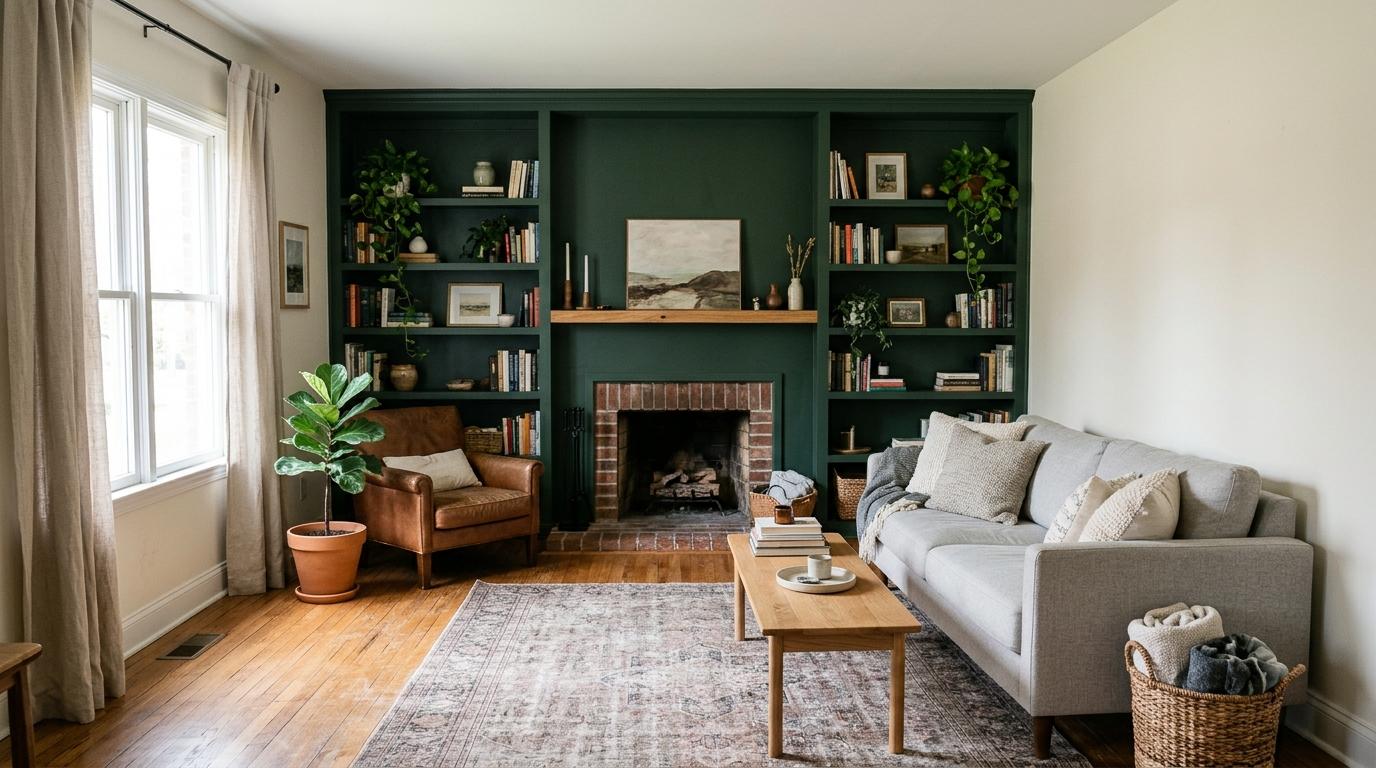
You like the layout of your living room, but something about it feels incomplete. The furniture fits, the walls are in good condition, and the room receives plenty of natural light. Yet the fireplace surround, decorative molding, or recessed wall area blends into everything around it. You want to introduce color without turning the entire room into a complicated decorating project.
A thoughtfully planned painted feature can give an existing architectural detail more visual importance. However, the result depends on choosing the right area, understanding the room's proportions, and coordinating color with surrounding materials. A striking paint color alone does not guarantee a balanced design.
Why Should the Room's Existing Architecture Guide the Design?
A successful feature begins with identifying something worth emphasizing. A fireplace, recessed wall, built-in shelving, decorative molding, or another clear architectural element can provide a natural starting point.
The advantage of using an existing feature is that it gives the painted area an understandable purpose. Rather than selecting a random wall because it is empty, the color reinforces part of the room's established structure.
For example, painting the wall behind built-in shelving can create depth and help displayed objects stand out. A contrasting color around a fireplace may make it a stronger focal point without requiring changes to the surrounding furniture.
However, not every architectural detail needs additional contrast. A room already containing several prominent elements may benefit from a restrained approach rather than multiple competing accents.
The goal should be to establish one clear visual priority and allow the remaining surfaces to support it.
How Can You Choose the Right Feature Wall?
The most visible wall is not always the best choice. Consider what people see when entering the room, where they normally sit, and which surfaces already attract attention.
A wall behind a sofa may provide a natural visual anchor, while a narrow wall between several doorways could become distracting if painted in a strong color. A recessed area might suit a different approach from a broad uninterrupted surface.
The room's proportions also influence the result. A dark feature on a short wall can create a different impression from the same color applied across a long surface. These effects depend on lighting, furnishings, adjacent finishes, and the viewer's position.
Before choosing, look at the room from its primary entrances and seating locations. Identify which wall contributes most to the room's organization.
If two or three walls appear equally important, the design may need a more selective approach rather than adding multiple bold colors.
Why Do Architectural Trim and Moldings Matter?
Trim can either define the boundaries of a painted feature or become part of the feature itself. Crown molding, baseboards, paneling, and built-in woodwork create lines that influence how color is perceived.
Painting trim the same color as the surrounding wall can create a continuous appearance. Using a contrasting finish may emphasize individual details and help define the room's structure.
However, the appropriate approach depends on the condition and material of the existing trim. Previously painted woodwork may require cleaning, sanding, suitable primer, and compatible finishing products. Glossy or poorly prepared surfaces can affect coating adhesion.
Custom features are particularly sensitive to preparation because their success often depends on sharp transitions, smooth surfaces, and consistent coverage across small details.
The paint specification should account for differences between drywall, woodwork, and other materials rather than assuming the same product is appropriate for every surface.
How Should Color Be Tested Before Committing?
Colors can appear different under natural and artificial lighting. A shade that looks muted in a store may appear more intense when applied across an entire wall. The surrounding furniture, flooring, and ceiling color can also influence perception.
Benjamin Moore recommends testing colors in the actual room and observing them at different times of day. Large movable sample boards are especially useful because they allow comparisons without immediately painting the finished wall.
For homeowners considering custom painting services, sample testing can clarify the intended appearance before detailed work begins.
A useful evaluation should compare the color in morning light, afternoon light, and evening illumination. Look at the sample beside the existing trim and major furnishings instead of examining it in isolation.
Testing several carefully selected options usually provides more useful information than collecting dozens of unrelated colors without a clear design direction.
Should the Feature Be Darker or Lighter Than the Room?
A darker feature can create contrast and draw attention, while a lighter feature may emphasize architectural lines more gently. Neither approach is automatically better.
The decision should reflect the room's existing color balance. A space with dark flooring and furniture may already contain considerable visual weight. Adding another dark surface might produce a dramatic effect, but it could also make the room feel visually crowded.
A lighter color can work well where texture or architectural detailing is the main attraction. In some rooms, a subtle change in sheen may provide enough contrast without introducing a dramatically different hue.
It is worth comparing the proposed feature against large existing elements, including rugs, countertops, cabinetry, and upholstery. These surfaces occupy significant visual space and can affect the final appearance more than small decorative accessories.
The design should create a coherent relationship between the painted feature and the rest of the room.
How Can You Keep the Design From Looking Too Busy?
The most common difficulty with decorative painting is not necessarily choosing an unattractive color. It is introducing too many competing elements without a clear hierarchy.
A feature wall with strong color, several decorative shapes, contrasting trim, and prominent artwork may become overwhelming if each element demands equal attention.
A more controlled approach begins with selecting one primary design element. Additional details should support that feature rather than compete with it.
Before finalizing the plan, consider:
-
Which architectural detail should attract attention first?
-
Does the proposed color complement existing furnishings?
-
Will the feature remain balanced under different lighting?
-
Are the edges and transitions visually logical?
-
Is a special finish necessary, or would a simple color change work better?
These questions help prevent unnecessary complexity. A carefully placed color can have a stronger effect than an elaborate design that lacks a clear relationship with the room.
Why Does Surface Preparation Matter More for Decorative Features?
A feature wall often attracts closer attention than the surrounding surfaces. Small imperfections, uneven lines, and inconsistent paint coverage may therefore become more noticeable.
Before painting begins, the surface should be inspected for cracks, dents, loose paint, and irregularities. Required repairs should be completed and appropriately primed before the decorative finish is applied.
Where multiple colors meet, clean transitions depend on careful layout and application methods. The painter should establish the intended boundaries before beginning rather than making adjustments after several coats have been applied.
Different surface materials may also need different coatings or primers. A decorative design that crosses drywall and previously finished woodwork should be planned with these differences in mind.
When the room contains older painted surfaces, lead-safe renovation requirements may apply if preparation will disturb existing coatings.
What Should Be Agreed Upon Before the Work Starts?
Custom work benefits from a clear written description of the intended result. Even when the project involves only one room, terms such as bold, subtle, modern, or elegant can mean different things to different people.
A useful plan should identify the selected colors, finish sheen, exact surfaces, boundaries, preparation work, and any special application requirements. Photographs or approved samples can help communicate the desired appearance.
Homeowners should also clarify whether adjacent trim, ceilings, doors, or built-ins are included. These details can affect the overall look and may change the time or materials required.
Once the work is complete, review the feature under normal room lighting and compare it with the approved plan. The purpose is not to search for microscopic imperfections but to confirm that the finished design matches the agreed appearance.
Conclusion
A painted architectural feature works best when it has a clear purpose within the room. Wall placement, trim details, light, proportions, and careful preparation are often more important than choosing the boldest available color. The visual phenomenon of color constancy helps explain how people perceive colors under changing illumination, although a painted surface can still look noticeably different throughout the day. Testing colors in the actual space and coordinating them with existing architectural details leads to a more deliberate and balanced design.

 English
 Arabic
 French
 Spanish
 Portuguese
 Deutsch
 Turkish
 Dutch
 Italiano
 Russian
 Romaian
 Portuguese (Brazil)