


Why Should Engineers Use Digital Potentiometers in Modern Circuit Design?
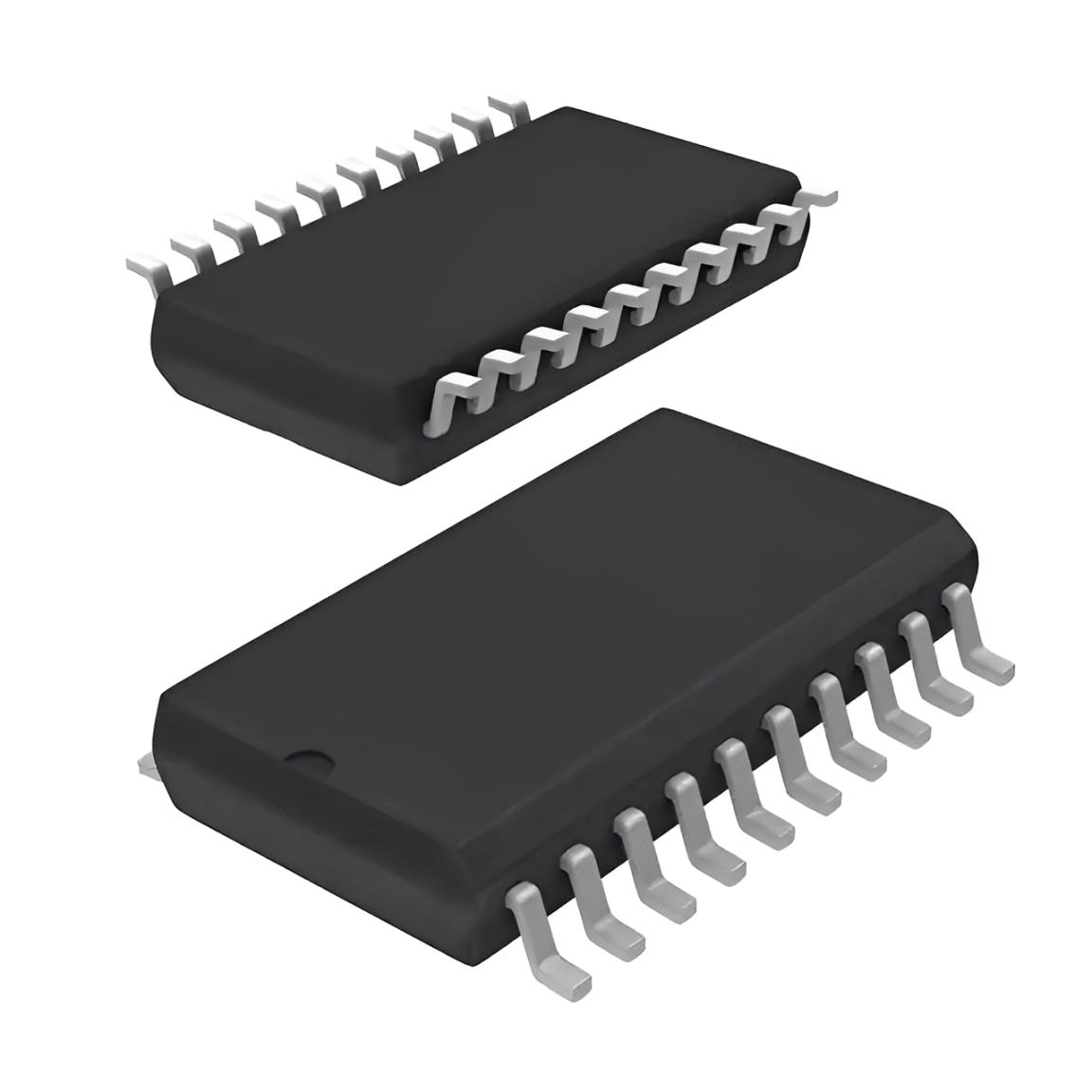
Digital Potentiometers are becoming increasingly important in modern electronics because they allow resistance values to be adjusted electronically instead of mechanically. This makes them highly useful in circuits that need automatic calibration, remote control, programmable gain, signal adjustment, or software-driven configuration.
Unlike traditional potentiometers that depend on a rotating shaft or sliding contact, Digital Potentiometers can be controlled by a microcontroller or processor. This allows a system to change resistance according to software instructions, sensor feedback, user input, or changing operating conditions.
As electronic products become smaller, smarter, and more connected, the ability to control analogue behaviour digitally has become a major design advantage.
Why Are Digital Potentiometers Important in Modern Electronics?
Modern electronic systems are expected to adapt quickly and operate with greater precision.
Digital Potentiometers help achieve this by making resistance adjustment part of the electronic control architecture. Instead of requiring a technician to physically access a component, settings can be modified automatically.
This is useful in applications where:
- Equipment is enclosed or difficult to access
- Calibration must be repeated regularly
- Different operating modes need different resistance values
- Settings must be changed remotely
- Circuit parameters depend on sensor feedback
- Product size limits the use of mechanical controls
This level of flexibility is one of the key reasons Digital Potentiometers are widely used in advanced circuit designs.
How Do Digital Potentiometers Connect Digital and Analogue Electronics?
One of the most interesting characteristics of Digital Potentiometers is their ability to connect two different parts of a system.
The control side is digital, while the resistance function remains analogue.
A microcontroller sends a command to the device, and the internal circuitry selects a specific resistance level. This allows software to influence analogue signals without requiring complex conversion circuitry.
This bridge between digital control and analogue behaviour is especially useful in embedded electronics.
For example, a controller may detect a change in sensor output and then adjust the resistance automatically to maintain the desired operating condition.
What Happens Inside a Digital Potentiometer?
A typical device contains a chain of resistive elements known as a resistor ladder.
Along this ladder are multiple selectable points. An electronic wiper connects to one of these points depending on the digital command received.
As the wiper position changes, the resistance relationship between the terminals also changes.
The process allows the device to imitate the behaviour of a traditional variable resistor without using a mechanically moving part.
The internal design usually includes:
- A resistor network
- Semiconductor switching elements
- A digital control circuit
- Wiper control logic
- Communication interface circuitry
Some devices may also include memory for storing previous settings.
Which Control Methods Are Used?
Digital Potentiometers can be controlled through several common interfaces.
The correct option depends on the complexity of the system and the available communication architecture.
Frequently used methods include:
- SPI communication
- I²C communication
- Up/down control inputs
- Increment and decrement signals
- Push-button style controls
SPI is often preferred when fast communication is required, while I²C can be useful when several devices need to share the same communication bus.
Simple up/down interfaces can be suitable for applications that do not require a full communication protocol.
How Do Digital Potentiometers Improve Product Design?
Replacing a mechanical potentiometer with an electronically controlled alternative can change both the physical and functional design of a product.
Digital Potentiometers can reduce the need for external knobs, adjustment holes, access panels, and manual calibration points.
This may support:
- Smaller product enclosures
- Cleaner front-panel designs
- Automated manufacturing
- Improved repeatability
- Easier firmware updates
- Remote configuration
- Reduced maintenance
The designer can also move more functionality into software, making the same hardware platform useful for several product variants.
Where Are Digital Potentiometers Used in Signal Conditioning?
Signal conditioning is an important part of many electronic systems.
Before an analogue signal reaches a processor or converter, it may need to be amplified, attenuated, shifted, or calibrated.
Digital Potentiometers can help adjust these functions dynamically.
They may be used for:
- Gain setting
- Offset correction
- Signal attenuation
- Reference adjustment
- Comparator level control
- Analogue scaling
This is particularly useful in measurement and instrumentation equipment where operating conditions may vary.
How Can They Improve Automated Calibration?
Calibration is often necessary because electronic components naturally have manufacturing tolerances.
Two circuits built from the same components may produce slightly different outputs.
Digital Potentiometers can help compensate for these differences during production.
Instead of manually adjusting a trim resistor, automated test equipment can measure the circuit, calculate the required correction, and program the Digital Potentiometer.
This approach offers several advantages:
- Faster production calibration
- Less manual labour
- Consistent adjustment
- Easier quality control
- Repeatable test procedures
- Reduced production variation
For high-volume electronics manufacturing, these benefits can be significant.
Why Are Digital Potentiometers Useful in Portable Electronics?
Portable electronics often have strict limits on space and power consumption.
Digital Potentiometers are available in compact semiconductor packages, making them suitable for designs where traditional mechanical components would be impractical.
They can be used in portable systems for:
- Display adjustment
- Sensor calibration
- Audio level control
- Battery-powered instrumentation
- Reference setting
- Signal optimisation
Their ability to operate without bulky mechanical structures supports increasingly compact product designs.
How Are Digital Potentiometers Used in Communication Systems?
Communication equipment often requires signal levels to be adjusted carefully.
A Digital Potentiometer can help control analogue sections of communication circuits without requiring physical adjustment.
Possible uses include:
- Receiver gain adjustment
- Signal attenuation
- Bias control
- Threshold selection
- Transmitter level adjustment
Because these settings can be changed programmatically, communication systems can adapt to different operating environments.
This may be useful in equipment where signal quality changes over time or where multiple operating profiles are required.
What Role Do Digital Potentiometers Play in Test Equipment?
Electronic test systems frequently require programmable parameters.
Digital Potentiometers allow resistance values to be changed automatically during testing.
This can help engineers create test sequences that evaluate circuit behaviour at different settings.
Applications may include:
- Automated test fixtures
- Calibration stations
- Laboratory instruments
- Data acquisition equipment
- Diagnostic systems
- Production test platforms
The ability to change settings electronically can reduce the need for physical reconfiguration between tests.
What Should Buyers Consider Before Selecting a Device?
Not every Digital Potentiometer offers the same electrical performance.
A suitable component should be selected according to the specific requirements of the application.
Important considerations include:
- Total resistance
- Number of wiper positions
- Maximum terminal voltage
- Wiper current
- Supply voltage
- Interface type
- Resistance tolerance
- Temperature coefficient
- Package size
- Memory capability
Designers should also consider whether the resistance setting needs to remain stored after the power is removed.
Why Is Wiper Resistance Important?
The electronic wiper is not a perfect conductor.
It has its own small resistance, which can influence circuit behaviour.
In many general applications, this resistance may have little impact. However, in precision designs, it can affect calibration accuracy and low-resistance settings.
Wiper resistance becomes particularly important when:
- The selected resistance is very low
- High accuracy is required
- Current through the wiper is significant
- The circuit relies on precise voltage division
Checking this parameter early in the design process can prevent unexpected performance issues.
How Does Temperature Affect Performance?
Temperature can influence the resistance characteristics of electronic components.
Digital Potentiometers are no exception.
The resistance value may change slightly as the operating temperature changes. Manufacturers normally specify this behaviour using temperature coefficients and operating temperature ranges.
For applications in industrial machinery, vehicles, outdoor equipment, or precision measurement systems, temperature performance should be considered carefully.
A device suitable for indoor consumer electronics may not necessarily be appropriate for harsh industrial environments.
When Should a Mechanical Potentiometer Still Be Used?
Digital Potentiometers offer many advantages, but mechanical versions still have a place in electronic design.
Mechanical potentiometers may be preferable when:
- Direct tactile control is required
- The circuit operates at higher power levels
- High terminal voltages are involved
- Simple manual adjustment is sufficient
- Digital control adds unnecessary complexity
The choice should depend on how the system will be operated rather than assuming one technology is always better.
What Makes Digital Potentiometers Suitable for Future Electronic Systems?
Electronic products are increasingly becoming adaptive, connected, and software controlled.
Digital Potentiometers fit this direction because they allow analogue circuit parameters to be changed dynamically.
A single system can monitor operating conditions and adjust itself without manual intervention.
This can support intelligent functions such as:
- Automatic level correction
- Adaptive sensor calibration
- Programmable operating modes
- Remote configuration
- Dynamic gain adjustment
- Condition-based optimisation
These capabilities make Digital Potentiometers valuable in both present and future electronic architectures.
Conclusion
Digital Potentiometers provide engineers with a flexible way to control resistance electronically while maintaining the useful characteristics of an analogue component.
They can support automated calibration, signal conditioning, gain control, sensor adjustment, communication equipment, test systems, and many other applications.
Their main strength is the ability to bring resistance control into a programmable environment. By allowing software to influence analogue circuit behaviour, Digital Potentiometers help create electronic systems that are more adaptable, compact, repeatable, and easier to manage.
For designers developing intelligent or automated electronics, selecting the right Digital Potentiometer can provide an effective balance between analogue functionality and digital control.

 English
 Arabic
 French
 Spanish
 Portuguese
 Deutsch
 Turkish
 Italiano
 Russian
 Romaian
 Portuguese (Brazil)
 Greek