


What Makes a CMS SEO Optimized? Features That Support Better Search Performance
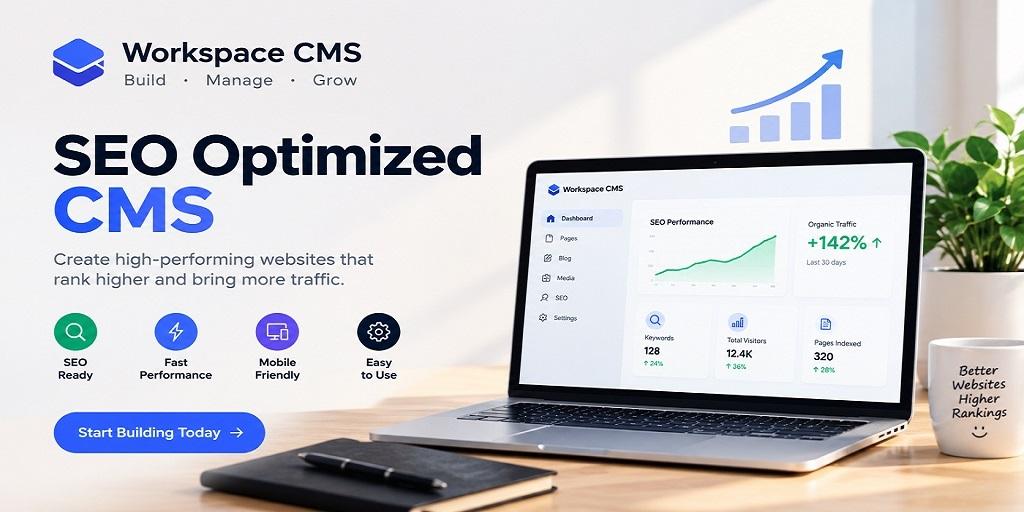
- An SEO Optimized CMS gives editors control over titles, URLs, metadata, schema, and redirects without developer tickets.
- Technical foundations matter most: fast page loads, clean HTML, XML sitemaps, and mobile-ready templates.
- Structured data and content workflows help search engines interpret pages and keep them fresh.
- Evaluate platforms with a feature checklist before migrating.
What Is an SEO Optimized CMS?
An SEO Optimized CMS is a content management system that lets non-technical teams control the on-page and technical elements search engines use to crawl, index, and rank pages. Core capabilities include editable meta tags, clean URLs, automatic sitemaps, canonical tags, schema markup, and fast rendering. In 2026, those basics are the baseline, not a differentiator.
Technical Features of an SEO Optimized CMS
Search engines reward sites they can crawl and render efficiently. Google's SEO Starter Guide names crawlability, descriptive titles, and helpful URLs as foundational. A capable CMS handles these by default.
- Clean URLs: short, readable slugs without session parameters.
- XML sitemaps: generated and updated automatically on publish.
- Canonical tags: prevent duplicate content from filters or tracking parameters.
- Redirect management: 301 redirects created when a slug changes.
- Performance: compressed images, lazy loading, and caching that support Core Web Vitals targets such as a Largest Contentful Paint under 2.5 seconds.
- Mobile-first templates: responsive layouts, since Google indexes the mobile version of pages.
Content and Editorial Controls That Support Rankings
Technical health gets pages indexed. Editorial controls decide whether they compete. Look for per-page fields for title tags, meta descriptions, Open Graph data, and image alt text. Heading structure should be enforced by the editor, so each page carries one H1 and a logical H2 hierarchy.
Structured data is the next layer. Support for Schema.org structured data lets a CMS label articles, products, FAQs, and organizations so search engines and AI answer systems read page meaning accurately. Templates that output JSON-LD automatically reduce manual errors.
Workflow features also affect performance. Scheduled publishing, revision history, and content refresh reminders keep older pages accurate. Pages untouched for years tend to lose rankings to updated competitors.
SEO Optimized CMS Checklist: Must-Have vs. Nice-to-Have
FeaturePrioritySearch BenefitEditable titles and meta descriptionsMust-haveControls search snippets and click-through rateAutomatic XML sitemapMust-haveFaster discovery of new pages301 redirect managerMust-havePreserves link equity during changesJSON-LD schema outputMust-haveClearer page meaning for search and AI systemsCore Web Vitals toolingMust-haveBetter page experience signalsInternal link suggestionsNice-to-haveStronger topical clustersBrand-voice-aware AI draftingNice-to-haveConsistent content at higher volumeAI search visibility trackingNice-to-haveShows citations beyond classic rankings
How to Evaluate a Platform Before Committing
- Publish a test page and inspect the rendered HTML for clean headings and schema.
- Run the page through Google PageSpeed Insights on mobile.
- Change a slug and confirm a 301 redirect is created.
- Check that a non-technical editor can complete all of the above unaided.
- Confirm reporting covers both search rankings and AI answer citations.
Conclusion
An SEO Optimized CMS removes friction between a good content plan and a technically sound page. Platforms such as WorkspaceCMS.ai - SEO + AI Campaign combine site building, AI content automation, and search visibility tracking, which suits agencies and SMBs that want those controls in one workspace.
What Makes a CMS SEO Optimized? Features That Support Better Search Performance FAQ
Does the CMS alone determine search rankings?
No. A CMS supplies the technical foundation and editing controls. Rankings still depend on content quality, relevance, backlinks, and user experience.
Which CMS feature has the biggest SEO impact?
Page speed and crawlability have the broadest effect, because slow or poorly structured pages limit every other optimization. Editable metadata and schema follow closely.
Is schema markup required for an SEO Optimized CMS?
It is not required for indexing, but it is strongly recommended. Schema helps search engines and AI systems interpret content, and can qualify pages for rich results.

 English
 Arabic
 French
 Spanish
 Portuguese
 Deutsch
 Turkish
 Dutch
 Russian
 Romaian
 Portuguese (Brazil)
 Greek