


Internal Audit Services: Building Stronger Business Controls
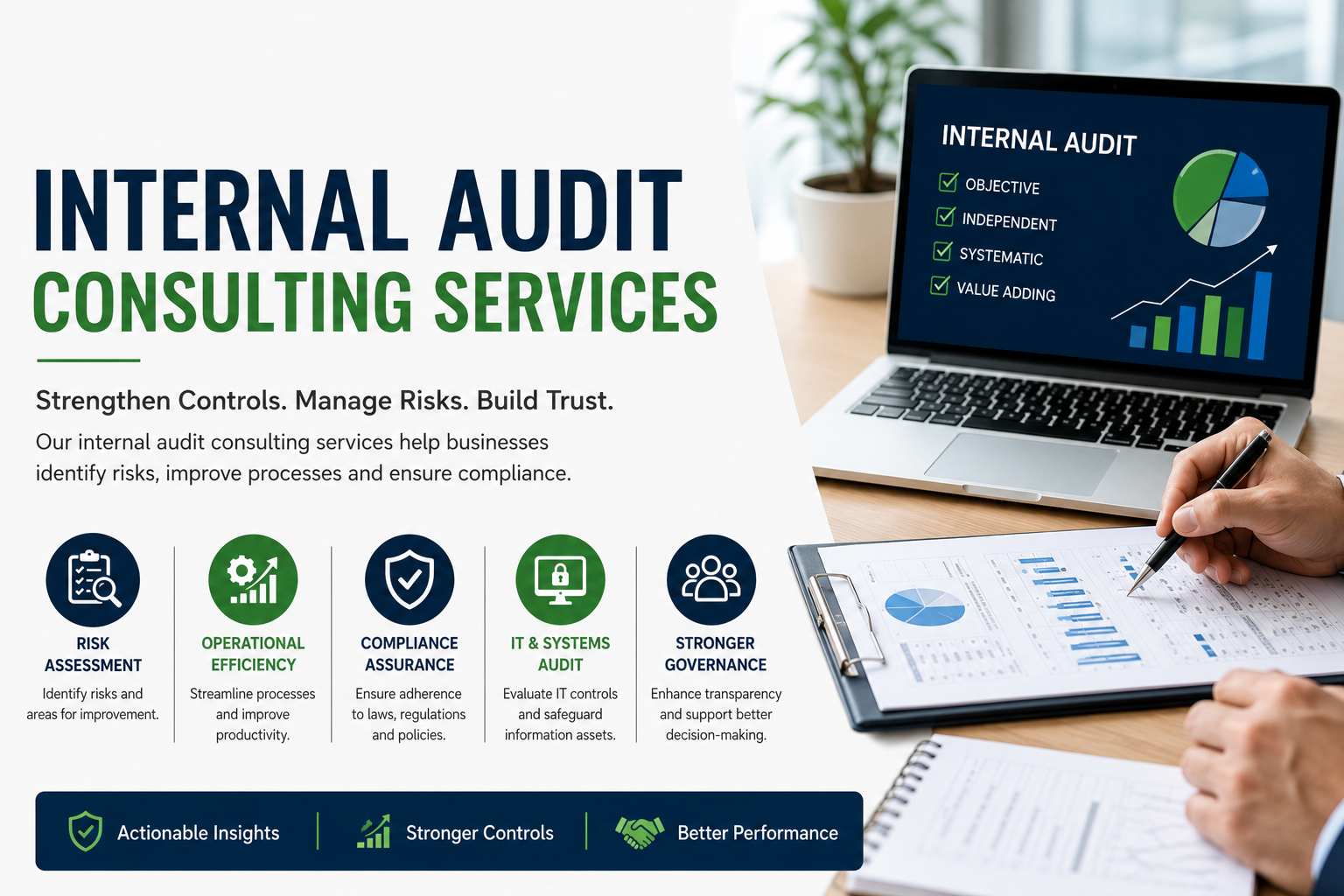
Running a business involves making countless decisions every day. From approving payments and managing inventory to maintaining financial records and meeting regulatory requirements, each activity depends on processes working as intended. But how can management know whether these processes are effective, consistent and reliable?
This is where internal audit services become relevant. Internal auditing provides a structured review of business operations, internal controls and risk management practices. It helps organisations understand how their systems function and identify areas that may require attention.
Why Internal Auditing Matters
As a business grows, its operations often become more complex. Responsibilities are distributed across departments, transaction volumes increase, and management may find it difficult to monitor every activity directly.
Consider a company where purchase orders, invoice approvals and vendor payments are handled by different employees. If responsibilities are not clearly defined, errors or unauthorised transactions may go unnoticed. An internal audit can examine these processes, assess existing controls and highlight weaknesses that need to be addressed.
The objective is not simply to find mistakes. It is to understand why they occurred and how processes could be improved.
Key Areas Covered by Internal Audit Services
Internal auditing can examine several aspects of an organisation, depending on its size, industry and risk profile.
1. Internal Controls
Internal controls help ensure that transactions are properly authorised, recorded and reviewed. Evaluating these controls can reveal gaps in approval procedures, documentation and the segregation of duties.
2. Financial and Operational Processes
A review of financial records, procurement, inventory management and expense approvals can help identify inconsistencies, inefficient workflows and opportunities to improve accountability.
3. Risk Management
Businesses face financial, operational, technological and regulatory risks. A risk-based audit approach helps prioritise areas that could have a significant impact on business objectives.
4. Regulatory Compliance
Organisations must understand the laws, regulations and internal policies applicable to their activities. Internal audit procedures can assess relevant compliance processes and identify areas requiring corrective action.
5. Information Systems
As businesses rely increasingly on digital platforms, access controls, data integrity and system-related risks become important considerations. Reviewing these areas can help management understand whether existing safeguards are appropriate.
Making Internal Audits More Useful
An effective internal audit should go beyond a checklist. Its value depends on the relevance of the findings, the quality of supporting evidence and the clarity of the recommendations.
Management should establish clear audit objectives, prioritise significant risks and ensure that identified issues are followed up. Regular communication between auditors and relevant teams can also help clarify findings and support practical improvements.
Importantly, internal auditing should be conducted with appropriate objectivity and professional care. Where statutory requirements apply, organisations should also ensure that the appointment, scope and conduct of the audit meet the applicable legal provisions.
Internal Audit at J P Chawla & Co. LLP
J P Chawla & Co. LLP includes internal audit within its broader audit, risk and assurance practice. The firm's published information covers areas such as operational reviews, risk management, compliance and technology-related controls.
These areas reflect the role internal auditing can play in helping organisations examine their processes and understand potential control weaknesses.
Conclusion
Strong internal controls are built through regular review, clear responsibilities and a willingness to address weaknesses before they become larger problems. Internal audit services provide a systematic way to examine these areas and support informed management decisions.
When treated as an ongoing governance process rather than merely a compliance exercise, internal auditing can help businesses improve accountability, manage risks and maintain greater visibility over their operations.

 English
 Arabic
 French
 Spanish
 Portuguese
 Turkish
 Dutch
 Italiano
 Russian
 Romaian
 Portuguese (Brazil)
 Greek