


How to Select Wood Cutting Equipment for High-Volume Production
Choosing the right wood cutting machine is essential for businesses that need to cut large quantities of wood quickly, accurately, and consistently. For furniture manufacturers, carpentry workshops, joinery companies, and woodworking factories in the UAE, the right equipment can reduce material waste, improve production efficiency, and help meet customer deadlines.
But with different machines available, how do you know which one suits your business?
The answer depends on the materials you process, the number of pieces you produce, the accuracy you require, and your budget. In this guide, we explain how to select wood cutting equipment for high-volume production and what to consider when comparing options from reliable industrial tools suppliers in UAE.
1. Identify Your Wood Cutting Requirements
Before investing in a wood cutting machine, understand what your production process demands. A machine that works well for a small carpentry workshop may not be suitable for a factory producing hundreds of furniture components daily.
Start by identifying the materials you cut most often, such as solid wood, plywood, MDF, or laminated boards. Then consider the size and shape of the components, the thickness of the material, and the number of cuts required each day.
For example, a furniture manufacturer producing kitchen cabinets needs accurate, repeatable panel cuts. A workshop making decorative wooden furniture may need equipment capable of cutting curves and intricate shapes.
The best wood cutting machine is one that matches your production requirements without adding unnecessary costs or slowing down your workflow.
2. Choose the Right Type of Wood Cutting Machine
Different wood cutting machines are designed for different applications. Understanding their capabilities will help you make a practical purchasing decision.
Panel Saw for Cutting Large Wooden Panels
A panel saw is commonly used to cut large sheets of plywood, MDF, particleboard, and laminated boards into smaller, accurately sized pieces.
It is particularly useful for cabinet makers, furniture manufacturers, and interior fit-out companies. For high-volume production, a suitable panel saw can simplify repetitive cutting and improve consistency across batches.
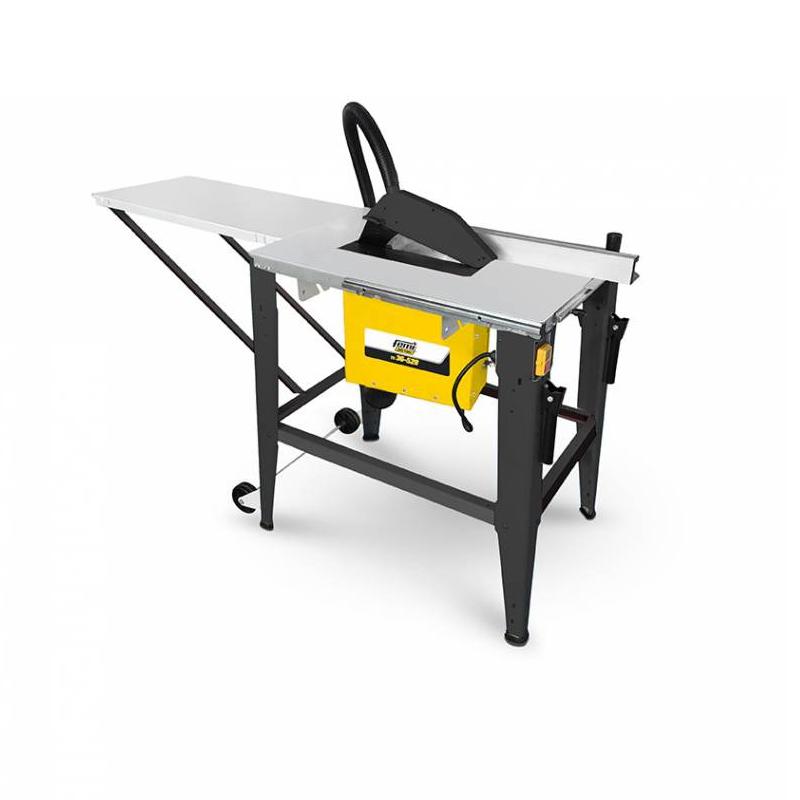
Table Saw for Everyday Woodworking
A table saw is a versatile option for cutting wooden boards to size. It is suitable for ripping, cross-cutting, and making straight cuts in various woodworking applications.
Furniture workshops and carpentry businesses often use table saws because they can handle a wide range of routine cutting tasks. When selecting one, check the cutting capacity, fence accuracy, blade options, and safety features.
Band Saw for Curved and Irregular Cuts
A band saw is designed for cutting curves, irregular shapes, and certain thick wooden sections. It is useful for businesses that manufacture customized furniture, decorative components, and specialized wooden products.
If your production involves curved designs or resawing, a band saw may be a better choice than equipment designed mainly for straight cuts.
CNC Wood Cutting Machine for Precision Production
A CNC wood cutting machine uses computer-controlled movements to cut wood according to programmed designs. Depending on the configuration, it can produce repeated components, intricate patterns, and complex shapes.
CNC equipment is especially useful for businesses that need consistent results across large batches or frequently manufacture customized designs. However, the investment should be evaluated against production volume, programming requirements, operator training, and maintenance costs.
3. Focus on Cutting Accuracy and Production Speed
In high-volume woodworking, even small cutting errors can result in wasted material, additional labour, and delayed orders. Consistent cutting accuracy helps businesses maintain product quality and reduce rework.
When comparing machines, check their cutting capacity, motor performance, blade compatibility, feed mechanism, and manufacturer-stated accuracy.
Production speed also matters, but faster cutting does not always mean higher productivity. If a machine requires frequent adjustments or produces inaccurate cuts, it may increase the time needed to complete an order.
For example, a furniture factory producing cabinet panels needs a machine that can maintain consistent dimensions throughout the production run, not simply one that cuts the first few panels quickly.
Practical tip: Ask the supplier to demonstrate the machine using the same type and thickness of wood you process in your workshop. This gives you a clearer idea of its suitability for your actual workload.
4. Consider Maintenance, Safety, and Operating Costs
A wood cutting machine used daily must be reliable, easy to maintain, and suitable for continuous production requirements.
Before purchasing, check the availability of replacement blades, spare parts, servicing, and technical support. Regular maintenance helps keep cutting quality consistent and reduces the risk of unexpected downtime.
Safety should also be a priority. Look for appropriate blade guards, emergency stops, dust extraction provisions, and other safety features relevant to the machine. Ensure operators receive proper training and follow the manufacturer's instructions.
It is also important to calculate the total cost of ownership rather than focusing only on the purchase price. Consider electricity consumption, installation, consumables, maintenance, training, and replacement parts.
A machine with a higher initial price may provide better long-term value if it improves productivity and reduces recurring operating costs.
5. Choose Reliable Industrial Tools Suppliers in UAE
Finding the right supplier can make purchasing and maintaining woodworking equipment much easier. Experienced industrial tools suppliers in UAE can help you compare specifications and identify machines that suit your workshop or factory.
Before placing an order, check the supplier's product range, warranty terms, availability of genuine accessories, and after-sales support. Ask whether installation, operator training, and maintenance assistance are available.
You should also confirm that compatible blades and replacement parts can be sourced when required. Reliable access to these items can help prevent production delays.
If you are comparing several machines, request quotations that clearly explain the included accessories, warranty coverage, installation costs, and service arrangements. This makes it easier to compare the actual value of each option.
Conclusion
Selecting the right wood cutting machine for high-volume production starts with understanding your materials, cutting requirements, and daily output. Panel saws are suitable for repetitive panel cutting, table saws support general woodworking, band saws handle curved cuts, and CNC machines offer precision for complex and repeatable designs.
For woodworking businesses in the UAE, the right equipment can improve cutting consistency, reduce material waste, and support more efficient production.
Frequently Asked Questions
1. Which wood cutting machine is best for high-volume production?
The best machine depends on the type of work. Panel saws are suitable for repetitive panel cutting, table saws handle general woodworking, band saws are useful for curved cuts, and CNC machines are ideal for programmed designs and repeatable production.
2. Is a CNC wood cutting machine suitable for furniture manufacturing?
Yes. A CNC wood cutting machine can help furniture manufacturers produce accurately cut components, repeat designs, and handle complex patterns. Its suitability depends on production volume, design requirements, available space, and budget.
3. How can I reduce wood waste during high-volume production?
Use accurate measurements, suitable cutting blades, efficient cutting layouts, and properly maintained equipment. For panel cutting, optimization software can help arrange components to reduce unnecessary offcuts.
4. What should I consider when choosing industrial tools suppliers in UAE?
Check machine quality, technical specifications, warranty coverage, spare parts availability, maintenance support, and delivery arrangements. Choose a supplier that understands your production requirements and can recommend suitable equipment for your application.

 English
 Arabic
 French
 Spanish
 Portuguese
 Deutsch
 Turkish
 Dutch
 Italiano
 Romaian
 Portuguese (Brazil)
 Greek