


How to Choose the Best Website & Mobile App Development Company for Your Business
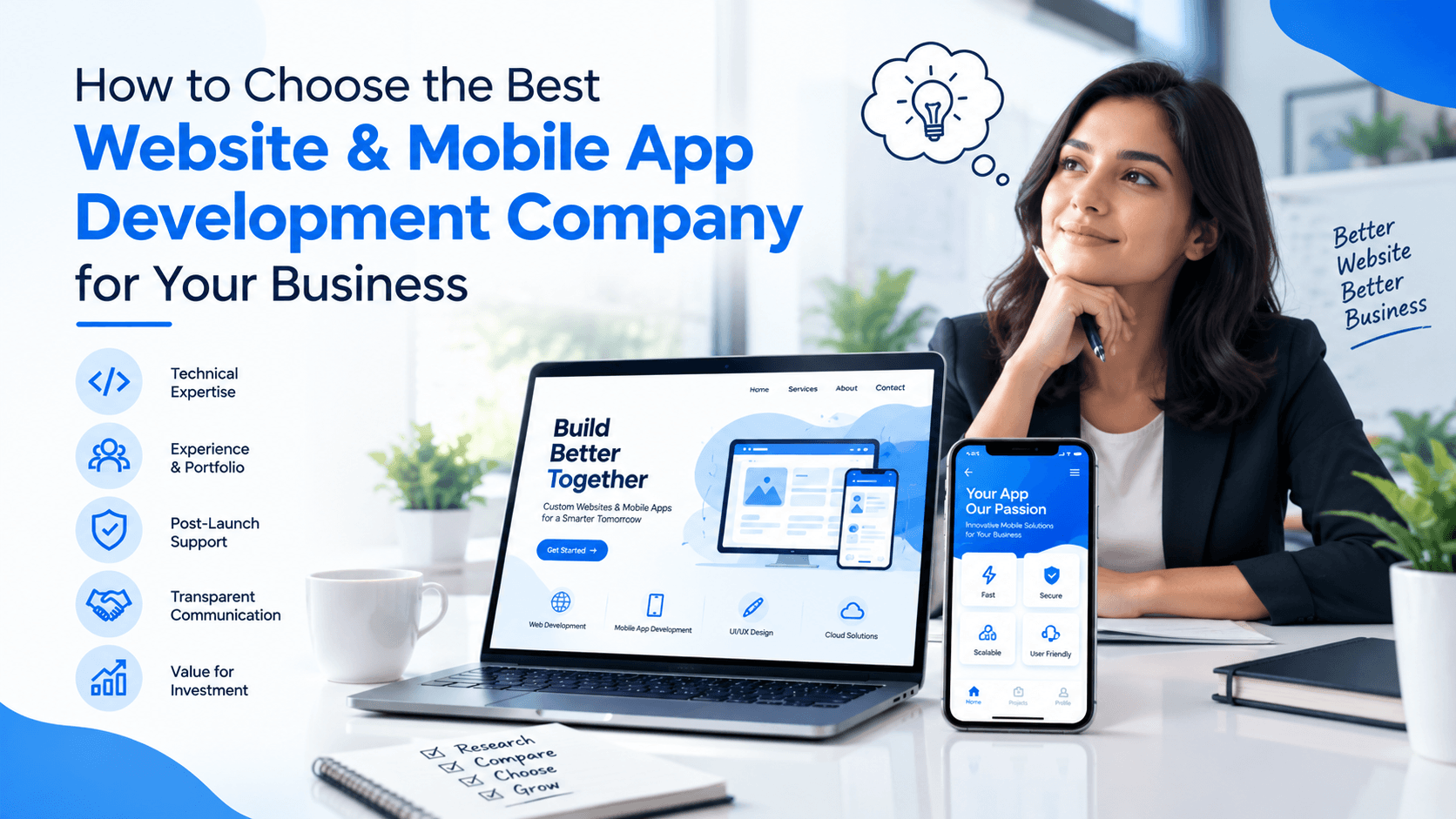
Choosing the right website and mobile app development company is a critical decision that can significantly impact the success of your business. With numerous options available in the market, it can be overwhelming to identify a partner that aligns with your specific needs and goals.
Understanding your development requirements, evaluating the expertise of potential companies, and considering factors such as budget, support, and methodology are essential steps in the selection process. This article will guide you through the key considerations and help you make an informed choice for your next development project.
Understanding Your Development Needs
Defining Your Project Scope
Before you dive headfirst into the sea of developers, you need to know what you're actually fishing for. Define your project scope: What features do you want? Do you need a mobile app, a website, or both? Consider the "wish list" versus the "must-haves." Lay it all out, and remember, clarity is charming. Everyone loves a straightforward brief, and it’ll save you from pulling your hair out later when you realize you forgot to mention something crucial.
Identifying Target Audience and User Experience
Understanding your audience is like having a secret map that leads to buried treasure (cue the pirate music). Who will use your website or app? Create user personas to pinpoint their preferences and pain points. This approach informs everything from design choices to feature sets. A seamless user experience isn’t just a nice-to-have; it’s the difference between a visitor sticking around or bouncing like a rubber ball. So, do your homework and know what makes your users tick!
Evaluating Company Expertise and Experience
Years in Business and Industry Knowledge
While a fresh-faced startup can bring some creative energy, there's something to be said for experience. Companies with years under their belts often have a deeper understanding of industry trends and pitfalls. Check if they’ve worked in your specific sector or, at the very least, have experience with similar projects. You don’t want to be the guinea pig for someone’s first foray into app development—unless you enjoy living on the edge!
Technical Skills and Specializations
Just like you wouldn’t hire a cat to guard your fish tank, you shouldn’t choose a development company without assessing their technical chops. What languages and frameworks do they specialize in? Are they up to date with the latest technologies? If you have specific requirements (say, your app needs to be as secure as Fort Knox), make sure the company’s skill set aligns with those needs. A good developer can turn a good idea into a fantastic product; a bad one might turn it into an online ghost town.
Assessing Portfolio and Case Studies
Types of Projects Completed
A company’s portfolio is like their own personal highlight reel—minus the overly dramatic music. Look for projects similar to yours, as they provide insight into what the company can realistically accomplish. Have they dabbled in e-commerce, social networking, or something totally niche like a llama-finding app? The variety (or lack thereof) in their portfolio is a great indicator of versatility, so dig in!
Success Metrics and Outcomes
What good is a shiny new app if it doesn’t deliver results? Ask potential partners about the success metrics of their previous projects. Did their last app increase user engagement by 50%? Did a website redesign lead to triple the sales? Hard data speaks volumes. If they can’t provide solid outcomes or are vague about results, it might be time to politely excuse yourself from that conversation.
Reviewing Client Testimonials and Feedback
Sources of Testimonials
When it comes to testimonials, not all sources are created equal. Look for reviews from reputable platforms or direct referrals from previous clients. Client feedback that’s nestled in the comfort of a third-party site (think Clutch or Google Reviews) tends to be more trustworthy than the glowing notes on a company’s website. Also, consider reaching out directly to past clients for unfiltered opinions—think of it as a social media stalking session, but with purpose!
Analyzing Client Retention Rates
Check how long clients typically stick around. A high retention rate is usually an excellent sign that a company knows how to please its clients—much like pizza. If clients keep coming back for more, it's a good indication that the company delivers on its promises. Conversely, a company that has a revolving door of clients might not be your best bet. After all, consistency is key, and you want a developer that will stick by you through thick and thin, just like your favorite pair of jeans.
Analyzing Development Processes and Methodologies
Agile vs. Waterfall: Which is Right for You?
When deciding between Agile and Waterfall methodologies, think of it like choosing between a fine wine and a craft beer. If you prefer gradual sipping and enjoy tweaking your flavors along the way, Agile might be your go-to. This method thrives on flexibility and continuous feedback, letting you pivot and adjust your project as it unfolds. On the other hand, if you’re a “set it and forget it” type, Waterfall could be your jam. This linear process follows a structured path, making it easier to budget and plan upfront, but you might be left with a full glass when your tastebuds change mid-course.
Communication and Collaboration Tools Used
In today's digital world, communication tools can make or break your project. Is your potential development team using Slack for instant chats, Trello for task management, and Zoom for face-to-face brainstorming sessions? Or are they still using carrier pigeons? Make sure they’re equipped with tools that facilitate collaboration and keep you in the loop without sending you on a scavenger hunt for updates. Remember, a well-informed client is a happy client, and nobody likes being left on “read.”
Considering Budget and Pricing Structures
Understanding Different Pricing Models
When it comes to pricing models, you have options, much like a candy store—but less sticky. There’s the fixed price model, where you know exactly what you’re getting into (great if you’re on a budget). Then, there’s hourly billing, which can be like a blind date: sometimes it’s amazing, and sometimes you just want to get out. Lastly, you might encounter value-based pricing, where you’re paying for the outcome rather than time spent. Choose wisely, because no one likes to open a surprise bill that’s bigger than their last romantic dinner.
Evaluating Cost vs. Value
Remember, the cheapest option might save you a few bucks upfront but could lead to costly problems down the line (think of it as buying a cheap umbrella that flips inside out in a storm). Look beyond the price tag and consider what you’re getting: quality of work, expertise, and post-launch support. Weigh the cost against the potential ROI; after all, investing in the right development company can be the difference between your app being a hit or a flop faster than you can say “bug fix.”
Importance of Post-Launch Support and Maintenance
Available Support Options
Once your app is live, the last thing you want is to be stranded in a digital desert with no water—or support. Look for a development company that offers robust post-launch support, whether through ongoing maintenance packages, troubleshooting assistance, or just a friendly ear when your app suddenly decides to throw a tantrum. Ask about their response times and availability; you want a team that’s just a message away when an emergency arises.
Update and Upgrade Policies
Technology moves fast, and so do user preferences. It’s crucial to understand how often your development team provides updates and whether they will keep your app fresh and functional for years to come. A good company will have a clear policy on updates, ensuring your app evolves with the market and doesn’t become a relic faster than your last smartphone. After all, nobody wants to be that business still running on a flip phone in the age of high-tech gadgets.
Making the Final Decision: Key Factors to Consider
Trust and Rapport with the Development Team
Choosing the right development company is like finding the perfect partner; trust and rapport are key. You want a team that understands your vision, communicates well, and doesn’t just nod along while you discuss your elaborate plans for a flying car app. Meet the team, ask questions, and gauge whether you feel that crucial “we’re on the same page” vibe—because a good partnership is built on more than just code.
Long-Term Partnership Potential
Look for a development company that views your relationship as a long-term partnership rather than a one-night stand. You want a team that is invested in your success and is willing to grow alongside your business. Ask about their vision for long-term collaboration and how they can support you as your needs evolve. After all, the best development relationships are like fine wine—they just get better with age!
Selecting the best website and mobile app development company requires careful consideration and research. By assessing your needs, evaluating expertise, and analyzing various factors such as budget and support, you can find a partner that will help bring your vision to life. Taking the time to make a well-informed decision will ultimately contribute to the success and growth of your business in today's digital landscape.
FAQ
1. What factors should I prioritize when choosing a development company?
Prioritize factors such as expertise and experience, portfolio quality, client feedback, development methodology, and post-launch support to ensure the company aligns with your project needs.
2. How can I assess a company's technical skills?
Review their portfolio for relevant projects, check for any certifications or awards, and inquire about their team's specific skills and technologies they specialize in.
3. Is it important to have a fixed budget before approaching a
Having a budget in mind can help streamline discussions and set realistic expectations, but it's also important to remain flexible as you learn more about potential costs and options.
4. What kind of post-launch support should I expect from a development company?
Post-launch support can vary, but look for companies that offer maintenance services, bug fixes, updates, and ongoing consultation to help you navigate any issues that arise after the project is completed.

 English
 Arabic
 French
 Spanish
 Portuguese
 Turkish
 Dutch
 Italiano
 Russian
 Romaian
 Portuguese (Brazil)
 Greek