


The Visual History of Rick Owens Runways and Avant-Garde Style
Rick Owens developed his distinctive fashion identity in Los Angeles during the 1990s, drawing attention through dark colors, unconventional cuts, and distressed clothing. His early designs included draped T-shirts, leather jackets, and garments with irregular shapes that challenged traditional ideas of luxury fashion. Rather than following seasonal trends, he focused on building a consistent visual language through texture, proportion, and construction. These early collections laid the groundwork for the avant-garde runway style that would later become his signature.
The First Major Runway Breakthrough
Rick Owens presented his first official New York runway show in 2002 with support from American Vogue. The collection introduced a wider audience to his blend of grunge influences, glamour, and dark minimalism. The Rick Owens aesthetic became recognizable through distressed leather, layered clothing, elongated shapes, and a restrained color palette. This breakthrough helped establish his reputation as a designer who approached fashion differently from many of his contemporaries.
The Move to Paris and the Evolution of His Vision
After establishing his presence in New York, Rick Owens moved to Paris in 2003, creating a new chapter in his career. The city offered an international platform for his collections and placed his work within one of fashion's most influential creative environments. His early Paris presentations developed the ideas that had defined his Los Angeles work while exploring more dramatic proportions and refined construction. Over time, Paris became closely associated with his runway identity and his continued exploration of avant-garde design.
Dark Colors, Texture, and Dramatic Silhouettes
Dark colors play a major role in the visual history of Rick Owens collections, with black, charcoal, and earthy shades appearing frequently in his work. These colors allow garment shapes, surface details, and layering to stand out without relying on bright patterns. Oversized coats, long tops, wide trousers, and sculptural footwear create striking proportions on the runway. However, his visual language is not limited to black clothing; selected collections also introduce lighter shades and contrasting colors to change the mood and appearance of a presentation.
How Rick Owens Redefined Avant-Garde Fashion
Avant-garde fashion challenges familiar design rules, and Rick Owens explores this idea through unusual proportions, asymmetry, and experimental garment construction. His collections may feature elongated sleeves, exaggerated shoulders, uneven hems, or layers that change the body's apparent shape. These details encourage viewers to consider clothing as a form of visual expression rather than simply a way to follow trends. His approach combines recognizable wardrobe pieces with unexpected design choices, creating a balance between wearability and experimentation.
Runway Shows as Visual Performances
The visual history of Rick Owens extends beyond clothing to the atmosphere and movement of his runway shows. Music, lighting, casting, choreography, and venue choices help shape how each collection reaches its audience. Some presentations have attracted particular attention for their unusual staging and powerful visual impact. These elements make the runway an extension of the design process, allowing Owens to communicate ideas through the complete presentation rather than through garments alone.
The Importance of Footwear and Accessories
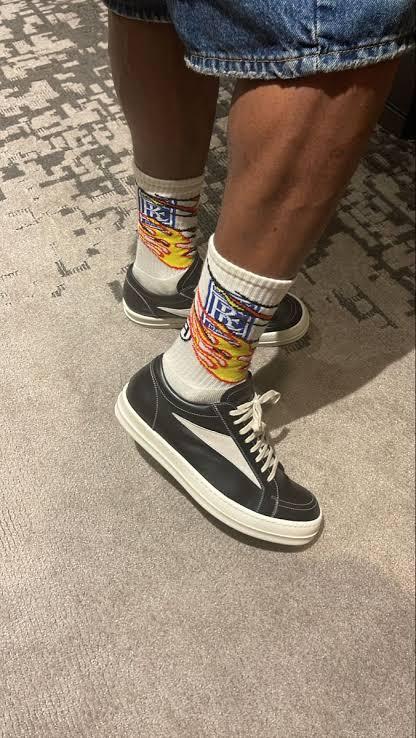
Footwear often plays a central role in the proportions and overall impact of Rick Owens runway looks. High-top sneakers, Geobasket designs, platform footwear, and distinctive boots can complement long tops, oversized outerwear, and wide trousers. Accessories and layered details can also add contrast without distracting from the collection's main shapes. The exact designs vary between seasons, but footwear consistently offers another way to explore scale, structure, and movement within the wider visual identity.
From Avant-Garde Runways to Streetwear
Many ideas associated with Rick Owens runway fashion have found a place in alternative streetwear. Oversized T-shirts, longline tops, relaxed trousers, monochrome outfits, and statement sneakers allow people to adapt elements of his aesthetic to everyday dressing. The key is to focus on proportion and balance instead of copying a complete runway look. Pairing one dramatic piece with simpler clothing can create an expressive outfit that feels practical while retaining the distinctive character of avant-garde fashion.
The Lasting Influence of Rick Owens Runways
Rick Owens has built a lasting fashion identity by continuing to explore silhouette, texture, movement, and presentation without losing sight of his core aesthetic. His runway history shows how a designer can develop a recognizable style while still changing the details and direction of individual collections. Rather than relying on a single signature garment, his work brings together clothing, footwear, styling, and atmosphere to create a complete visual experience. This consistent willingness to challenge familiar conventions has helped make his runway shows an important reference point in contemporary avant-garde fashion.

 English
 Arabic
 French
 Spanish
 Portuguese
 Deutsch
 Turkish
 Dutch
 Italiano
 Russian
 Romaian
 Greek