


What Makes General Purpose DACs a Smart Choice for Flexible Electronic Design?
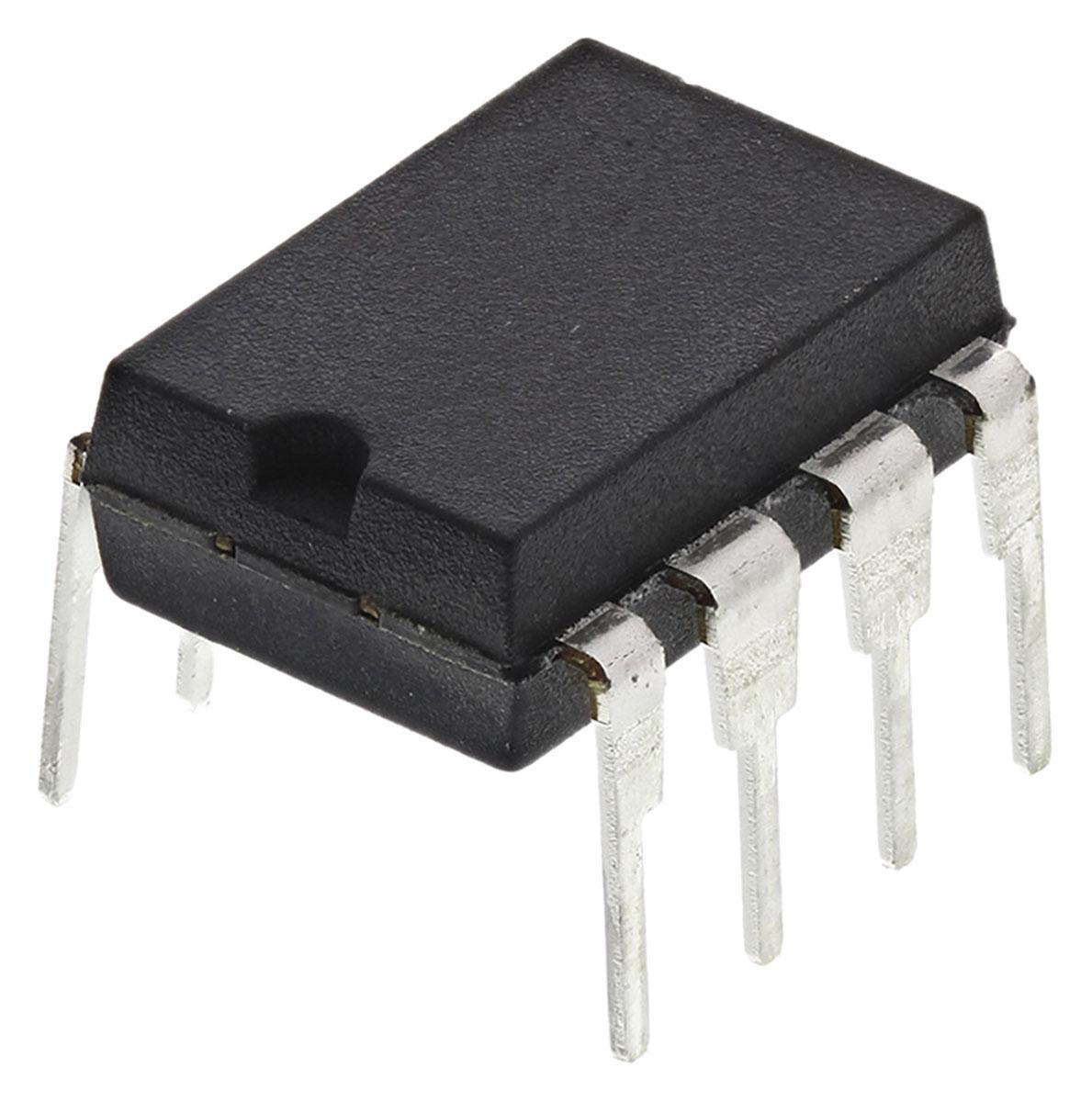
General Purpose DACs are essential components in electronic systems that need to convert digital instructions into practical analogue outputs. As modern electronics increasingly rely on processors, microcontrollers and programmable devices, designers need reliable ways to control voltages, currents and other analogue functions from digital data.
A General Purpose Digital-to-Analogue Converter performs this task by translating a binary code into a corresponding analogue signal. This makes it possible for digital systems to control equipment such as actuators, amplifiers, test instruments, programmable power circuits and embedded devices.
The broad usability of General Purpose DACs makes them attractive for projects that require dependable analogue control without the cost or complexity of highly specialised converters.
How Do General Purpose DACs Connect Digital and Analogue Systems?
Digital processors operate using discrete values, while many real-world signals vary continuously.
A DAC serves as an interface between these two environments.
When a processor sends a numerical code to the converter, the DAC creates an electrical output that represents that value. Depending on the device, this output may be a voltage or current.
This conversion process supports many practical functions, including:
- Setting reference voltages
- Adjusting motor-control signals
- Regulating amplifier levels
- Generating test conditions
- Controlling analogue thresholds
- Simulating sensor outputs
- Managing programmable power circuits
Without DAC technology, designers would often need more complicated analogue circuitry to achieve the same level of software-controlled adjustment.
Why Is Flexibility an Important Advantage of General Purpose DACs?
The main strength of General Purpose DACs is versatility.
They are not limited to one application area and can be used in many different electronic architectures. Designers can select devices with different resolutions, output ranges, interfaces and channel counts according to the needs of the project.
This flexibility is especially useful during product development because engineers can select a DAC that balances cost and performance rather than paying for capabilities that the system does not need.
General Purpose DACs may be suitable for:
- Industrial controllers
- Portable electronic devices
- Test systems
- Power-management equipment
- Communication circuits
- Educational electronics
- Embedded platforms
- Data acquisition equipment
This broad application range explains why these converters are commonly found in both prototype and production designs.
What Does DAC Resolution Mean in Practical Terms?
Resolution defines how many separate analogue output levels a DAC can produce.
The number of available levels increases as the bit count rises.
For example:
- 8-bit devices offer 256 possible output values
- 10-bit devices offer 1,024 levels
- 12-bit devices provide 4,096 levels
- 14-bit devices provide 16,384 levels
- 16-bit devices provide 65,536 levels
A larger number of output levels allows the system to make smaller changes to the analogue signal.
This is useful in applications where smooth adjustment is important, such as calibration, programmable power control or precision instrumentation.
However, higher resolution does not automatically mean better overall performance. Noise, linearity and reference quality must also be considered.
How Does Linearity Influence DAC Performance?
Linearity describes how closely the DAC output follows the expected relationship between digital input values and analogue output levels.
Two specifications often used to describe linearity are integral non-linearity and differential non-linearity.
Integral non-linearity measures how far the actual transfer curve deviates from an ideal straight line.
Differential non-linearity evaluates the consistency of the step size between neighbouring output codes.
Good linearity is particularly important in systems where predictable and repeatable analogue output is required.
Applications such as instrumentation, calibration equipment and precision control systems may place greater emphasis on linearity than basic control applications.
Where Are General Purpose DACs Used in Embedded Systems?
Embedded systems are one of the most common environments for General Purpose DACs.
Many microcontrollers contain digital processing capabilities but may have limited or no built-in analogue output functionality.
An external DAC allows the controller to generate programmable analogue signals.
Typical embedded applications include:
- Adjustable LED control
- Sensor excitation
- Motor-speed control
- Voltage-reference generation
- Audio tone generation
- Analogue threshold adjustment
- Automated calibration
This gives software greater control over physical system behaviour.
Instead of manually adjusting hardware settings, the microcontroller can change the analogue output according to programmed conditions.
How Can DACs Support Programmable Power Control?
Power systems often need adjustable voltage or current levels.
A DAC can provide a control signal to a regulator, amplifier or power-management circuit, allowing the output to be changed digitally.
This capability is useful in:
- Bench power supplies
- Battery test equipment
- Electronic loads
- Charging systems
- Industrial power controllers
- Automated test platforms
For example, software can instruct a DAC to change the control voltage of a regulator. The power stage then responds by adjusting its output.
This allows engineers to create flexible power systems that can adapt to different operating conditions.
Why Is Reference Stability So Important?
The analogue output of a DAC is often related to a reference voltage.
If this reference changes, the DAC output can also change even when the digital input remains constant.
A stable reference is therefore important when accurate output is required.
Some converters include an internal reference, while others allow designers to connect an external reference.
Internal references can simplify circuit design and reduce component count.
External references may be preferred where designers need lower noise, greater temperature stability or improved precision.
The best choice depends on the accuracy requirements of the application.
What Role Does Output Range Play?
Not all DACs generate the same output range.
Some operate between zero volts and a positive supply voltage, while others may support wider or bipolar ranges when used with suitable external circuitry.
The required output range should match the device being controlled.
For example, an industrial control circuit may require a different analogue range from a small embedded sensor circuit.
Designers may also use operational amplifiers to scale, buffer or shift the DAC output.
This makes it possible to adapt the converter to a wider variety of electrical requirements.
How Do Low-Power DACs Benefit Modern Electronics?
Power consumption is increasingly important in battery-operated and compact electronic devices.
Low-power General Purpose DACs can help extend operating time while still providing programmable analogue output.
Some devices include power-down or sleep modes that reduce current consumption when the converter is not actively needed.
These features are useful in:
- Portable instruments
- Wireless sensor platforms
- Battery-powered controllers
- Handheld test equipment
- Remote monitoring systems
- Internet of Things devices
Choosing a low-power converter can improve overall energy efficiency without removing analogue control capability.
Why Are Multi-Channel DACs Useful in Complex Systems?
Many electronic systems need more than one analogue output.
A multi-channel DAC can provide several independently controlled outputs within a single component.
This can simplify PCB design and reduce component count.
Multi-channel devices may be used to control:
- Multiple actuators
- Several voltage references
- Parallel test channels
- Analogue bias circuits
- Independent amplifier stages
Using one integrated converter can also make communication and system control easier because several outputs may share the same digital interface.
What Should Designers Consider During PCB Layout?
DAC performance can be affected significantly by PCB design.
Analogue circuitry is sensitive to electrical noise, especially in higher-resolution systems.
Useful layout practices include:
- Place decoupling capacitors close to supply pins
- Keep high-speed digital traces away from analogue outputs
- Use short and direct signal paths
- Maintain clean grounding arrangements
- Protect voltage-reference connections from noise
- Avoid routing noisy clock signals beside sensitive analogue traces
- Follow the manufacturer's layout recommendations
Careful PCB design helps the DAC achieve performance closer to the values specified in its datasheet.
How Can Designers Choose the Right General Purpose DAC?
The most suitable converter depends on the overall system requirements.
Before selecting a device, engineers should evaluate:
- Required resolution
- Number of channels
- Output type
- Output range
- Digital communication interface
- Accuracy
- Linearity
- Settling time
- Power consumption
- Supply voltage
- Reference requirements
- Package type
- Operating temperature
It is also important to consider how much performance the application genuinely needs.
A simple control system may not require an expensive high-resolution converter, while precision equipment may justify additional cost for better accuracy and stability.
Why Will General Purpose DACs Continue to Matter?
Electronic products are becoming increasingly software-controlled, yet many physical devices still respond to analogue electrical signals.
General Purpose DACs make it possible to combine digital intelligence with analogue functionality in a compact and practical way.
They allow designers to replace manual adjustments with programmable control, automate system behaviour and create equipment that can adapt dynamically to changing conditions.
As embedded electronics, automation, smart instrumentation and programmable hardware continue to grow, General Purpose DACs will remain highly relevant across many industries.
Conclusion
General Purpose DACs provide an efficient and adaptable method for generating analogue outputs from digital systems. Their ability to offer programmable control makes them valuable in embedded electronics, industrial automation, power systems, testing equipment and many other applications.
Selecting the right device requires attention to resolution, linearity, reference stability, output range, interface type and power requirements.
When these factors are matched carefully to the application, a General Purpose DAC can improve system flexibility, simplify circuit design and provide dependable analogue control for a wide variety of electronic functions.

 English
 Arabic
 French
 Spanish
 Portuguese
 Deutsch
 Turkish
 Dutch
 Russian
 Romaian
 Portuguese (Brazil)
 Greek