


Half Pigeon Pose Yoga: Benefits, Steps, and How to Practice Safely
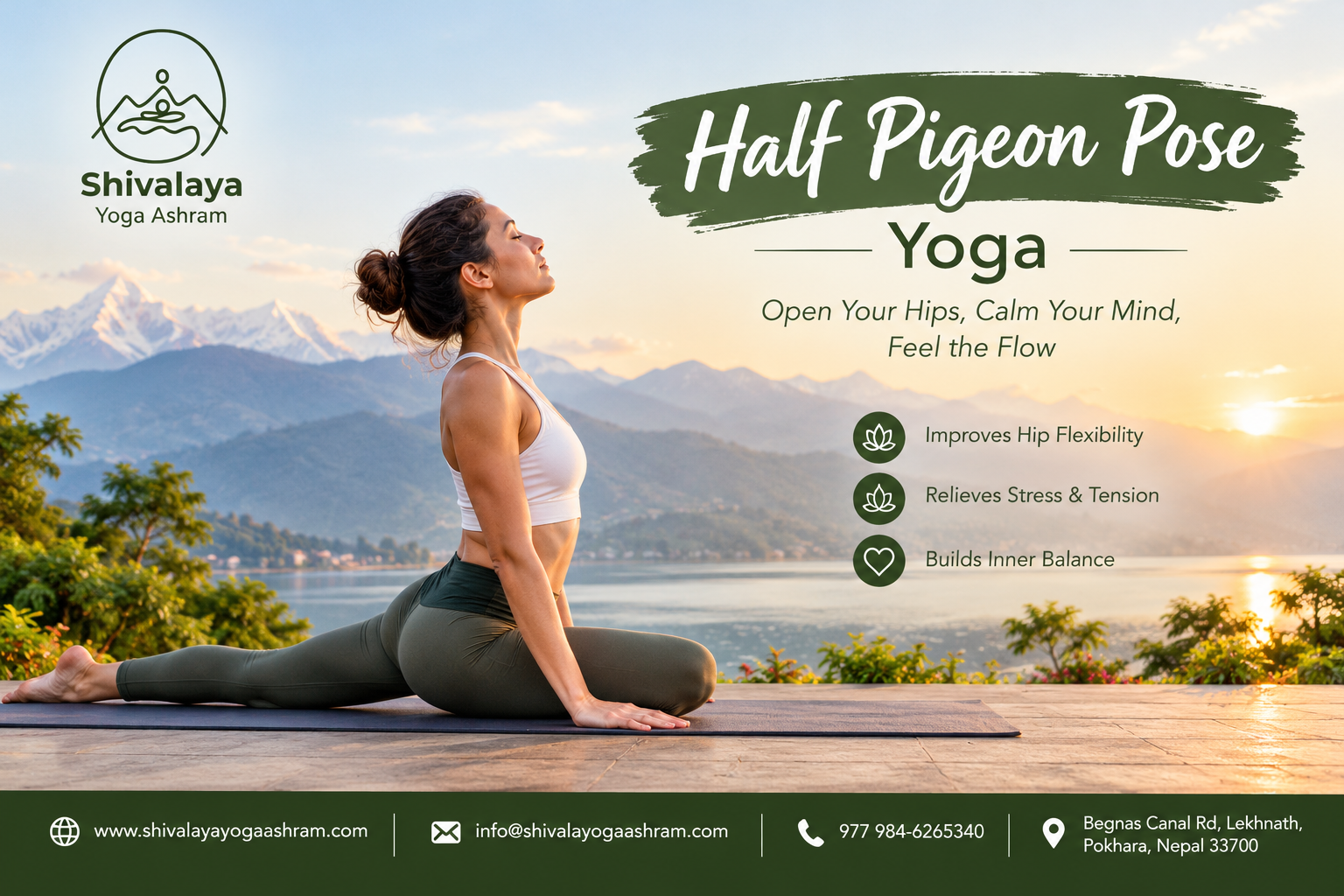
Tight hips, stiff legs, and discomfort after long hours of sitting can make everyday movement feel difficult. If you are looking for a yoga posture that encourages flexibility, improves body awareness, and creates an opportunity to slow down, Half Pigeon Pose Yoga may be a valuable addition to your practice.
Half Pigeon Pose is a popular yoga posture that primarily targets the hips and surrounding muscles. It is commonly included in yoga sequences designed to improve hip mobility, stretch the gluteal muscles, and encourage relaxation. Whether you are a beginner exploring yoga for the first time or an experienced practitioner refining your alignment, learning this pose correctly can help you develop a more comfortable and mindful practice.
At Shivalaya Yoga Ashram in Pokhara, Nepal, yoga practitioners can explore traditional yoga practices while developing a deeper connection between movement, breathing, and awareness.
In this guide, you will discover what Half Pigeon Pose Yoga is, its potential benefits, how to perform it step by step, common mistakes to avoid, and modifications that can make the posture more accessible.
What Is Half Pigeon Pose Yoga?
Half Pigeon Pose, commonly known as Ardha Kapotasana in yoga, is a seated floor posture that focuses on the hips, gluteal muscles, and surrounding connective tissues.
The Sanskrit name combines three elements:
-
Ardha: Half
-
Kapota: Pigeon
-
Asana: Posture or pose
In the traditional version of the pose, one leg is positioned in front of the body with the knee bent, while the opposite leg extends backward. The hips move toward the floor as the practitioner maintains a comfortable, controlled position.
The upper body can remain upright or gradually fold forward over the front leg, depending on flexibility, comfort, and the variation being practiced.
Half Pigeon Pose is often included in Hatha Yoga, Vinyasa Yoga, and flexibility-focused sequences. It can be practiced independently or as part of a broader routine that includes gentle hip openers and restorative postures.
Important distinction: Half Pigeon Pose and full Pigeon Pose are not identical. Full Pigeon Pose generally involves a deeper backbend and additional shoulder or back flexibility, whereas Half Pigeon is typically more accessible when appropriately modified.
Benefits of Half Pigeon Pose Yoga
Half Pigeon Pose Yoga offers several potential benefits when practiced with proper alignment and without forcing the body into an uncomfortable position.
1. Supports Hip Flexibility
The hips play an important role in walking, running, sitting, and many other everyday movements. Spending extended periods sitting may contribute to feelings of stiffness or reduced hip mobility.
Half Pigeon Pose places the front hip in a flexed and externally rotated position while the back leg extends behind the body. Depending on individual anatomy and alignment, this can stretch several muscles around the hip.
Regular, comfortable practice may help improve hip mobility over time.
2. Stretches the Gluteal Muscles
The gluteal muscles help stabilize the pelvis and support movements such as walking, climbing stairs, and standing up from a chair.
The front-leg position in Half Pigeon Pose can stretch parts of the gluteal region, including the gluteus maximus.
People who experience muscular tightness after exercise or prolonged sitting may find this posture useful as part of a balanced mobility routine.
However, stretching should produce a manageable sensation rather than sharp pain, tingling, or numbness.
3. Encourages Lower-Body Mobility
Healthy movement depends on coordination between the hips, pelvis, and legs. Half Pigeon Pose can complement other mobility exercises by encouraging controlled movement around the hip joints.
It may be particularly useful for people who want to improve their comfort in floor-based yoga postures.
For better results, combine it with gentle movements such as:
-
Cat-Cow Pose
-
Low Lunge
-
Bound Angle Pose
-
Supine Figure-Four Stretch
-
Gentle hip rotations
A varied routine is generally more useful than relying on a single stretching posture.
4. Promotes Relaxation and Body Awareness
Yoga combines physical movement with attention to breathing and present-moment awareness.
Holding Half Pigeon Pose comfortably while breathing slowly may help practitioners develop a calmer, more attentive approach to movement.
Rather than trying to achieve the deepest possible stretch, focus on relaxing unnecessary muscular tension and noticing how your body responds.
The pose is not a guaranteed treatment for stress or anxiety, but it can be one component of a broader relaxation practice.
5. Complements Sports and Fitness Routines
Runners, cyclists, dancers, and gym enthusiasts often include hip mobility exercises in their training routines.
Half Pigeon Pose may complement these activities by stretching the muscles around the hips and buttocks.
However, it should not be considered a substitute for a complete warm-up, strength training, or a sport-specific recovery plan.
For athletes, the best approach is to combine flexibility exercises with appropriate strengthening, movement control, and recovery.
6. Develops Patience and Mindful Movement
Some yoga postures encourage practitioners to slow down rather than constantly seek movement or intensity.
Half Pigeon Pose provides an opportunity to observe physical sensations, adjust alignment, and practice patience.
This mindful approach can help beginners understand an important principle of yoga: progress does not require forcing the body into a particular shape.
How to Do Half Pigeon Pose Yoga Step by Step
Learning the correct technique is essential for practicing Half Pigeon Pose comfortably.
Follow these steps to get started.
Step 1: Begin in Tabletop Position
Start on your hands and knees on a yoga mat.
Position your hands approximately beneath your shoulders and your knees beneath your hips. Keep your spine in a neutral, comfortable position.
Take a few relaxed breaths before moving into the pose.
Step 2: Bring One Knee Forward
Slide your right knee forward toward your right wrist.
Allow your right foot to move toward the left side of your body. The exact position of your foot will depend on your hip mobility and comfort.
Do not force your shin to become parallel to the front edge of the mat. This is not necessary for a beneficial stretch and may be uncomfortable for some people.
Step 3: Extend the Opposite Leg Backward
Slowly slide your left leg backward, allowing the front of the leg to rest on the mat if comfortable.
Keep the back leg extended behind you without forcing the knee into the floor.
Check that the position feels stable before proceeding.
Step 4: Support Your Hips
Allow your pelvis to move toward the mat only as far as your body comfortably permits.
If your right hip remains lifted, place a folded blanket, yoga block, or firm cushion underneath it.
Supporting the hips can help reduce unnecessary twisting and make the posture easier to maintain.
Step 5: Lengthen Your Spine
Place your hands on the mat and gently lengthen your spine.
Keep your chest open and your shoulders relaxed. Avoid collapsing your weight into the front knee.
You can remain upright if that feels comfortable.
Step 6: Fold Forward If Appropriate
If your hips and knees feel comfortable, slowly walk your hands forward and lower your upper body toward the front leg.
Rest your forearms on a bolster or place your forehead on a cushion if needed.
This forward-folding variation may create a different stretching sensation, but it is optional. Remaining upright is equally valid.
Step 7: Breathe and Hold
Breathe slowly and naturally.
Beginners can start with approximately 15–30 seconds on each side, gradually increasing the duration if the position remains comfortable.
There is no need to hold the pose for a long time. Stop sooner if you experience pain, numbness, tingling, or increasing discomfort.
Step 8: Exit the Pose Slowly
Place your hands beneath your shoulders and gently lift your torso if you were folding forward.
Bring your front leg back and return to Tabletop Position.
Take a few breaths before repeating the posture on the opposite side.
Beginner tip: Practice both sides without comparing them. Differences in flexibility between the hips are common, and each side may require a different modification.
Common Mistakes to Avoid in Half Pigeon Pose
Although Half Pigeon Pose may look straightforward, incorrect positioning can place unnecessary pressure on the knee or hip.
Avoid these common mistakes.
Forcing the Front Shin Into Position
Many beginners believe the front shin must form a straight line across the mat.
In reality, the appropriate angle varies according to individual anatomy and mobility.
Keep your front foot closer to your pelvis if that feels more comfortable.
Allowing the Hip to Drop Without Support
If one hip is significantly elevated, trying to push it toward the floor may create discomfort or twisting.
Use a block, blanket, or cushion to support the elevated side instead of forcing the pelvis downward.
Ignoring Knee Discomfort
Half Pigeon Pose should not create sharp pain or pressure in the front knee.
If your knee hurts, come out of the posture rather than attempting to stretch through the discomfort. Consider a gentler alternative, such as the Supine Figure-Four Stretch.
Holding Your Breath
Breath-holding can increase muscular tension and make it harder to assess how your body feels.
Maintain a natural breathing rhythm and release unnecessary tension in your shoulders, jaw, and hands.
Staying in the Pose for Too Long
A longer hold does not automatically produce better results.
Start with a short, comfortable duration and increase it gradually according to your experience and response.
Half Pigeon Pose Modifications for Beginners
You do not need advanced flexibility to explore the benefits of yoga. Modifications can make Half Pigeon Pose more comfortable and accessible.
Use a Yoga Block or Folded Blanket
Place a block, folded blanket, or firm cushion beneath the front-side hip.
This support can reduce the need to force the pelvis toward the floor.
Keep the Front Foot Closer to the Body
If your hips feel tight, move the front foot closer to your pelvis rather than trying to position the shin at a particular angle.
The goal is to find a comfortable position, not to copy another person's shape.
Stay Upright
You do not have to fold forward to practice Half Pigeon Pose.
Keep your torso upright, place your hands on the floor, and focus on steady breathing.
Try the Supine Figure-Four Stretch
If kneeling or placing weight through your hips is uncomfortable, lie on your back.
Bend both knees, place one ankle over the opposite thigh, and gently draw the supporting leg toward your body.
This variation may provide a hip stretch without requiring the same floor position as Half Pigeon Pose.
Choose the alternative that feels comfortable and seek professional guidance if you have persistent pain or an existing injury.
Who Should Avoid or Modify Half Pigeon Pose?
Half Pigeon Pose is not suitable for everyone in its standard form.
Consider avoiding the posture or seeking guidance from a qualified yoga instructor or healthcare professional if you have:
-
A current knee, hip, or pelvic injury
-
Significant knee pain or restricted hip movement
-
Recent hip, knee, or pelvic surgery
-
Symptoms of sciatica or another condition involving nerve irritation
-
Pain that increases during stretching
-
A medical condition that affects your ability to kneel or bear weight comfortably
People with hypermobility should avoid pushing their joints toward their maximum range of motion.
During pregnancy, modifications may be necessary as comfort and mobility change. Consult a qualified prenatal yoga instructor or healthcare professional about appropriate options.
Stop immediately if you experience sharp pain, tingling, numbness, or a sensation of pressure inside the knee.
If pain persists after stopping the pose, seek appropriate medical advice.
Half Pigeon Pose vs. Full Pigeon Pose
Understanding the difference between these postures can help you choose an appropriate variation.
| Feature | Half Pigeon Pose | Full Pigeon Pose |
|---|---|---|
| Main focus | Hip mobility and stretching | Hip mobility combined with a deeper backbend |
| Back leg | Extended behind the body | Often bent, with the foot brought toward the head |
| Upper-body position | Upright or folded forward | May involve substantial back and shoulder extension |
| Flexibility requirements | Varies; modifications are available | Generally requires greater flexibility |
| Beginner suitability | Often more adaptable | Usually requires more experience or instruction |
Neither posture is inherently better than the other.
Choose a variation according to your mobility, experience, and comfort. A deeper posture is not necessarily more effective.
How Often Should You Practice Half Pigeon Pose?
For beginners, practicing Half Pigeon Pose two or three times a week may be a reasonable starting point if the posture feels comfortable and fits your overall exercise routine.
Start with short holds of approximately 15–30 seconds on each side. Gradually increase the duration if you can maintain comfortable alignment without pain or numbness.
You can include the pose in a gentle sequence:
-
Begin with Cat-Cow movements to warm up.
-
Practice Low Lunge on each side.
-
Move into Half Pigeon Pose with appropriate support.
-
Transition into a comfortable seated or lying posture.
-
Finish with a few minutes of relaxed breathing.
Consistency matters more than intensity. If your goal is better hip mobility, combine stretching with suitable strengthening exercises and regular movement throughout the day.
There is no universal timeline for improved flexibility. Results depend on your starting mobility, practice frequency, anatomy, and overall activity level.
Learn Mindful Yoga at Shivalaya Yoga Ashram
Developing a consistent yoga practice involves more than memorizing postures. Learning alignment, breathing, modifications, and body awareness can help you build a practice that suits your individual needs.
Shivalaya Yoga Ashram, located in Pokhara, Nepal, offers a setting for exploring yoga, meditation, and related wellness practices.
Whether you are beginning your yoga journey or looking to deepen your understanding of traditional yoga, learning from experienced teachers can help you approach postures with greater awareness.
You can explore the available programs and learn more about the ashram through the official website: https://shivalayayogaashram.com/
When choosing a yoga program, consider the teaching approach, instructor qualifications, class structure, and whether appropriate modifications are available for your experience and mobility.
Conclusion: Make Half Pigeon Pose Part of Your Yoga Practice
Half Pigeon Pose Yoga can be a useful addition to a well-rounded yoga routine, offering an opportunity to stretch the gluteal muscles, explore hip mobility, and develop greater awareness of your body.
The key to practicing safely is to work within your comfortable range of motion, support your hips when necessary, and avoid forcing your front leg into a particular position. Remember that flexibility develops gradually, and modifications are a normal part of yoga.
Whether you practice at home or learn with a qualified instructor, prioritize consistent movement, comfortable breathing, and appropriate alignment over achieving a deeper stretch.
Ready to deepen your yoga journey? Explore yoga, meditation, and teacher-training opportunities at Shivalaya Yoga Ashram in Pokhara, Nepal. Visit https://shivalayayogaashram.com/ to learn more about available programs and discover an approach to yoga that supports mindful movement and personal growth.
Frequently Asked Questions About Half Pigeon Pose Yoga
1. What Is Half Pigeon Pose Yoga Good For?
Half Pigeon Pose is commonly practiced to stretch the gluteal muscles, support hip mobility, and develop body awareness. It can complement a broader flexibility and relaxation routine when performed comfortably.
2. How Long Should You Hold Half Pigeon Pose?
Beginners can start with 15–30 seconds on each side. You may gradually increase the duration if the position remains comfortable. Stop if you experience pain, tingling, or numbness.
3. Is Half Pigeon Pose Suitable for Beginners?
Yes, many beginners can practice a modified version of Half Pigeon Pose. Supporting the hips with a folded blanket or yoga block and keeping the torso upright can make the posture more accessible.
4. Why Does Half Pigeon Pose Hurt My Knee?
Knee discomfort may occur when the hip position places excessive stress on the knee or when the posture is forced beyond a comfortable range. Stop if you experience knee pain and try a gentler alternative, such as the Supine Figure-Four Stretch. Persistent pain should be assessed by a healthcare professional.
5. Can Half Pigeon Pose Help With Tight Hips?
It may help improve hip flexibility when practiced consistently and comfortably. However, tightness can have different causes, and this posture may not be appropriate for everyone. Combine it with other mobility and strengthening exercises for a balanced approach.
6. Should I Fold Forward in Half Pigeon Pose?
No. Folding forward is optional. You can keep your torso upright and still practice the posture. Choose the variation that allows you to maintain comfortable alignment and breathe naturally.

 English
 Arabic
 French
 Spanish
 Portuguese
 Turkish
 Dutch
 Italiano
 Russian
 Romaian
 Portuguese (Brazil)
 Greek