


Internal vs External Piles Symptoms: Key Differences and Treatment
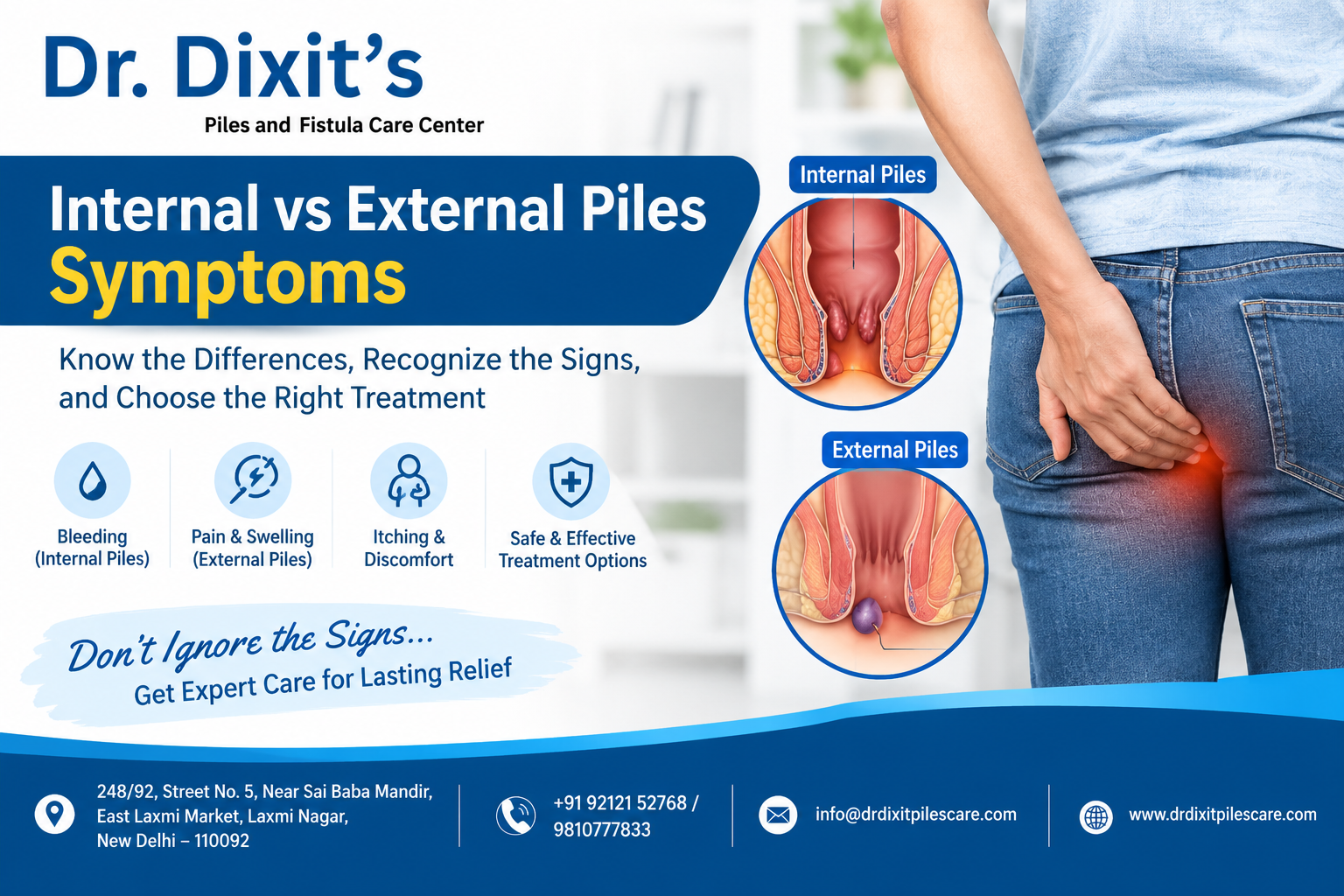
Have you ever noticed blood after passing stool, experienced itching around the anus, or felt a painful lump near the anal opening? These symptoms can be uncomfortable and worrying, especially when you are unsure what is causing them. One possible explanation is piles, also known as haemorrhoids.
However, not all piles are the same. Internal and external piles differ in their location, symptoms, severity, and treatment options. While internal piles often cause painless bleeding, external piles are more likely to cause discomfort, swelling, and pain around the anus.
Understanding the differences between internal and external piles symptoms can help you recognise when medical attention is necessary and make informed decisions about your treatment.
In this guide, we will explain how internal and external piles develop, how their symptoms differ, what treatment options are available, and when you should consult a qualified healthcare professional.
What Are Piles?
Piles, medically known as haemorrhoids, are swollen vascular cushions in the lower rectum and around the anus. These structures are naturally present and help maintain bowel control. Problems occur when they become enlarged, swollen, or symptomatic.
Piles commonly develop due to increased pressure in the lower rectum. Factors such as chronic constipation, straining during bowel movements, prolonged sitting on the toilet, pregnancy, and a low-fibre diet can contribute to their development.
There are two main types of piles:
-
Internal piles: Develop inside the rectum, above the dentate line.
-
External piles: Develop beneath the skin around the anal opening.
Both types can cause discomfort and bleeding, but their symptoms are often different. Identifying these differences is an important first step towards appropriate diagnosis and treatment.
Internal vs External Piles Symptoms: What Is the Difference?
The primary difference between internal and external piles is their location. Internal piles develop inside the rectum, where pain-sensitive nerves are less concentrated. External piles develop under the sensitive skin surrounding the anus.
This anatomical difference helps explain why internal piles often cause painless bleeding, whereas external piles are more likely to cause pain, itching, and swelling.
| Feature | Internal Piles | External Piles |
|---|---|---|
| Location | Inside the rectum | Under the skin around the anus |
| Common symptom | Bright red bleeding during bowel movements | Pain, swelling, itching, or a tender lump |
| Pain | Usually painless unless complications occur | Can be painful, particularly if a blood clot develops |
| Visible lump | May protrude during bowel movements | May be visible or felt around the anal opening |
| Itching | Can occur, particularly with prolapse or mucus discharge | Common due to irritation and moisture |
| Bleeding | Common symptom | Possible, especially if the skin becomes damaged |
| Diagnosis | Often requires examination of the anal canal and rectum | Often identifiable through external examination |
| Treatment | Depends on severity; may include office procedures or surgery | Depends on symptoms; thrombosed piles may require specific treatment |
These differences are useful for understanding possible symptoms, but they cannot confirm a diagnosis. Other anorectal conditions can produce similar symptoms.
What Are the Symptoms of Internal Piles?
Internal piles develop inside the rectum and may remain unnoticed during their early stages. Many people discover them only after experiencing bleeding during a bowel movement.
1. Painless Bleeding During Bowel Movements
One of the most common internal piles symptoms is bright red blood during or after passing stool.
You may notice:
-
Blood on toilet paper after wiping.
-
Bright red streaks on the surface of the stool.
-
A few drops of blood in the toilet bowl.
Internal piles can bleed when enlarged haemorrhoidal tissue is irritated by passing stool, particularly when constipation or straining is present.
However, rectal bleeding should never automatically be attributed to piles. Anal fissures, inflammatory bowel disease, polyps, and colorectal cancer can also cause bleeding. Persistent or recurrent bleeding requires medical evaluation.
2. Prolapse or Tissue Protruding From the Anus
As internal piles enlarge, they may protrude through the anal opening during bowel movements.
This is called prolapse. Depending on the severity, the tissue may return inside the rectum on its own, require gentle manual reduction by a clinician-guided approach, or remain outside.
Internal piles are commonly classified into four grades:
-
Grade I: Enlarged piles that remain inside the anal canal.
-
Grade II: Piles that protrude during bowel movements but return spontaneously.
-
Grade III: Piles that protrude and require manual reduction.
-
Grade IV: Piles that remain prolapsed and cannot be reduced normally.
The grade helps clinicians determine the most appropriate treatment.
3. Mucus Discharge and Irritation
Prolapsed internal piles can sometimes produce mucus, which may irritate the surrounding skin.
This can lead to:
-
Itching around the anal opening.
-
A feeling of dampness.
-
Difficulty keeping the area clean.
-
Discomfort after bowel movements.
Maintaining gentle hygiene may help reduce irritation, but persistent discharge or skin changes should be assessed by a healthcare professional.
4. A Feeling of Incomplete Bowel Emptying
Some people with enlarged internal piles experience a sensation that the bowel has not emptied completely.
This feeling can encourage repeated visits to the toilet or unnecessary straining, potentially aggravating symptoms.
If this sensation persists or occurs alongside changes in bowel habits, abdominal pain, or unexplained weight loss, seek medical advice rather than assuming piles are the only cause.
What Are the Symptoms of External Piles?
External piles develop beneath the sensitive skin surrounding the anus. Because this area contains many pain-sensitive nerves, external piles can be particularly uncomfortable.
1. Pain and Tenderness Around the Anus
Pain is a common symptom of external piles, especially when the swelling is inflamed or a blood clot develops.
You may notice discomfort when:
-
Sitting for extended periods.
-
Passing hard stools.
-
Cleaning the anal area.
-
Walking or performing everyday activities.
The intensity varies. Mild external piles may cause only irritation, while a thrombosed external haemorrhoid can cause sudden, substantial pain.
2. A Lump Near the Anal Opening
External piles may appear as a small lump or swelling around the anus.
The lump can feel soft or firm, depending on the inflammation and whether a clot has formed.
A sudden, painful, firm lump with a bluish or purple appearance may indicate a thrombosed external haemorrhoid.
Other conditions, including skin tags, anal abscesses, and other forms of swelling, can produce similar lumps. A clinical examination is the safest way to establish the cause.
3. Itching and Skin Irritation
External piles can cause itching because swelling, moisture, mucus, and repeated wiping may irritate the surrounding skin.
To reduce irritation:
-
Clean the area gently with water.
-
Pat the skin dry instead of rubbing.
-
Avoid heavily fragranced soaps and irritating products.
-
Wear comfortable, breathable underwear.
-
Avoid scratching the affected area.
Persistent itching may also result from dermatitis, fungal infections, or other skin conditions, so it should not automatically be attributed to piles.
4. Swelling and Discomfort While Sitting
Inflamed external piles can make sitting uncomfortable, particularly on hard surfaces.
A warm sitz bath may provide temporary relief. Sitting in comfortably warm water for around 10–15 minutes can help soothe the area.
Avoid excessively hot water and stop if the discomfort worsens. A sitz bath may relieve symptoms, but it does not eliminate the underlying haemorrhoid.
5. Bleeding From Irritated Skin
Although external piles are often associated with pain and swelling, bleeding can also occur.
The skin covering an external haemorrhoid may become damaged through friction, wiping, or irritation. A thrombosed external haemorrhoid may also bleed if the overlying skin breaks.
Heavy bleeding, dizziness, weakness, or black, tarry stools require urgent medical assessment.
What Causes Internal and External Piles?
Both types of piles are associated with increased pressure and changes in the supporting tissues of the anal canal.
Common contributing factors include:
Chronic constipation: Hard stools can increase straining and irritate haemorrhoidal tissue.
Excessive straining: Repeatedly pushing during bowel movements places additional pressure on the anal region.
Prolonged toilet sitting: Spending extended periods on the toilet may increase pressure on the haemorrhoidal cushions.
Low-fibre diets: Insufficient dietary fibre can contribute to hard stools and constipation.
Pregnancy: Hormonal changes, increased abdominal pressure, and constipation can contribute to haemorrhoids.
Ageing: The supporting tissues around the rectum and anus may weaken with age.
Chronic diarrhoea: Frequent bowel movements and repeated irritation may aggravate symptoms.
Addressing these factors can help relieve symptoms and reduce the risk of recurrence, although it may not be sufficient for every case.
How Are Internal and External Piles Diagnosed?
Symptoms alone cannot reliably distinguish piles from every other anorectal condition. A medical examination helps identify the cause and determine the severity.
Depending on the symptoms, a clinician may recommend:
Medical History and Symptom Assessment
Your doctor may ask about bleeding, pain, bowel habits, constipation, medications, symptom duration, and any previous treatment.
These details help identify possible causes and determine whether further investigation is necessary.
Physical Examination
An external examination can identify visible swelling, external haemorrhoids, skin tags, or other abnormalities.
Digital Rectal Examination
A clinician may use a gloved, lubricated finger to examine the rectum for abnormalities. This may be recommended depending on the symptoms and clinical findings.
Anoscopy or Further Investigation
Anoscopy allows a clinician to inspect the anal canal and identify internal haemorrhoids or other abnormalities.
If rectal bleeding is unexplained, persistent, or associated with warning signs, further investigations, including colonoscopy, may be appropriate depending on the person's age, medical history, and risk factors.
Early assessment can help prevent delays in diagnosing conditions that require different treatment.
Treatment Options for Internal and External Piles
Treatment depends on the type of haemorrhoid, its severity, the duration of symptoms, and the person's overall health.
Not everyone requires surgery. Mild cases often improve with dietary and lifestyle changes, while persistent or severe symptoms may require medical procedures.
1. Dietary and Lifestyle Changes
Conservative management is often the first step for uncomplicated piles.
Helpful measures include:
-
Increasing fibre intake through vegetables, fruits, whole grains, and legumes.
-
Drinking adequate fluids, unless a clinician has advised fluid restriction.
-
Avoiding excessive straining during bowel movements.
-
Responding promptly to the urge to pass stool.
-
Avoiding prolonged sitting on the toilet.
-
Maintaining regular physical activity.
Fibre supplements may be helpful for some people. Increase fibre gradually to reduce bloating and gas.
These measures can improve bowel habits and reduce symptoms, but they do not necessarily eliminate larger or prolapsed haemorrhoids.
2. Medicines for Symptom Relief
Depending on the symptoms, a healthcare professional may recommend short-term topical treatments or other medicines to reduce discomfort, itching, or swelling.
Use these products according to professional advice and the product instructions. Some topical preparations, particularly those containing corticosteroids, are not intended for prolonged use without medical supervision.
Medicines may relieve symptoms without removing the haemorrhoid itself.
3. Office-Based Procedures for Internal Piles
When internal piles continue to cause bleeding or prolapse despite conservative treatment, a clinician may recommend an office-based procedure.
Options may include:
-
Rubber band ligation: A small band is placed around the base of an internal haemorrhoid to restrict its blood supply.
-
Sclerotherapy: A solution is injected into the haemorrhoidal tissue to reduce its size.
-
Infrared coagulation: Heat is used to create controlled tissue changes that help shrink selected internal haemorrhoids.
The suitability of each procedure depends on the haemorrhoid grade, symptoms, medical history, and clinician's assessment.
4. Treatment for External Piles
Mild external piles may improve with conservative care.
If a thrombosed external haemorrhoid causes severe pain, a clinician may assess whether a procedure to remove the clot and affected tissue is appropriate. The potential benefit depends partly on when symptoms began and the person's clinical circumstances.
Surgery may be considered for selected patients with persistent, recurrent, or complicated haemorrhoids.
5. Kshar Sutra and Other Specialised Treatment Approaches
Some Ayurvedic centres offer Kshar Sutra therapy or other specialised approaches for selected anorectal conditions.
However, Kshar Sutra is not a standard first-line treatment for every type of internal or external haemorrhoid. Its suitability and evidence base depend on the specific condition being treated.
It is particularly important to distinguish haemorrhoids from anal fistulas, fissures, and other conditions because their treatment approaches differ.
If you are considering an Ayurvedic treatment, consult a qualified practitioner who can explain the diagnosis, expected benefits, risks, alternatives, and available evidence. Do not delay necessary medical assessment or proven treatment.
At Dr. Dixit's Piles and Fistula Care Centre, patients can seek professional guidance about anorectal symptoms and discuss suitable treatment options after an appropriate clinical assessment.
When Should You Consult a Doctor?
Occasional mild discomfort may improve with conservative care, but certain symptoms require medical attention.
Arrange a medical assessment if you experience:
-
Repeated or persistent rectal bleeding.
-
Pain that does not improve or keeps returning.
-
A new lump around the anus.
-
Prolapsed tissue that causes ongoing discomfort.
-
Symptoms that persist despite dietary and lifestyle changes.
-
Changes in bowel habits or unexplained weight loss.
Seek urgent medical care for heavy bleeding, faintness, severe or rapidly worsening pain, fever with anal swelling, or black, tarry stools.
These symptoms may indicate a condition other than uncomplicated piles and should not be ignored.
How Can You Reduce the Risk of Piles?
Healthy bowel habits can reduce the pressure and irritation associated with haemorrhoids.
Consider these practical steps:
Eat more fibre: Include fruits, vegetables, whole grains, and legumes in your daily meals.
Drink sufficient water: Adequate fluid intake helps support normal bowel movements.
Avoid straining: Do not force a bowel movement when stool does not pass easily.
Limit toilet time: Avoid sitting on the toilet while scrolling through your phone or reading.
Stay physically active: Regular movement can support bowel regularity.
Manage constipation early: If constipation persists despite dietary changes, consult a healthcare professional.
Maintain gentle hygiene: Avoid excessive wiping or harsh products that irritate the anal skin.
These habits support digestive health and may reduce the likelihood of recurrent symptoms.
Conclusion: Understand the Symptoms and Choose the Right Treatment
Understanding internal vs external piles symptoms can help you recognise the differences between these two common forms of haemorrhoids.
Internal piles often cause painless bright red bleeding and may protrude during bowel movements. External piles are more likely to cause pain, itching, swelling, and a tender lump near the anal opening. However, symptoms can overlap, and rectal bleeding or anal pain may have other causes.
The right treatment depends on an accurate diagnosis, the severity of the condition, and your individual health needs. Dietary changes and improved bowel habits may help mild cases, while persistent or severe symptoms may require medical procedures.
Do not ignore recurring bleeding, persistent pain, or unexplained changes in bowel habits. Early medical assessment can help identify the cause and guide appropriate care.
If you are experiencing symptoms of piles, consult Dr. Dixit's Piles and Fistula Care Centre for an evaluation and guidance on suitable treatment options.
Contact Dr. Dixit's Piles and Fistula Care Centre
-
Address: 248/92, Street No. 5, Near Sai Baba Mandir, East Laxmi Market, Laxmi Nagar, New Delhi – 110092
-
Phone: +91 92121 52768 / 9810777833
-
Email: [email protected]
-
Website: https://drdixitpilescare.com/
Frequently Asked Questions (FAQs)
1. What is the main difference between internal and external piles symptoms?
Internal piles commonly cause painless bright red bleeding and may protrude during bowel movements. External piles more often cause pain, itching, swelling, and a lump around the anus. However, symptoms can overlap, so a medical examination may be necessary.
2. Are internal piles more dangerous than external piles?
Neither type is automatically more dangerous. Internal piles can cause recurrent bleeding or prolapse, while external piles can become very painful if a blood clot develops. Persistent bleeding, severe pain, or other unusual symptoms require medical assessment.
3. Can external piles go away on their own?
Mild external piles may improve with time, adequate fibre intake, sufficient fluids, and avoiding straining. A thrombosed external haemorrhoid may also improve gradually, although pain can initially be substantial. Seek medical advice for severe or persistent symptoms.
4. Do internal piles always cause bleeding?
No. Internal piles may cause no noticeable symptoms, particularly in the early stages. When symptoms occur, painless bright red bleeding is common. However, rectal bleeding can have other causes and should not automatically be attributed to haemorrhoids.
5. How can I tell whether I have piles or an anal fissure?
Piles may cause bleeding, itching, swelling, or a lump. An anal fissure is a small tear in the anal lining and commonly causes sharp pain during bowel movements, sometimes followed by burning discomfort. Because symptoms can overlap, a clinician should confirm the diagnosis.
6. When should I seek treatment for piles?
Seek medical advice if you have recurrent bleeding, persistent pain, a new anal lump, prolapse, or symptoms that do not improve with conservative care. Heavy bleeding, faintness, fever with anal swelling, or severe worsening pain require urgent medical assessment.

 English
 Arabic
 French
 Spanish
 Portuguese
 Deutsch
 Turkish
 Dutch
 Italiano
 Russian
 Romaian
 Portuguese (Brazil)