


BIS Certification Requirements for Manufacturers in India
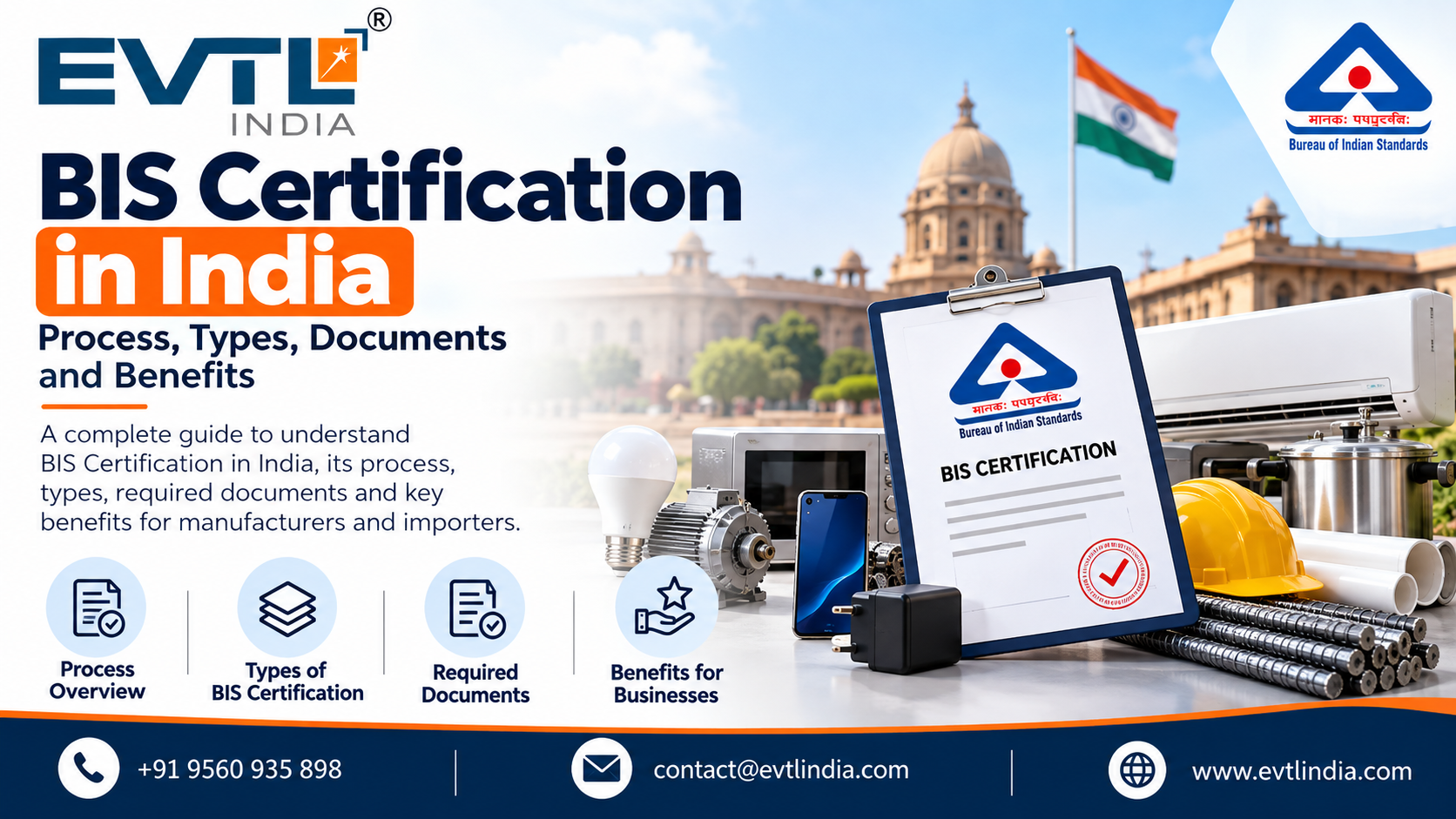
BIS Certification is an important quality assurance mechanism in India that helps ensure products meet the applicable Indian Standards for quality, safety, performance, and reliability. The Bureau of Indian Standards (BIS) is India's national standards body and operates product certification schemes under the BIS Act, 2016, and the applicable conformity assessment regulations.
For manufacturers, BIS Certification can help demonstrate that their products conform to the relevant Indian Standard (IS). Depending on the product category and applicable government regulations, certification may be voluntary or mandatory. When a product is covered by a compulsory Quality Control Order (QCO) or another applicable notification, manufacturers must comply with the prescribed requirements before placing the product on the Indian market, subject to applicable exemptions.
Understanding BIS Certification in India is essential for Indian and foreign manufacturers who want to sell regulated products, maintain product quality, and meet applicable compliance obligations.
What Is BIS Certification?
BIS Certification is a conformity assessment process through which the Bureau of Indian Standards evaluates whether a product meets the requirements of its applicable Indian Standard under the relevant certification scheme.
For many products covered under Scheme-I, BIS grants a licence to manufacturers to use the ISI Mark after assessing manufacturing and testing capabilities and establishing product conformity. Other products may fall under different schemes, such as the Compulsory Registration Scheme (CRS) or Scheme-X, depending on the applicable rules and notifications.
BIS Certification may apply to products from several industries, including:
-
Electrical and electronic appliances
-
Cement and construction materials
-
Steel and other industrial products
-
Furniture and household products
-
Chemicals and related materials
-
Selected machinery and engineering components
The exact requirements depend on the product, its corresponding Indian Standard, the certification scheme, and whether a government notification makes compliance compulsory.
What Is BIS Certification in India?
BIS Certification in India provides a structured way to assess product conformity with the applicable Indian Standards. The certification process generally involves identifying the relevant standard, evaluating the manufacturer's facilities, testing product samples, and reviewing the application.
The BIS certification system supports consumer protection and encourages manufacturers to maintain consistent quality. It can also help businesses meet regulatory obligations and strengthen confidence among customers, distributors, and other commercial partners.
However, BIS Certification is not automatically required for every product sold in India. Businesses should first verify whether their specific product is covered under a compulsory certification requirement. The official BIS website maintains information about products covered by compulsory certification and the relevant schemes.
What Is a BIS License?
A BIS License is an official authorization granted by the Bureau of Indian Standards that permits a manufacturer to use the specified BIS Standard Mark on products covered by the licence, subject to its conditions.
Under the applicable product certification scheme, a licence is granted after the required assessment establishes that the product meets the relevant Indian Standard and the manufacturer has the necessary production controls and testing capabilities. A licence is generally linked to the specified product and manufacturing premises, rather than being a blanket approval for every product made by a company.
A valid BIS licence helps manufacturers demonstrate compliance with applicable product requirements. Businesses must also maintain compliance with licence conditions, surveillance requirements, and renewal obligations.
BIS Certification Process in India
The process for obtaining certification varies according to the product and applicable scheme. For product certification under Scheme-I, the general steps include:
-
Identify the applicable Indian Standard: Determine the IS number relevant to the product.
-
Review certification requirements: Check the product manual, applicable QCO, testing requirements, and relevant certification guidelines.
-
Prepare the manufacturing facility: Ensure appropriate machinery, quality control procedures, production infrastructure, and testing arrangements are available.
-
Submit the application: Apply through the official BIS online portal, providing the required information and documentation.
-
Factory assessment: BIS assesses the manufacturing facilities and quality control capabilities where required by the applicable scheme.
-
Product testing: Samples are tested through the prescribed testing arrangements to establish conformity with the relevant standard.
-
Grant of licence: BIS reviews the assessment results and grants the licence if the applicable requirements are satisfied.
-
Maintain compliance: The manufacturer must follow licence conditions, surveillance procedures, and renewal requirements.
These steps are a general overview; the precise procedure can differ for CRS, FMCS, Scheme-X, and other certification routes.
Documents Required for BIS Certification
The documents required depend on the product category, manufacturing location, and certification scheme. Commonly requested documents may include:
-
Manufacturing unit registration and address proof
-
Details of the authorised signatory
-
Product specifications and technical information
-
Manufacturing process details
-
Machinery and testing equipment lists
-
Quality control and inspection records
-
Test reports, where applicable
-
Factory layout and infrastructure details
-
Trademark or brand-related documents, where required
-
Relevant declarations and application forms
Applicants should consult the applicable BIS product manual and scheme-specific checklist before submitting their application.
Benefits of BIS Certification
BIS Certification offers several potential benefits to manufacturers and businesses:
-
Regulatory compliance: Helps meet mandatory certification requirements where applicable.
-
Product quality: Encourages conformity with established Indian Standards.
-
Consumer confidence: Provides assurance that certified products meet applicable requirements.
-
Market access: Supports the sale of products subject to mandatory BIS requirements.
-
Brand credibility: Demonstrates a commitment to quality and product safety.
-
Quality consistency: Encourages appropriate manufacturing controls and testing practices.
How Can Businesses Get Assistance With BIS Certification?
Manufacturers should begin by identifying the correct Indian Standard and checking whether certification is mandatory for their products. They should then review the applicable scheme, prepare the required documents, and ensure their manufacturing and testing arrangements meet the prescribed requirements.
EVTL India assists businesses with understanding certification requirements, documentation, application preparation, and the applicable compliance process. Manufacturers should always verify current requirements through official BIS resources because procedures, product coverage, and implementation dates may change.
Conclusion
BIS Certification in India plays an important role in product conformity, quality assurance, and regulatory compliance. Understanding the applicable Indian Standard, certification procedure, documentation, and BIS License requirements can help manufacturers prepare more effectively and avoid unnecessary application delays. Before applying, businesses should verify the latest requirements for their specific product and certification scheme.

 English
 Arabic
 French
 Spanish
 Portuguese
 Deutsch
 Turkish
 Dutch
 Italiano
 Russian
 Romaian
 Greek