


BIS ISI Mark: Requirements, Application Process, and Documents
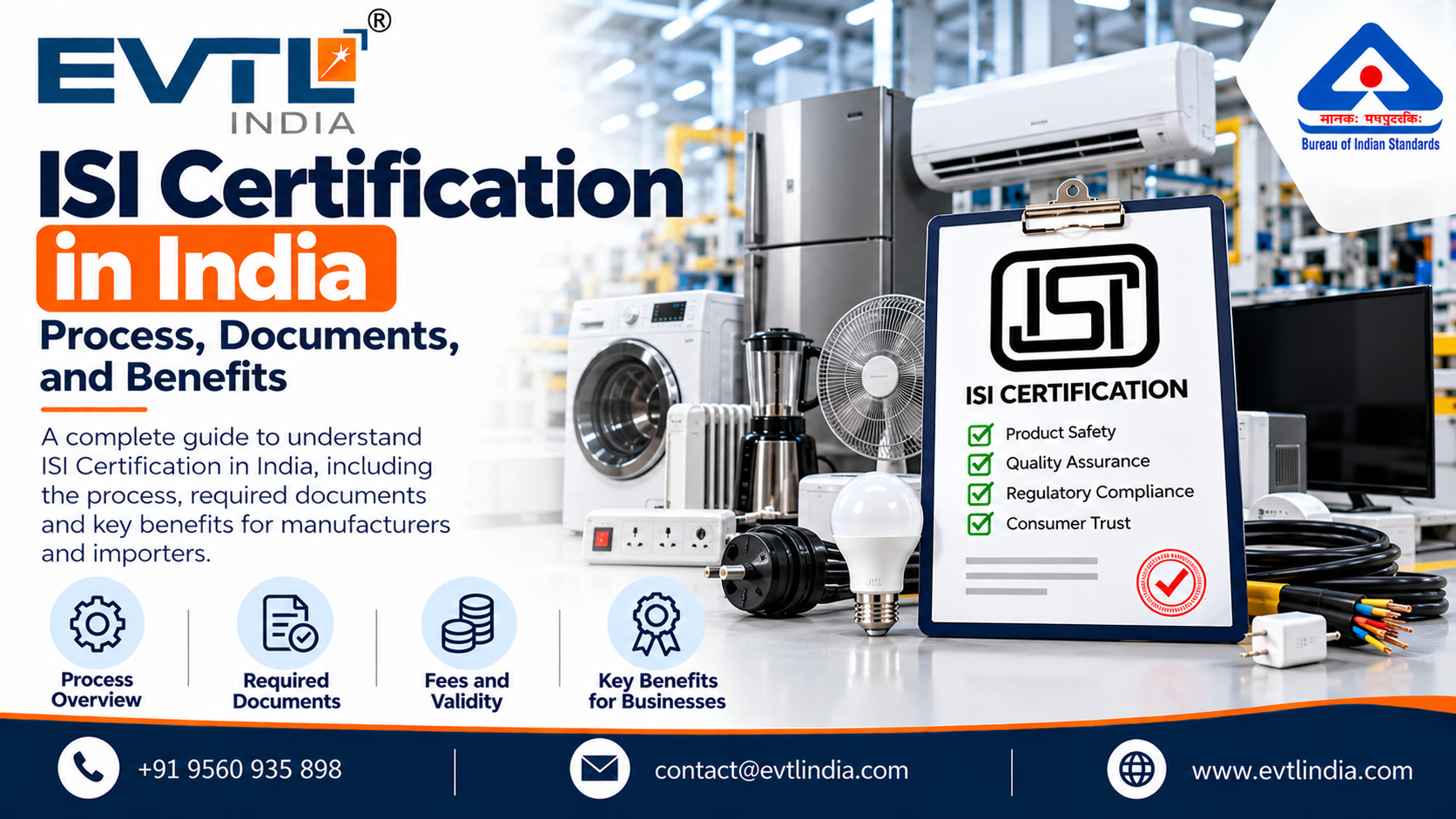
ISI Certification is an important product quality certification in India that helps manufacturers demonstrate that their products conform to the applicable Indian Standards. The certification is administered by the Bureau of Indian Standards (BIS), India's national standards body. Products covered under applicable Quality Control Orders (QCOs) or other mandatory requirements must obtain the relevant BIS licence before being manufactured, sold, imported, or distributed in India, as applicable.
The ISI Mark Certification indicates that a product has been assessed under the applicable BIS conformity assessment scheme and is authorised to carry the prescribed Standard Mark. For Indian manufacturers, obtaining the correct certification is essential for regulatory compliance, product quality assurance, and market access.
What Is ISI Certification?
ISI Certification is commonly used to describe certification under the BIS product certification scheme that permits eligible products to carry the ISI Standard Mark. The certification process generally involves identifying the applicable Indian Standard, evaluating manufacturing facilities, testing product samples, and verifying the manufacturer's quality control arrangements.
The exact requirements depend on the product category, the relevant Indian Standard, and the applicable BIS scheme. Not every product requires mandatory ISI certification. Manufacturers should first verify whether their product falls under a compulsory certification requirement or whether certification is voluntary.
What Is the BIS ISI Mark?
The BIS ISI Mark is a recognised conformity mark associated with products certified under the relevant BIS product certification scheme. It helps buyers identify products that have been assessed against specified quality, safety, performance, or other technical requirements.
Manufacturers cannot legally use the ISI Mark simply because their products meet certain quality expectations or have passed an independent laboratory test. They must obtain the appropriate BIS licence and comply with the applicable marking requirements. The licence number and other prescribed details must be displayed wherever required under the relevant standard and BIS guidelines.
BIS ISI Mark Certification Process for Indian Manufacturers
Indian manufacturers must follow the applicable BIS procedure to obtain a licence for using the Standard Mark. The general process includes the following steps.
-
Identify the applicable Indian Standard: Determine the correct IS number and confirm the product's scope, specifications, and certification requirements.
-
Prepare the manufacturing facility: Ensure that the factory has the required machinery, production infrastructure, quality control procedures, and testing facilities.
-
Arrange the required documents: Prepare the manufacturing, technical, testing, and legal documents applicable to the product and application.
-
Submit the BIS application: Apply through the official BIS online application system and pay the applicable fees.
-
Factory inspection: BIS assesses the manufacturing facility, production processes, quality control arrangements, and testing capabilities.
-
Product sample testing: Samples are tested as required under the relevant certification procedure, either through an authorised laboratory, factory testing, or a combination of methods.
-
Grant of licence: BIS grants the licence when the prescribed assessment and conformity requirements are satisfactorily fulfilled.
-
Maintain compliance: After approval, the manufacturer must follow the relevant standard, marking conditions, testing requirements, and applicable surveillance procedures.
The exact procedure may vary depending on the product and the applicable certification guidelines.
Documents Required for ISI Mark Certification
The documents required for BIS ISI Mark Certification depend on the product and the manufacturer's circumstances. Commonly required documents may include:
-
Business registration documents and factory address proof.
-
Details of the authorised signatory.
-
Manufacturing process flow chart.
-
List of manufacturing machinery and testing equipment.
-
Quality control and inspection procedures.
-
Product specifications and technical details.
-
Test reports, where applicable.
-
Details of raw materials and components.
-
Factory layout and infrastructure details.
-
Applicable declarations, undertakings, and application forms.
Manufacturers should confirm the latest product-specific checklist before submitting their application, as additional documents may be required.
Benefits of ISI Certification for Indian Manufacturers
ISI Mark Certification can offer several advantages to manufacturers:
-
Regulatory compliance: Helps meet applicable mandatory certification requirements.
-
Customer confidence: Provides assurance that certified products conform to the relevant Indian Standard.
-
Market access: Supports the sale of products for which BIS certification is compulsory.
-
Product quality: Encourages consistent manufacturing and effective quality control.
-
Brand credibility: Helps demonstrate a commitment to recognised product standards.
-
Competitive advantage: Can strengthen a manufacturer's position when buyers require certified products.
-
Reduced compliance risks: Helps manufacturers address applicable product certification obligations.
These benefits depend on the product, market requirements, and the manufacturer's continued compliance with the licence conditions.
Why Choose Professional Guidance for BIS ISI Certification?
The certification process can involve technical documentation, product testing, factory inspection, and regulatory interpretation. Manufacturers may need support in identifying the correct Indian Standard, preparing documentation, reviewing testing arrangements, and addressing gaps before inspection.
EVTL India assists businesses with BIS certification-related requirements, including understanding the applicable standards, preparing application documentation, and navigating the certification process. Manufacturers should always verify the relevant requirements and final licensing decisions with BIS.
Conclusion
ISI Certification is an important part of India's product conformity framework. For Indian manufacturers, BIS ISI Mark Certification can help demonstrate conformity with applicable Indian Standards and fulfil mandatory regulatory obligations where required. A successful application depends on selecting the correct standard, maintaining suitable manufacturing and testing facilities, submitting accurate documents, and meeting BIS assessment requirements.
Before starting the process, manufacturers should check the latest applicable Quality Control Order, product-specific BIS guidelines, fees, and implementation dates to avoid delays and ensure compliance. The official BIS website provides information on applicable standards, certification procedures, and products covered under compulsory certification.

 English
 Arabic
 French
 Spanish
 Portuguese
 Deutsch
 Turkish
 Italiano
 Russian
 Romaian
 Portuguese (Brazil)
 Greek