


How to Get BIS FMCS Certification for Foreign Manufacturers
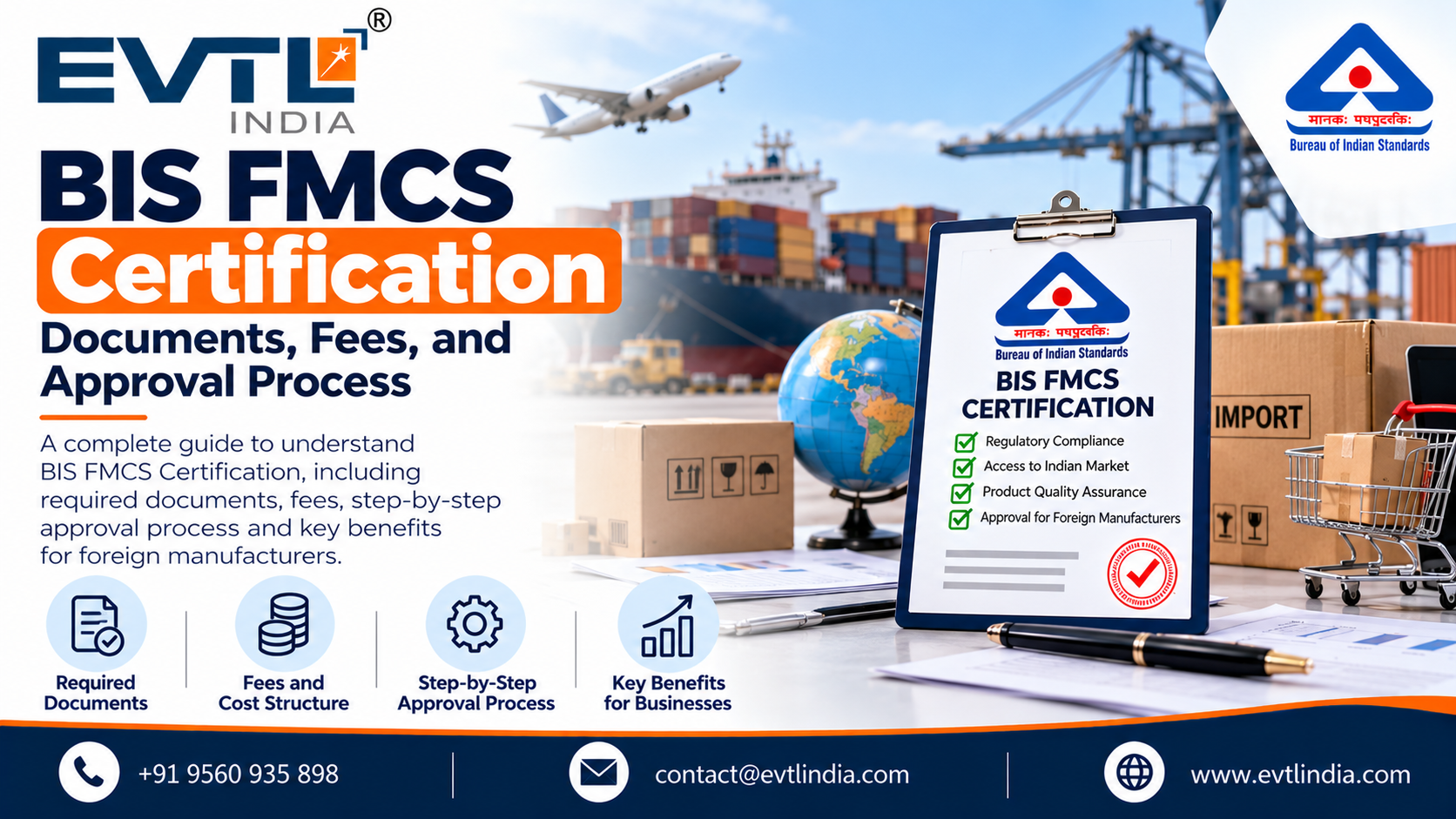
BIS FMCS Certification is an important compliance requirement for foreign manufacturers who want to sell products in the Indian market. The Foreign Manufacturers Certification Scheme (FMCS) is operated by the Bureau of Indian Standards (BIS) under the BIS Act, 2016, and the applicable conformity assessment regulations. It allows eligible manufacturers located outside India to obtain a BIS licence for products that conform to the relevant Indian Standards (IS).
For products covered under mandatory Quality Control Orders (QCOs), obtaining the applicable BIS licence is essential for lawful market entry, subject to the specific order and any applicable exemptions. FMCS helps establish that products manufactured overseas meet India's prescribed quality and safety requirements.
What Is FMCS Certification?
FMCS Certification is a BIS certification scheme specifically designed for manufacturers whose factories are located outside India. Under this scheme, BIS grants a licence to eligible foreign manufacturers to use the applicable Standard Mark on products manufactured at the approved factory and conforming to the relevant Indian Standard.
The scheme covers various product categories, including steel products, cement, household appliances, industrial components, footwear, toys, and other notified goods, depending on the applicable Indian Standards and certification requirements. However, electronics and IT products notified under the relevant MeitY registration framework generally fall under the Compulsory Registration Scheme (CRS), rather than FMCS.
Foreign manufacturers must identify the correct certification route before applying because the applicable scheme depends on the product category and the relevant government notification.
Who Can Apply for BIS FMCS Certification?
A foreign manufacturer with a manufacturing facility located outside India can apply for FMCS Certification if it meets the applicable BIS requirements. The manufacturer must have the necessary production infrastructure, testing facilities, competent personnel, and quality-control arrangements to demonstrate conformity with the relevant Indian Standard.
The applicant must also nominate an Authorized Indian Representative (AIR) as required under the scheme. The AIR must satisfy BIS eligibility and nomination conditions and is responsible for specified compliance obligations on behalf of the foreign manufacturer.
Importers or distributors cannot independently obtain an FMCS licence in place of the actual foreign manufacturer. Separate applications are generally required for each product or Indian Standard and each manufacturing location.
BIS FMCS Certification Process
The process for obtaining BIS FMCS Certification involves several important stages:
1. Identify the Applicable Indian Standard: The manufacturer must determine the correct IS code for its product and verify whether certification is mandatory under an applicable QCO.
2. Prepare the Required Documents: The applicant must compile the prescribed application details, factory information, manufacturing process documents, testing arrangements, quality-control records, and AIR nomination documents.
3. Submit the Application: Applications are submitted through the prescribed BIS online process on the Manakonline portal. Applicants should follow the latest BIS instructions regarding supporting documents, declarations, and fees.
4. Factory Inspection: BIS assesses the overseas manufacturing facility to verify production capabilities, testing infrastructure, quality-control procedures, and compliance with the applicable Indian Standard.
5. Product Testing: Product samples are tested as required under the relevant certification procedure. Samples drawn during inspection must be tested through BIS or BIS-recognised laboratories, as applicable. Testing reports based solely on international standards may not replace the required assessment against the relevant Indian Standard.
6. Grant of Licence: After satisfactory assessment, testing, document verification, and fulfilment of applicable requirements, BIS may grant the licence. The manufacturer can use the authorised Standard Mark only in accordance with the licence conditions.
Documents Required for FMCS Certification
The documents required depend on the product and applicable Indian Standard. Commonly required documents include:
-
Foreign manufacturer's business registration or factory licence.
-
Prescribed BIS application form and fee payment details.
-
Manufacturing process flowchart and factory layout.
-
List of manufacturing machinery and testing equipment.
-
Calibration records for relevant testing equipment.
-
Details and qualifications of quality-control personnel.
-
Product specifications and applicable Indian Standard details.
-
Raw material information and supplier details, where required.
-
Authorized Indian Representative nomination and supporting documents.
-
Brand or trademark information and relevant authorization.
-
Undertakings, declarations, and acceptance of applicable inspection and marking requirements.
Applicants should consult the latest product-specific BIS checklist because additional documents may be required for particular product categories.
Benefits of BIS FMCS Certification
BIS FMCS Certification provides several benefits to eligible foreign manufacturers. It supports compliance with Indian product regulations, helps establish confidence in product quality, and enables access to the Indian market where a valid BIS licence is required.
Certification can also improve buyer confidence, support relationships with Indian importers and distributors, and demonstrate that the manufacturer has established appropriate quality-control and testing arrangements. Maintaining compliance after approval is equally important, including adherence to licence conditions, marking requirements, surveillance inspections, and renewal obligations.
Conclusion
BIS FMCS Certification is a key compliance pathway for foreign manufacturers supplying products covered by the applicable BIS certification requirements in India. A successful application requires the correct Indian Standard, suitable factory infrastructure, reliable testing arrangements, complete documentation, and an eligible Authorized Indian Representative.
EVTL India supports businesses in understanding certification requirements, preparing documentation, and navigating the FMCS application process. Manufacturers should always verify the latest BIS guidelines and product-specific notifications before applying to avoid unnecessary delays and compliance issues.

 English
 French
 Spanish
 Portuguese
 Deutsch
 Turkish
 Dutch
 Italiano
 Russian
 Romaian
 Portuguese (Brazil)
 Greek